
RIB Boats Explained: How Rigid Inflatable Boats Work in 2026
What if the inflatable tubes aren’t the whole story? A RIB pairs a rigid hull with inflatable tubes, which is what distinguishes it from a conventional inflatable boat. The hull provides a firm platform; the tubes add buoyancy and can help cushion contact. How a boat performs depends on its design, condition and the water you’re heading into.
Comparing RIBs can be confusing when terminology and performance claims don’t explain what matters for your plans. Check how the hull and tubes are made, how the layout affects practical use, and whether the boat suits your intended activities and conditions.
This guide explains the defining features of a RIB, the activities and conditions it may suit, and what to inspect before choosing one for Australian waters. You’ll also find practical upkeep tips and a reminder to check the registration and safety requirements that apply in your state or territory. Comparing documented details makes it easier to choose with confidence.
Key Takeaways
- Learn what the term RIB means and how it differs from the alternative abbreviation, RHIB.
- Identify the hull, tubes, transom and propulsion setup, then check which details vary between boats.
- Weigh intended use, onboard space, storage and transport needs against a boat’s documented capacity and operating limits.
- Know what to inspect on the tubes, valves, seams, hull and fittings, and where repair support may help with ongoing care.
What is a RIB? Understand the rigid inflatable boat design
A RIB, or rigid inflatable boat, combines a rigid hull with inflatable tubes fitted around its outer edge. The hull forms the boat’s solid lower structure, while the tubes are a defining part of its surrounding layout. Together, these components make a distinct boat type, though materials, shapes and specifications vary between models.
In plain English: a RIB is an inflatable boat built around a rigid hull, with inflatable tubes positioned around the hull’s sides. It differs from an inflatable boat with a flexible or inflatable floor because its hull is a separate, rigid structure.
The defining hull-and-tube layout
The rigid hull gives the boat a formed base rather than a soft floor. Inflatable tubes sit around the hull’s perimeter, with their arrangement and attachment depending on the boat’s design. The layout is easy to recognise, but it doesn’t tell you everything about a particular vessel. Hull shape, tube material, capacity and fittings can vary, so check the specifications for the individual boat rather than assuming all RIBs are built alike.
How the terms differ
RIB stands for “rigid inflatable boat”. RHIB is also commonly used, usually meaning “rigid-hulled inflatable boat”. In general usage, both terms refer to the same broad design: a rigid hull combined with inflatable tubes. The Rigid-inflatable boat overview provides further background on the design’s characteristics, construction and uses.
By contrast, a soft-bottom inflatable boat has a flexible or inflatable floor rather than a rigid hull. That difference affects the boat’s structure and how it’s packed, stored and set up. The better fit depends on your intended use and practical requirements. A boat’s name alone isn’t enough to compare it with a RIB: check its floor or hull construction and the manufacturer’s stated specifications.
Once the distinction is clear, the category becomes easier to compare. For broader context on inflatable boat types and how to choose between them, explore our first inflatable boat selection guide.
How a RIB is built: the hull, tubes and key components
A RIB brings several components together, but their materials, dimensions and fit-out depend on the specific boat. The hull provides the rigid lower structure, the inflatable tubes sit around it, and the transom forms the stern area where an outboard may be mounted. Any propulsion setup needs to match the boat’s documented specifications.
Think of the hull and tubes as connected parts with distinct roles, not interchangeable features. The hull shapes the boat’s base and running surface; the surrounding tubes form part of its overall layout. Neither the general design nor the word “rigid” tells you the exact construction or performance of an individual model.
Hull and tube construction
The hull supports the boat’s shape and provides a firm surface beneath it. Hull materials and construction methods vary, so check the manufacturer’s information rather than assuming every boat uses the same material or build. The tubes are inflatable sections arranged around the hull. Their fabric, diameter, number of chambers and attachment method can also differ. Check these details when comparing boats and planning care.
Key components at a glance
- Rigid hull: The formed base of the boat and its running surface. Check the stated hull material and inspect its condition.
- Inflatable tubes: Sections positioned around the hull. Confirm the tube material, layout and manufacturer’s care guidance.
- Transom: The stern structure that may provide a mounting point for an outboard. Look for signs of damage and confirm the specified motor limits.
- Propulsion setup: The motor and related arrangement, if supplied or fitted. Confirm compatibility against the boat’s documentation rather than assuming a motor is included.
Transom and motor compatibility
The transom provides the motor mounting area, but suitability depends on the boat’s design. Check the rating plate and manufacturer’s documentation for the permitted motor capacity and any other operating limits. Don’t choose a motor based on the boat’s length or appearance alone, and don’t assume that propulsion equipment is included.
Before settling on a model, verify its materials, capacity and specifications with the seller or manufacturer. You can also explore inflatable boat options to compare the categories available from Inflatable Boats. Focus on the details documented for the boat you’re assessing, not assumptions based on the broader design.
RIB advantages and trade-offs: where the design makes sense
A rigid hull and inflatable tubes create a distinctive combination, but that alone doesn’t make a boat right for every plan. The practical fit depends on how you’ll use it, how many people and how much gear it needs to carry, and whether you can store and transport it comfortably. A boat suited to frequent launching may not be the easiest option if storage space is limited.
The design may suit varied recreational and utility boating, but it doesn’t guarantee a particular ride, handling quality or level of safety. Hull shape, tube design, load, weather and water conditions all matter. Look for documented specifications and consider how they match the places you intend to boat.
Compare the design with your needs
Rigid-hull inflatable boat: potential benefits and points to check
- Rigid hull and inflatable tubes: The combination offers a different structure from a soft-bottom inflatable. Check construction details and the manufacturer’s stated operating limits.
- Onboard space: The layout may suit some passengers and gear better than others. Review the boat’s usable area, capacity and seating arrangement in person if possible.
- Storage and transport: A rigid hull may be less straightforward to store or carry than an inflatable boat with a flexible floor. Compare the boat’s actual dimensions and weight with your storage space and transport setup.
- Ownership and care: Hull and tube materials can call for different care. Check the maker’s instructions and consider the condition of each component when assessing a used boat.
Match the boat to the mission
Start with a realistic picture of your usual outing. A boat used for short trips with a small amount of gear has different space and capacity needs from one expected to carry several passengers and equipment. Confirm that the documented passenger capacity and operating limits suit your plan. Don’t rely on appearance or broad claims about what the design can do.
Think through the whole ownership routine, too. Where will the boat live between outings? Can your vehicle and trailer handle its dimensions and weight, if towing is part of your plan? How will you launch, retrieve and clean it? A rigid hull can shape each of those decisions, while the tubes bring their own inspection and care requirements.
There’s no universal winner. A RIB may suit your requirements if its layout, capacity, transport and maintenance needs align with your boating plans. If compact storage or easy carrying is a priority, compare those practical demands closely with other inflatable boat designs before deciding.
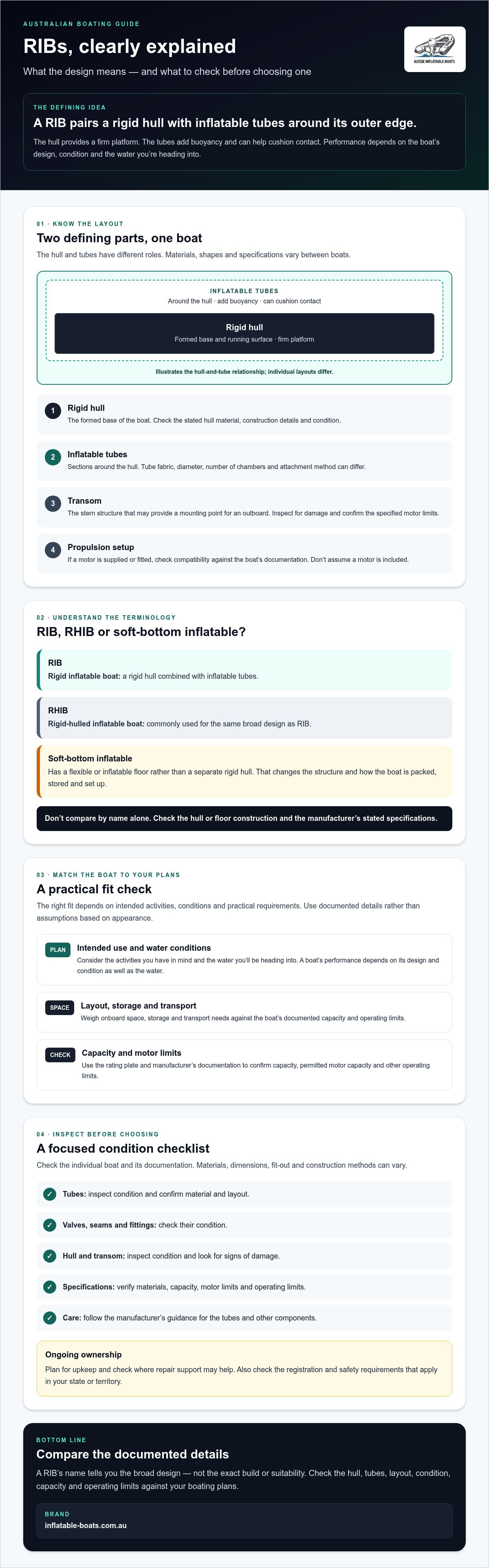
How to assess a RIB for your boating plans in Australia
Choose for the trips you’ll actually make, not a broad promise about what a boat can do. Use this checklist to compare specifications, transport needs and condition before committing. For a RIB, the manufacturer’s plate and documentation are key references, especially for capacity and motor limits.
- Define your use. Note where you plan to boat, how many people will usually come along, and what gear you’ll carry. Match these plans to the boat’s stated capacity and operating limits.
- Check the specifications. Confirm the documented length, weight, rated capacity and maximum motor specifications. Consider passengers and equipment when assessing the load, and don’t exceed the manufacturer’s limits.
- Plan transport and storage. Compare the boat’s dimensions and weight with your vehicle, trailer, launching arrangements and available storage. A rigid hull can make carrying and storing the boat less straightforward than with some inflatable designs.
- Confirm what’s included. Ask whether the sale includes a motor, accessories or other equipment. Don’t assume these are part of the package unless they’re listed in writing.
- Inspect condition and requirements. Look over the tubes, seams, valves, hull, transom and fittings for visible wear or damage. For a used boat, ask about its service history and previous repairs, then check current rules with the relevant state or territory authority.
Check the boat and its paperwork
Specifications should be clear and consistent across the rating plate, manufacturer’s documentation and sale information. If a capacity or motor limit is missing or unclear, ask the manufacturer or seller to confirm it before deciding. Also check which safety equipment is required for your vessel and planned waters. Australian registration, licensing and safety rules vary by jurisdiction, so verify current requirements with the relevant authority rather than relying on a general checklist.
During an inspection, look for visible damage and ask how any repairs were completed. A careful look won’t replace a professional assessment where one is needed, but it can help identify questions to resolve before use or purchase. Inflatable boat repairs are also part of longer-term ownership support if an issue is found.
To compare inflatable boat categories, browse the inflatable boat collections. Once you’ve narrowed down the type, explore inflatable boat options and compare each boat’s documented specifications with your checklist.
RIB ownership: care, repairs and your next step
Good upkeep starts with the boat’s materials and manufacturer instructions. Tube fabric, hull construction and fittings can call for different care, so don’t assume that a cleaner or repair method suitable for one boat will suit another. Follow the maker’s guidance for cleaning, drying, storage and maintenance.
Simple checks between outings
As part of your regular boat checks, look over the tubes, valves, seams, hull, transom and fittings. Watch for pressure loss, abrasion, loose components, visible seam damage or signs of impact to the hull. Rinse and dry the boat as directed, and store it in the way the manufacturer recommends. Before applying a cleaning product, adhesive or repair material, confirm it’s compatible with the boat’s materials.
Visual checks can help you spot changes, but they don’t replace an expert assessment. Persistent air loss, a faulty valve, damaged seams or concerns about the hull or transom warrant professional advice. Avoid relying on an improvised patch or repair if you’re unsure about the material, method or extent of the damage.
Know when to seek repair support
Inflatable Boats offers inflatable boat repairs and spare parts. If you’ve identified a fault or need a replacement part, share the boat’s details and describe the issue so the right information can be considered. You can contact the inflatable boat team about a repair or parts enquiry.
Care needs can vary, particularly with exposure to sun, salt water and storage conditions. Keep the manufacturer’s care instructions with your boat, and check the relevant guidance when a repair or cleaning question arises. For a RIB, regular attention to the tubes and rigid structure helps you notice concerns, while professional assessment can help clarify what action is appropriate.
Ready to compare options for your next outing? Explore inflatable boats and boating gear.
Choose your next boat with confidence
The right boat starts with the job you need it to do. A RIB combines a rigid hull and inflatable tubes, but its layout, materials and operating limits vary by model. Check the documented capacity, motor specifications, dimensions and condition, then weigh those details against your plans for storage, transport and upkeep.
No design is the best fit for every boater. Compare the practical trade-offs, follow the manufacturer’s care instructions and check current registration and safety requirements with your state or territory authority. Regular inspections can help you spot concerns, while professional repair support may be appropriate for persistent air loss, seam damage or structural faults.
Inflatable Boats sells inflatable boats, accessories and spare parts, and offers inflatable boat repairs. Explore inflatable boats and boating gear as you consider your options. With the right checks, you can make a more informed choice and look forward to getting out on the water.
Frequently Asked Questions
What does RIB stand for?
RIB stands for rigid inflatable boat. It describes a boat that combines a rigid hull with inflatable tubes fitted around it. You may also see RHIB, meaning rigid-hulled inflatable boat, used for the same general design. The abbreviation doesn’t specify the boat’s materials, layout, capacity or equipment, so check the manufacturer’s details for the particular vessel you’re considering.
What is the difference between a RIB and an inflatable boat?
A RIB has a rigid hull and inflatable tubes, while “inflatable boat” is a broader term that can also include soft-bottom designs. These may have a flexible or inflatable floor instead of a rigid hull. The construction affects practical considerations such as setup, storage and transport. Compare each boat’s dimensions, weight and specifications rather than assuming one design suits every outing.
Are RIBs safer than other inflatable boats?
No boat type is automatically safer in every situation. Safety depends on the specific boat’s condition, design, capacity, equipment and operating limits, as well as weather, water conditions and how it’s used. Check the manufacturer’s instructions, don’t exceed the stated capacity, and carry the safety equipment required for your location and trip. Confirm current requirements with the relevant Australian state or territory authority.
Can you use an outboard motor on a RIB?
Yes, an outboard can be used if the boat is designed and specified for one. Check the rating plate and manufacturer’s documentation for the maximum permitted motor capacity and any other operating limits. Confirm that the motor is compatible with the transom and boat setup. Don’t select a motor based on appearance or length alone, and check whether it’s included if you’re buying a boat.
How do you choose the right size RIB?
Choose a size that suits your usual passenger numbers, gear, boating plans, transport and storage. Check the boat’s documented length, weight and rated capacity, then make sure the combined load stays within the manufacturer’s limits. Consider launching and retrieval too. A larger boat may offer a different layout but could be harder to tow or store, so compare actual specifications with your setup.
How do you maintain a RIB?
Follow the manufacturer’s instructions for cleaning, rinsing, drying and storage, as suitable care depends on the boat’s materials. Check the tubes, valves, seams, hull, transom and fittings for pressure loss, wear, loose parts or visible damage. Confirm material compatibility before using cleaners or repair products. Persistent air loss, valve faults, seam damage or structural concerns should be assessed by a repair professional.
Do RIBs need to be registered in Australia?
A RIB may need registration in Australia, but requirements vary by state or territory and can depend on factors such as the vessel and its motor. Operator licensing and safety equipment rules are separate requirements and can also differ. Before using or buying a boat, check current registration, licensing and safety obligations with the relevant authority. Don’t rely on a single national rule of thumb.