
The Rugged Guide to Choosing Your First Inflatable Boat in 2026
Would you trust a backyard toy to carry your family ten kilometres offshore when the Australian sun is at its peak and the swell begins to rise? Choosing your first inflatable boat is a high-stakes decision because the margin for error on our coastal waters is razor thin. It's natural to feel concerned about the relentless UV index degrading your tubes or a hidden oyster lease puncturing your hull far from the nearest boat ramp. We understand that you're looking for more than just a weekend runabout; you're seeking a resilient, expedition-grade vessel that offers genuine peace of mind.
This guide promises to transform that uncertainty into master-level confidence by deconstructing the technical specifications of high-performance craft. You'll learn how to distinguish between standard PVC and heavy-duty Hypalon while matching the right floor type to your specific motor requirements. We'll examine the structural engineering that separates a professional-grade inflatable boat from a flimsy alternative so you can invest with total clarity. From hull design to long-term maintenance protocols, you're about to gain the expertise required to command the open water with authority.
Key Takeaways
- Identify the critical differences between recreational toys and expedition-grade vessels to ensure your craft can handle the unique demands of Australian coastal environments.
- Understand how the high Australian UV index affects fabric longevity and why choosing between PVC and Hypalon is a vital decision for long-term durability.
- Master the technical nuances of hull and floor designs to select an inflatable boat that provides the specific balance of portability and on-water stability you require.
- Learn the professional maintenance techniques and essential spare parts needed to protect your investment and maintain peak performance in remote areas.
What defines a high-quality inflatable boat for Australian conditions?
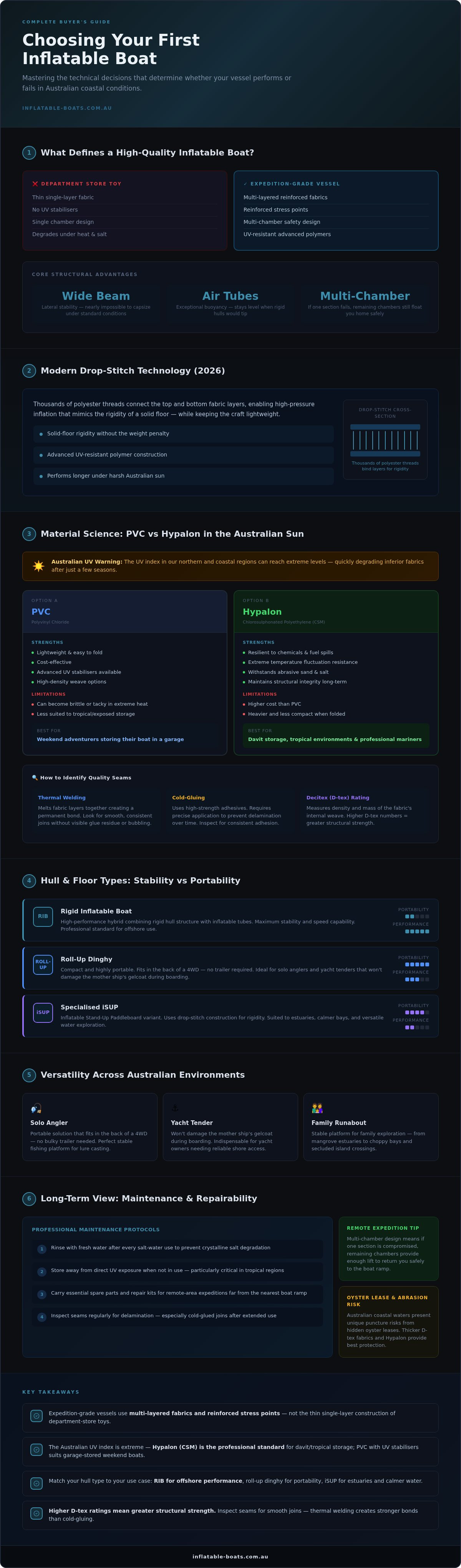
A genuine marine-grade vessel is a far cry from the thin-skinned inflatables found in department store toy aisles. In the demanding Australian maritime environment, the distinction lies in structural integrity and material density. High-quality craft are engineered to withstand abrasive salt air, jagged oyster leases, and the relentless heat of our coastal summers. This ruggedness comes from advanced inflatable boat construction and design, which prioritises safety through multi-layered fabrics and reinforced stress points.
The primary advantages of an inflatable boat centre on its exceptional buoyancy and stability. It stays level when others tip. Unlike traditional rigid hulls, the wide beam and air-filled tubes provide lateral stability that makes them nearly impossible to capsize in standard conditions. This makes them the ideal choice for Australian boaties using them as yacht tenders, stable fishing platforms, or versatile family runabouts. Whether you are looking at a compact roll-up dinghy, a high-performance Rigid Inflatable Boat (RIB), or a specialised iSUP, the focus remains on reliability far from the shore.
The evolution of inflatable watercraft technology
Recent advancements in maritime science have revolutionised what these boats can achieve. Modern 2026 models utilise sophisticated drop-stitch technology, where thousands of polyester threads connect the top and bottom layers of the fabric. This allows for high-pressure inflation that mimics the rigidity of a solid floor while maintaining the benefits of a lightweight craft. Safety is bolstered by multi-chamber designs. If one section is compromised, the remaining chambers provide enough lift to return you safely to the boat ramp. The shift from basic PVC to advanced UV-resistant polymers ensures these vessels don't just perform better; they last longer under the harsh Australian sun.
Versatility across different aquatic environments
The adaptability of these craft is what truly sets them apart. A well-chosen vessel is just as comfortable navigating shallow, mangrove-lined coastal estuaries as it is crossing a choppy bay to reach a secluded island. For yacht owners, they serve as indispensable tenders that won't damage the mother ship's gelcoat during boarding. For the solo angler, they offer a portable solution that fits in the back of a 4WD, removing the need for a bulky trailer. You can easily configure your boat for a quiet morning of lure casting or a lively afternoon of family exploration, making it a truly multi-purpose investment for any Australian water enthusiast.
Material science: PVC vs Hypalon in the Australian sun
The Australian sun is the ultimate test for any synthetic material. While a vessel might look sturdy in the showroom, the UV index in our northern and coastal regions can reach extreme levels that quickly degrade inferior fabrics. Choosing the right material for your inflatable boat isn't just about the initial price tag; it's about how that craft performs after five summers on the water. Standard fabrics can become brittle or tacky if they aren't engineered specifically for our climate. High-quality marine polymers are designed to resist this thermal breakdown, ensuring the tubes remain supple and airtight.
PVC (Polyvinyl Chloride) is the most common choice for recreational users. It's lightweight, easy to fold, and cost-effective. Modern PVC often features advanced UV stabilisers and high-density weaves that offer impressive resistance to tearing. In contrast, Hypalon is a synthetic rubber known as Chlorosulphonated Polyethylene (CSM). It's incredibly resilient to chemicals, fuel spills, and extreme temperature fluctuations. If you plan to leave your boat on a davit or in a tropical environment, Hypalon is the professional standard. Australian mariners often prefer it for its ability to withstand abrasive sand and salt without losing structural integrity.
Identifying quality seams is the final step in evaluating fabric science. Look for smooth, consistent joins without visible glue residue or bubbling. Thermal welding creates a permanent bond by melting the fabric layers together, while cold-gluing relies on high-strength adhesives that require precise application to prevent delamination over time. Decitex (D-tex) is a specific unit of measure that indicates the density and mass of the fabric's internal weave, with higher numbers representing greater structural strength.
Choosing the right fabric for your lifestyle
Weekend adventurers who store their boats in a garage will find PVC more than capable. It's easier to transport and clean after a day on the river. However, if your expeditions involve long-term exposure, the longevity of Hypalon justifies the higher investment. Consider your storage habits as much as your time on the water. Browsing high-quality inflatable boats helps clarify which material suits your specific needs.
Seam integrity and air retention
Thermally welded seams fuse material layers into a single piece, creating a bond stronger than the surrounding fabric. This is standard for high-end PVC. Cold-glued joins are used for Hypalon, requiring skilled craftsmanship for an airtight seal. Multi-chamber designs ensure that if one section is punctured, the others keep you afloat. Reinforced rubbing strakes provide vital armour against abrasive docks and jagged oyster rocks.
Analysing hull and floor types for stability and performance
The floor of your inflatable boat acts as its skeletal system. It dictates how the craft responds to engine torque and how it tracks through a messy coastal chop. While the tubes provide the necessary buoyancy, the floor determines the rigidity of the entire platform. Choosing the wrong floor type can lead to a "flexing" sensation at high speeds, which reduces fuel efficiency and compromises your control. For Australian boaties, the decision usually comes down to a trade-off between the ease of setup and the need for a rock-solid standing area.
Slat floors represent the peak of portability. These consist of individual timber or plastic planks held in place by fabric pockets. You can roll the boat up without removing the floor, making them ideal for short-distance yacht tenders or quick lake explorations. However, they lack a keel, which means they tend to skid during tight turns. If you require more performance without the weight of metal, air deck floors are the modern solution. These use high-pressure drop-stitch technology to create a surface that feels nearly as hard as a board but remains light enough for one person to carry.
For those prioritising maximum stability, aluminium or timber panels are the superior choice. These interlocking sections create a completely flat, rigid deck. This is essential for serious fishing where you need to stand securely while casting or landing a heavy catch. While they take longer to assemble and add significant weight to the package, the increase in structural integrity is undeniable. They allow the hull to maintain its shape under pressure, ensuring a smoother ride in open water.
Rigid Inflatable Boats (RIBs) vs Soft Bottoms
A RIB is a hybrid vessel featuring a solid fibreglass or aluminium V-hull surrounded by inflatable tubes. This design offers the best of both worlds: the unsinkable nature of an inflatable and the high-speed tracking of a traditional tinny. They cut through waves with precision and are the standard for professional rescue and patrol teams. The trade-off is storage. Unlike soft-bottomed boats, a RIB cannot be folded into a bag. It requires a dedicated trailer or a large set of davits on a parent vessel, making it a permanent commitment to a specific storage solution.
Matching floor type to your propulsion
Your choice of motor should directly influence your floor selection. Small electric motors or 2hp outboards work perfectly with slat or air floors. However, if you're mounting a 15hp or 20hp engine, the torque will cause a soft floor to buckle or "hook" during acceleration. Hard floors or high-pressure air decks are mandatory for larger engines to ensure the power is transferred into forward motion rather than hull deformation. Always check your vehicle's roof-rack or towing capacity before opting for heavy aluminium panels, as the extra mass can quickly add up during a long coastal road trip.
Essential accessories and safety gear for every expedition
Equipping your inflatable boat requires a strategic approach that balances utility with the specific needs of a soft-sided vessel. Unlike rigid boats, your choice of gear must account for weight distribution and the risk of abrasion against the tubes. Selecting the right pump is your first priority. While a manual high-volume foot pump is reliable and requires no power, an electric high-pressure pump ensures your air deck or tubes reach the exact PSI recommended by the manufacturer. This precision is vital for maintaining the boat's intended hull shape and performance characteristics on the water.
Propulsion and anchoring also require specialised consideration. Oars should be lightweight, using ergonomic grips and durable aluminium shafts to reduce fatigue during long-distance rowing. When it comes to staying put, avoid heavy fluke anchors with sharp edges that could gouge the fabric. Mushroom or rubber-coated grapnel anchors are the standard for inflatables. Finally, always verify your outboard motor compatibility. The transom is the most stressed part of the craft, so staying within the maximum weight and horsepower limits is non-negotiable for both safety and transom longevity.
The critical role of pressure management
A reliable pressure gauge is the most important tool in your kit. Air expands when heated, meaning a boat inflated to the correct pressure in the cool of the morning can become dangerously over-pressurised by midday under the Australian sun. This puts immense strain on the seams and internal baffles. High-quality vessels feature integrated over-pressure valves that automatically bleed off excess air, but manual monitoring remains essential. Maintaining the correct PSI ensures the boat remains rigid enough to handle swell without overstressing the material.
Safety and navigation essentials
Comfort and safety go hand-in-hand during an expedition. Marine-grade seating should provide support without adding excessive weight or creating pressure points on the floor. Dedicated storage solutions, such as waterproof under-seat pouches and bow bags, keep your gear dry and secure while improving the boat's trim. Your safety kit must include Australian Standard-approved life jackets, a bailer bucket, and a comprehensive repair kit containing fabric patches and adhesive. You can find a complete range of inflatable boat accessories to ensure you are fully prepared for your next offshore journey.
The long-term view: Maintenance, spare parts, and repairability
Owning a high-performance inflatable boat is a commitment to precision maintenance that begins the moment you leave the boat ramp. While these vessels are engineered for rugged environments, their longevity depends on your willingness to treat them as precision equipment rather than disposable toys. A proactive approach to care ensures that your craft remains airtight and structurally sound for decades. This lifecycle management is what separates a seasoned mariner from a casual hobbyist. By understanding the mechanics of your boat, you gain the freedom to explore remote coastlines with total peace of mind.
A comprehensive inventory of specialised spare parts is the backbone of any serious expedition. Components such as high-pressure valves, reinforced handles, and stainless steel D-rings are subject to constant stress and environmental wear. Keeping these parts on hand allows for immediate replacements before a minor issue becomes a critical failure. We position Inflatable Boats as your national partner in this journey, providing the technical expertise and inventory required to keep your vessel in peak condition. Whether you are navigating tropical estuaries or southern bays, having access to the right components is vital.
Knowing when to perform a DIY fix and when to seek professional intervention is a critical skill. Small pinprick punctures from fish hooks or stray tackle are easily managed with a high-quality field repair kit and the correct adhesive for your fabric type. However, complex issues like transom delamination or significant seam failures require the controlled environment of a professional workshop. Professional repair services ensure that the structural integrity of the hull is never compromised, protecting both your safety and your financial investment.
Preventative care for the modern mariner
Salt is the silent enemy of maritime equipment. After every outing, a thorough rinse with fresh water is mandatory to prevent salt crystals from abrading the fabric or seizing the valves. Mould can also take hold in damp folds, so ensuring the boat is completely dry before storage is essential. UV protectant sprays are highly effective for both PVC and Hypalon, acting as a sacrificial layer against the harsh Australian sun. When storing your boat for long periods, avoid tight folds that create permanent creases. A loose roll in a cool, dry area protected from rodents will preserve the fabric's flexibility.
The specialist advantage
Access to genuine replacement parts does more than just keep you on the water; it directly protects your boat's resale value. A well-documented history of professional maintenance and the use of authentic components signals to future buyers that the craft has been cared for by experts. This technical support provides a safety net for your adventures, ensuring you always have a knowledgeable mentor to turn to. If you are ready to invest in a vessel built for the long haul, explore our range of high-quality inflatable boats and professional repair services to start your journey with confidence.
Command the open water with confidence
Selecting your first inflatable boat is the beginning of a new chapter in coastal exploration. By mastering the technical differences between PVC and Hypalon fabrics and matching your hull design to your propulsion needs, you've laid the foundation for a safe and successful maritime experience. Remember that the longevity of your craft is defined by the quality of its construction and your commitment to preventative care. Access to professional repair services and a comprehensive inventory of spare parts ensures your vessel remains an asset for years to come.
Our team of seasoned Australian mariners is ready to provide the expert advice and technical support you need to make an informed investment. We offer a national repair service and a specialised range of components for all major brands, ensuring you're never left stranded. Browse our expedition-ready inflatable boats and accessories today to find a craft engineered for the unique challenges of Australian waters. The freedom of the horizon is waiting for you; it's time to take the helm and start your next great adventure.
Frequently Asked Questions
Are inflatable boats safe for use in the ocean?
Inflatable boats are exceptionally safe for ocean use due to their low centre of gravity and multi-chamber construction. These vessels are nearly impossible to capsize because the air-filled tubes act as massive buoyancy tanks that provide lateral stability. For coastal expeditions, ensure your craft has a high-density hull and is rated for the expected sea conditions. Professional-grade models are designed to remain buoyant even if one chamber is compromised, providing a level of safety that many rigid boats cannot match.
How long does a high-quality inflatable boat typically last in Australia?
The lifespan of an inflatable boat in Australia depends heavily on the fabric type and UV exposure. A high-quality PVC vessel typically lasts between five to ten years with proper care. In contrast, a Hypalon boat can remain operational for twenty years or more due to its superior resistance to chemicals and sunlight. Regular maintenance, such as using UV protectant sprays and rinsing salt residue, is essential to maximise the return on your investment in our harsh climate.
Can I leave my inflatable boat inflated all year round?
You can leave your boat inflated, but you must monitor the internal pressure as temperatures fluctuate. Air expands in the heat, which can overstress the seams if the boat is left in the sun for extended periods. It's best to store the craft in a shaded, well-ventilated area or use a fitted cover to prevent UV degradation. If you're storing it on a trailer or davits, ensure the hull is properly supported to avoid creating permanent pressure points.
What is the best way to clean and maintain my inflatable boat?
Maintenance starts with a thorough fresh water rinse after every salt water outing. Use a mild, biodegradable soap and a soft brush to remove grime, as harsh chemicals can damage the fabric's protective coating. Once dry, applying a marine-grade UV protectant helps prevent the material from becoming brittle. Always check the valves for debris and ensure the floor panels are free from sand, which can act like sandpaper against the tubes during transit or storage.
Do inflatable boats require a boat licence in Australia?
Licensing requirements vary between Australian states and territories, but they generally depend on the motor's power. In most regions, a licence is mandatory if your boat is fitted with an engine exceeding 4hp or 6hp. It's also important to check if your vessel requires registration with your local maritime authority. Always carry the necessary safety equipment, such as life jackets and a bailing bucket, to remain compliant with national maritime safety standards regardless of your motor size.
What happens if I get a puncture while out on the water?
Modern marine-grade boats are built with multiple independent air chambers, so a single puncture won't sink the vessel. If you notice a leak, move your weight to the opposite side and head slowly back to shore. Most high-quality kits include a field repair set for temporary fixes. For permanent solutions, our national repair service provides professional restoration to ensure the patch is as strong as the original fabric, maintaining the boat's long-term structural integrity and safety.
Can I attach a petrol motor to any inflatable boat?
Petrol motors can only be attached to boats featuring a reinforced transom. Every vessel has a specific maximum horsepower and weight rating that you must never exceed. Attaching an oversized motor can lead to transom failure or cause the boat to "hook" dangerously at high speeds. For boats without a built-in transom, small electric trolling motors are often a better choice, provided you use a compatible mounting bracket designed specifically for inflatable hulls and tube diameters.