
How to protect tubes from fishing hooks while fishing
A bare fishing hook can turn a good day on the water into a repair job. A practical way to protect tubes from fishing hooks is to cover each barb with a short piece of tubing that stays in place when turned upside down but is still easy to remove. This simple barrier helps keep sharp points away from inflatable boat tubes.
If you fish from an inflatable boat, keeping hooks under control matters when casting, changing tackle or stowing gear. A little preparation can reduce the risk of accidental punctures without disrupting your time on the water.
This guide explains how to make and fit a basic hook guard, handle hooks around the boat and spot possible tube damage. It also covers practical accessories and when a repair may be the right next step, so you can focus on fishing with greater confidence.
Key Takeaways
- Use a simple hook guard to put a barrier between sharp barbs and inflatable boat tubes.
- Keep hooks and tackle organised so they’re less likely to catch against the boat during fishing.
- Look over the tube surfaces for signs of damage as part of your fishing routine.
- Choose inflatable boat accessories that support safer, more orderly gear handling on the water.
- If a tube is punctured or damaged, inflatable boat repairs can help restore it for use.
How to protect tubes from fishing hooks
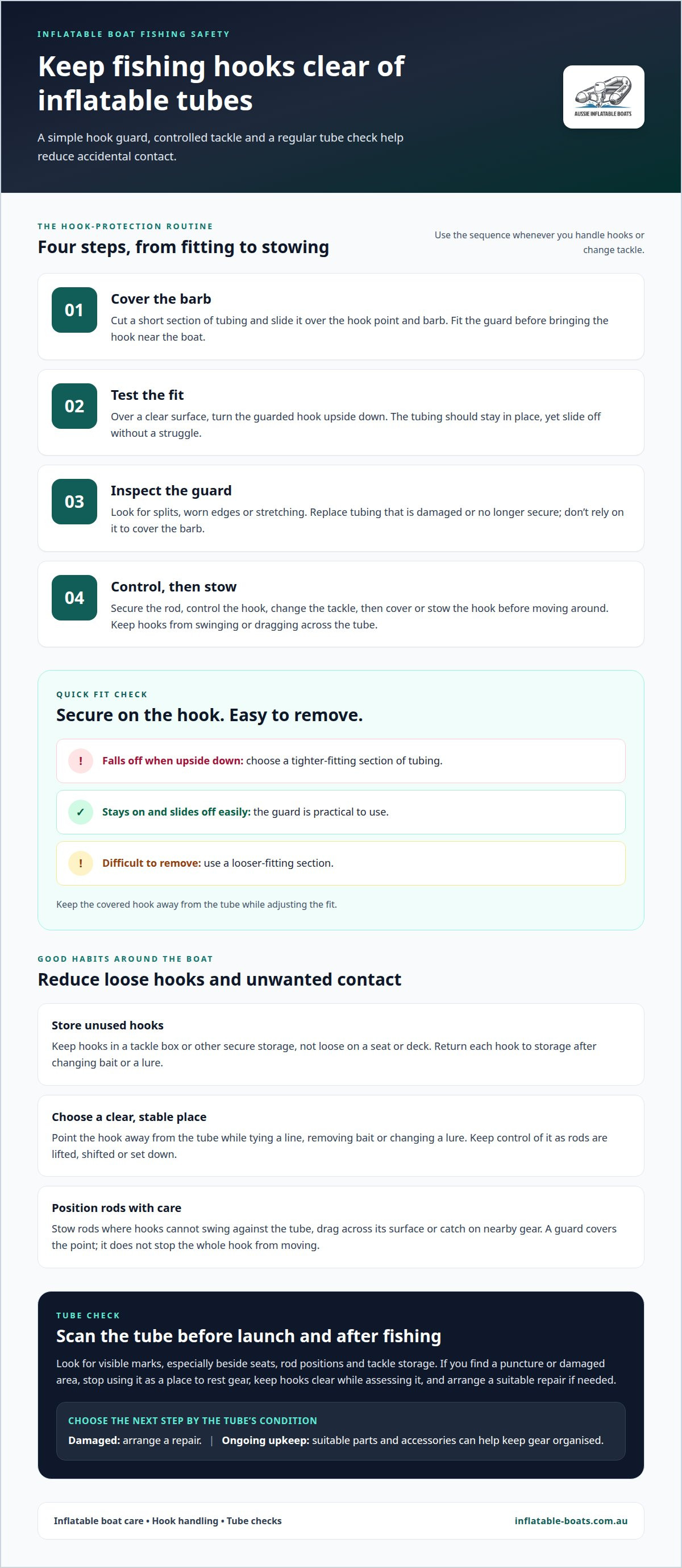
A short tubing guard over a hook’s barb creates a barrier between sharp metal and an inflatable boat tube. To make one, cut tubing into short sections that cover the barb. Sourcing durable plastic tubing from specialist suppliers such as Abbey Extrusions makes it straightforward to find the right diameter and wall thickness. Each section should stay on when turned upside down but remain loose enough to remove. This is a practical way to protect tubes from fishing hooks without making tackle difficult to handle.
Fit the guard before bringing a hook near the boat. Slide the tubing over the point and barb, then turn the hook upside down over a clear surface. If the guard falls off, choose a tighter-fitting section. If it is difficult to remove, use a looser fit. Keep the covered hook away from the tube while adjusting it.
Check each guard before use. Look for splits, worn edges or stretching that could let it slip off. Replace a damaged guard rather than relying on it to cover the barb. If a hook catches on clothing or tackle as you move it, stop and make sure the tubing still covers the point.
Organised tackle adds another layer of protection. Keep unused hooks in a tackle box or other secure storage, not loose on a seat or deck. Return each hook to storage after changing bait or a lure. When setting a rod down, position the hook so it cannot swing against the tube as the boat moves.
Choose a clear, stable place to handle hooks. Point the hook away from the tube while tying a line, removing bait or changing a lure. Follow a simple sequence: secure the rod, control the hook, change the tackle, then cover or stow the hook before moving around. This helps prevent an exposed point from brushing against the inflatable surface during routine handling.
- Cover the barb: cut a short tubing section that shields the sharp point.
- Test the fit: turn the guarded hook upside down to see whether the cover stays in place.
- Keep removal practical: make sure you can slide the guard off without a struggle.
- Inspect and replace: discard tubing that is split, stretched or no longer secure.
Take care when moving rods, too. A hook can swing as a rod is lifted, shifted or set down. Keep the hook under control throughout each movement, and avoid laying it against the tube even if the barb is covered. The guard covers the point, but it does not keep the whole hook still. Stow rods where hooks cannot drag across the inflatable surface or catch on nearby gear.
Before launching and after fishing, scan the tube surfaces for visible marks. Check areas beside seats, rod positions and tackle storage, where hooks may have been handled. If you spot a puncture or damaged area, stop using it as a place to rest gear. Keep hooks clear while assessing the damage, and arrange a suitable repair if the tube needs attention.
No guard replaces careful handling. A secure cover, organised tackle and controlled rod movements all help reduce contact between hooks and tubes. Make these steps part of every tackle change and repeat them when packing up. A consistent routine helps protect the boat and keeps fishing gear ready for the next cast.
Inflatable Boats
Inflatable Boats offers inflatable boat accessories, spare parts and repair services to help maintain your vessel. If a fishing hook has punctured or damaged a tube, an inflatable boat repair can address the damage and help restore the boat. Suitable accessories can also help keep gear organised on the water. Choose the next step based on the tube’s condition: repair damaged areas, or use parts and accessories for ongoing upkeep.
For help with a damaged inflatable boat or related parts, contact Inflatable Boats.
Make tube protection part of every fishing trip
Make hook protection part of your regular boat preparation, not an afterthought. When your tackle or fishing setup changes, consider how you will keep hooks controlled while casting, moving around and packing up. A consistent routine makes it easier to spot hazards before they reach the tube and keeps your attention on the water.
Knowing how to protect tubes from fishing hooks is also useful when choosing replacement parts or planning a repair after accidental damage. The right next step depends on the condition of the tube and what support you need for your inflatable boat. Inflatable Boats can help with boat-related needs, accessories and spare parts.
For assistance with your inflatable boat, contact Inflatable Boats. Keep your gear organised, handle hooks deliberately and head out ready for the next cast.