
2026 Guide: Best Lightweight Inflatable Dinghies
If you are still wrestling a sixty-kilogram fibreglass tender onto your davits every time you want to hit the shore, you are limiting your reach across the Australian coastline. Most mariners accept this physical strain because they believe a lighter craft cannot survive the intense UV or the sharp oyster rocks found in a typical tidal creek. It is a common, exhausting trade-off between a boat that is easy to manage and one that offers genuine structural longevity.
This 2026 guide will show you how to find a lightweight inflatable dinghy that balances extreme portability with elite maritime performance. We will explore how modern engineering has brought bare-hull weights down to between 12kg and 35kg; allowing one person to launch a vessel without risk of injury or equipment damage. You will learn about the structural advantages of high-pressure drop-stitch floors and the resilience of advanced fabric technologies. We are going to break down payload capacities and material science so you can invest in a portable tender that handles your gear, your passengers, and the elements with quiet confidence.
Key Takeaways
- Learn why the sub-40kg benchmark is the gold standard for solo launching and how a lightweight inflatable dinghy enhances your mobility on the water.
- Discover the technical differences between thermo-welded PVC and Hypalon to ensure your hull survives the intense Australian UV and abrasive shorelines.
- Understand how high-pressure drop-stitch floor designs provide rigid-hull performance without the cumbersome weight of traditional timber or aluminium slats.
- Master the art of calculating real-world payloads, ensuring your safety gear and passengers don't exceed your craft's engineering limits.
- Recognise the long-term value of choosing a specialist with a national inventory of spare parts to keep your vessel in peak condition for years.
Defining the Lightweight Inflatable Dinghy Standard
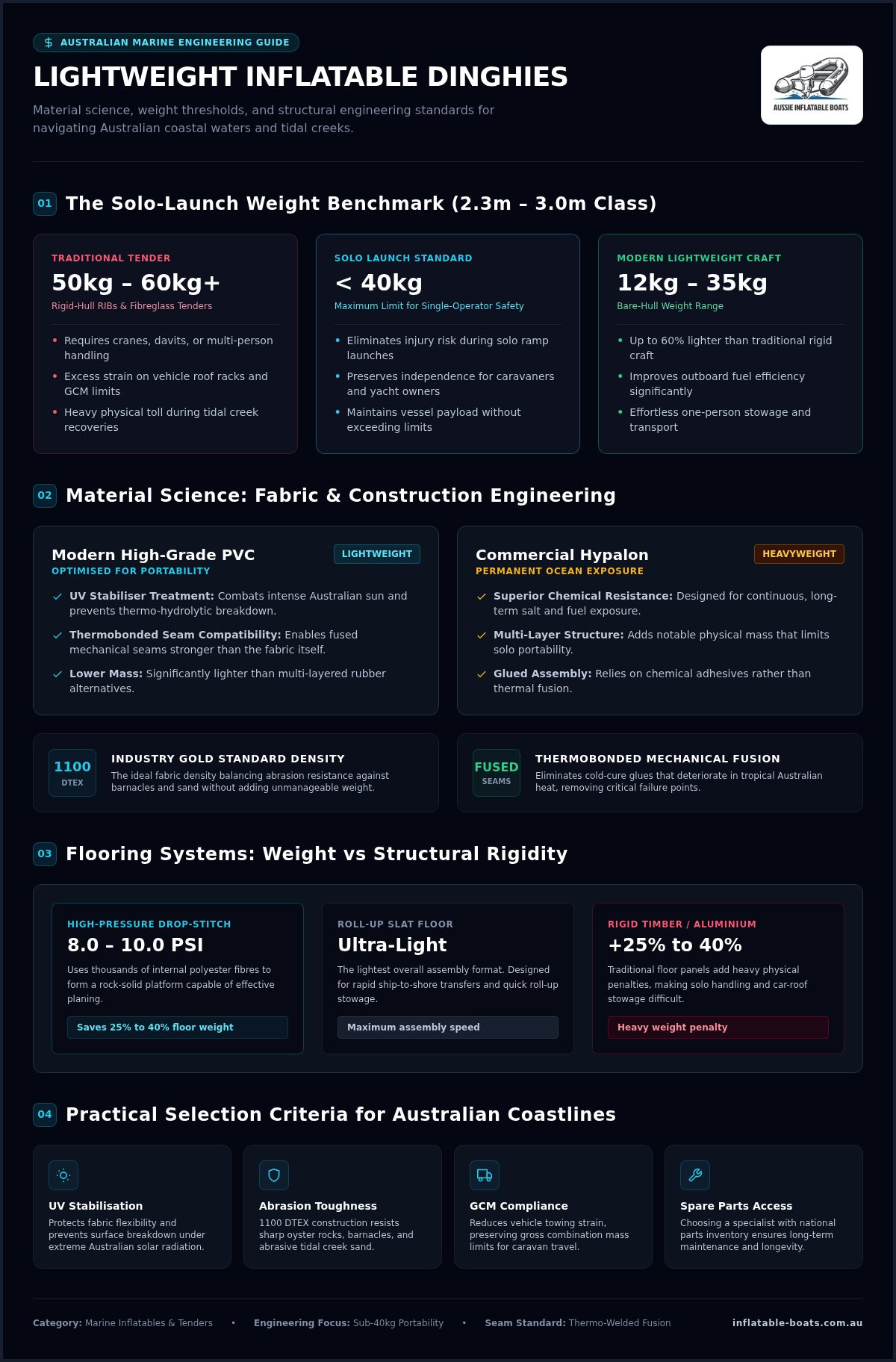
In the maritime world, the term "lightweight" is often used loosely, but for the serious Australian adventurer, it represents a specific engineering threshold. A true lightweight inflatable dinghy is defined by its portability; it's a craft that a single person can launch, recover, and stow without needing a crane or a second set of hands. In the standard 2.3 metre to 3.0 metre class, the benchmark for a modern bare-hull weight now sits between 12kg and 35kg. This is a significant reduction compared to traditional rigid-hull RIBs of the same size, which frequently exceed 50kg or 60kg.
Why Weight Matters for Australian Boaters
The physical toll of manhandling a heavy tender on a hot afternoon at the boat ramp cannot be overstated. For caravaners and yacht owners, every kilogram counts. A lighter boat means less strain on your back, your roof racks, and your vessel's davits. Reducing weight also improves the fuel efficiency of your outboard motor and ensures your towing vehicle stays within its legal GCM (Gross Combination Mass) limits. For solo mariners or elderly boaties, this weight reduction isn't just a convenience; it's the key to maintaining independence on the water. It allows you to explore remote reaches and sandy bays that would be inaccessible with a heavier, more cumbersome vessel.
The Lightweight vs. Durability Paradox
Achieving a low weight often raises concerns about structural integrity, especially when facing sharp oyster rocks or debris. Modern maritime engineering solves this through high-performance materials and innovative floor designs. High-pressure air floors, or drop-stitch decks, are the primary weight-saving tool. These floors operate at pressures between 8.0 and 10.0 PSI, providing a rigid platform that allows the boat to plane effectively without the 25% to 40% weight penalty of timber or aluminium slats.
However, there is a distinct difference between a high-quality lightweight craft and a "toy" inflatable. Professional-grade boats utilise high-decitex fabrics and often feature thermo-welded seams. These technologies ensure the boat remains resilient against the harsh Australian UV and physical abrasion. Cheap alternatives often rely on thin, single-layer PVC and cold-cure glues that deteriorate rapidly in tropical heat. A genuine utility craft maintains its shape and safety standards even when pushed to its payload limits, providing peace of mind for those venturing far from the shore. This reliability is essential when navigating the challenging environments of the Australian coastline.
Material Science: Fabrics and Floor Designs
Choosing the right material is a balancing act between mass and durability. For a lightweight inflatable dinghy, PVC is often the superior choice because it is naturally lighter than Hypalon. While Hypalon offers exceptional UV resistance, its multi-layered construction adds significant weight that can hinder portability. Modern high-grade PVC is treated with advanced UV stabilisers to combat the intense Australian sun. This ensures the fabric remains supple and resists the thermo-hydrolytic breakdown common in tropical climates, providing a reliable service life without the heavy weight penalty of older materials.
Fabric Tech: PVC, Hypalon, and Coatings
The strength of the fabric is measured in decitex (DTEX), with 1100 DTEX serving as the industry gold standard. It provides the necessary abrasion resistance to survive contact with barnacles or sand without making the boat too heavy to carry. Thermobonded seams are another critical innovation. By fusing the material layers together, manufacturers create a bond stronger than the fabric itself while eliminating the extra weight and failure points of chemical glues. This mechanical fusion prevents seam failure in high heat. If you are unsure which material suits your specific environment, you can browse our range of technical specifications to compare fabric weights and durability ratings.
- PVC: Lightweight and compatible with high-strength thermobonded seams.
- Hypalon: Heavier but offers superior chemical and UV resistance for permanent ocean exposure.
- 1100 DTEX: The ideal density for balancing puncture resistance with manageable weight.
Floor Systems: The Key to Portability
The floor design is often the heaviest component of any inflatable. Slat floors remain the lightest option, perfect for short ship-to-shore transfers where assembly speed is the priority. However, for those seeking performance, air-deck floors are the standard. Drop Stitch technology represents the ultimate revolution in inflatable flooring, using thousands of internal fibres to create a rock-solid, high-pressure deck that delivers rigid-hull performance at a fraction of the weight. These air-decks provide the tracking and stability of a rigid floor while weighing up to 40% less than timber or aluminium alternatives.
For mariners who frequent rocky shorelines or oyster leases, ultralight aluminium hulls offer a middle ground. While a RIB is inherently heavier than a roll-up, a single-deck aluminium hull provides immense impact resistance for a relatively small weight gain. This choice is often worth the extra kilos for those exploring rugged coastlines where durability is non-negotiable. The goal is always to match the hull material to the specific hazards of your local waters.
The Best Lightweight Dinghy Categories for 2026
Selecting the right vessel depends entirely on your primary mission. In 2026, the market has branched into four distinct specialisations that cater to the unique demands of the Australian coastline. Whether you are navigating a crowded marina or exploring a remote estuary, there is a configuration designed to minimise weight without sacrificing safety. True portability is found in matching the boat's design to your specific storage and performance requirements.
Roll-Up Tenders for Yachties
For the coastal cruiser, deck space is a premium commodity. The ultra-lightweight roll-up is the ultimate solution for those who need to stow their gear in a small locker or a vehicle boot. These boats often feature slatted floors that allow for rapid inflation and deflation, making them ideal for quick ship-to-shore duties in calm bays. While they aren't designed for high-speed offshore transits, their compact footprint is unbeatable. If you are just starting your journey, The Rugged Guide to Choosing Your First Inflatable Boat provides deeper technical insights into these versatile entry-level models. Their simplicity ensures you spend less time on assembly and more time exploring.
Air-Deck Dinghies for Caravaners
Caravaners often face the challenge of roof-topping a boat or fitting it inside a packed 4WD. This is where the high-performance air-deck shines. By utilising a high-pressure drop-stitch floor, these models offer the rigid tracking required to reach a plane even with a modest 5hp or 6hp outboard. A 2.3 metre model is perfect for a solo explorer, while a 3.0 metre version provides the necessary payload for a couple and their gear. Because the entire craft is inflatable, it can be folded down to a fraction of its size, eliminating the need for a dedicated trailer. This lightweight inflatable dinghy class is the current sweet spot for those who demand both speed and portability on the road.
Lightweight RIBs and Fishing Specialities
If your setup includes davits or a trailer, a lightweight RIB with an aluminium hull offers maximum stability. These vessels track better in a chop and provide a solid platform for standing, which is a significant advantage in open water. For the keen angler, specialised fishing inflatables now feature reinforced tube tops and integrated mounting points for rod holders. These setups allow you to reach secluded fishing spots that are too shallow for traditional tinnies. By focusing on these specific categories, you can ensure your choice aligns with your lifestyle and the environmental conditions of your local waters.
Practical Selection Criteria for Australian Waters
Selecting a vessel involves more than just checking a spec sheet for the lowest number. You must account for the real-world payload to ensure safety when you are several nautical miles from the ramp. A lightweight inflatable dinghy might weigh only 20kg, but its performance changes once you add an 80kg passenger, a 12kg fuel tank, and 10kg of safety gear. Across the country, maritime regulations regarding tender exemptions vary slightly between jurisdictions. Generally, to remain exempt from registration, your craft must stay within a specific radius of the parent vessel and be used strictly for ship-to-shore duties. Always verify local requirements, especially if your motor exceeds 4hp or 3.0kW, as this often triggers mandatory registration and licensing.
Stability in a light boat comes from tube diameter. Look for over-sized tubes, typically 40cm or larger, which provide a higher displacement and better spray protection. These larger tubes act as a natural fender against your yacht's hull and keep the cockpit dry when the afternoon sea breeze kicks up a chop. Safety gear is non-negotiable; ensure your craft has enough internal D-rings to secure life jackets, an anchor, and a bailer bucket without cluttering the floor space.
Matching Motors to Lightweight Hulls
The rise of portable electric outboards has revolutionised the ultralight category. Units weighing under 7kg are a perfect match for a 15kg roll-up boat. If you prefer petrol, stay within the manufacturer's maximum horsepower rating. Over-powering a light hull leads to "porpoising," where the bow bounces uncontrollably, or worse, transom failure. Proper weight distribution is the key; sit further forward or use a tiller extension to keep the bow down and the hull on a plane. You can shop our range of compatible accessories to find the right motor mounts and seating solutions for your setup.
UV Protection and Storage
The Australian sun is the primary enemy of inflatable fabrics. UV radiation can cause the polyurethane glues in cheaper boats to fail within three years. Investing in a high-quality boat cover or "chaps" is the most effective way to double the life of your investment. Maintenance is equally vital. Salt crystallisation acts like sandpaper on fabric seams, so a fresh-water rinse after every outing is essential. Finally, manage your air pressure. In the midday heat, air expands rapidly. Buoyancy tubes that were perfect at 6:00 am can reach dangerous pressures by noon. Ensure your boat features over-pressure release valves, which automatically vent excess air to prevent tube rupture in the heat.
Finding Your Craft at Inflatable Boats
Selecting a lightweight inflatable dinghy is an investment in your freedom on the water. A generalist marine store might sell you a boat, but a specialist understands the intricate nuances of maritime construction and material science. At Inflatable Boats, we focus on the engineering details that ensure your vessel survives the transition from a hot car boot to a choppy bay. Our national inventory provides more than just the craft; it offers a vital lifeline of spare parts and technical support across Australia. This ensures that your investment remains a high-performance asset rather than a short-term convenience.
Beyond the Boat: Essential Accessories
A high-quality boat is only as good as the equipment that supports its operation. To achieve the 8.0 to 10.0 PSI required for a rigid air-deck floor, you need high-volume, ergonomic pumps that won't fail when you are miles from the nearest town. Similarly, having a dedicated repair kit and spare valves on hand is essential for any serious expedition into the mangroves or across rocky shorelines. These items aren't just optional extras; they are the must-have components that ensure your safety and convenience. You can browse our full range of technical gear and hardware in our Collections to round out your expedition kit.
The Inflatable Boats Advantage
We position ourselves as a knowledgeable mentor for your outdoor exploration. Our expertise extends far beyond the initial sale to include professional repair and restoration services, which can add decades to your boat's lifespan. Whether it is a minor puncture from an oyster rock or a complex valve replacement, our team ensures your equipment remains in peak condition. This commitment to longevity is what separates a professional utility craft from a disposable toy. When you choose us, you are gaining a partner dedicated to your success and safety in rugged environments. We advocate for a specific standard of quality that respects the unpredictable nature of the open water.
Before you make your final decision, run through this checklist to ensure your craft is ready for the Australian coast:
- Verify that the boat features thermo-welded seams for maximum heat resistance.
- Ensure the floor is a high-pressure drop-stitch design capable of reaching 10 PSI.
- Check for integrated over-pressure release valves to protect the tubes in the midday sun.
- Confirm the availability of a national network for spare parts and professional repairs.
Explore our range of lightweight inflatable dinghies today and prepare for your next Australian adventure with the quiet confidence of a seasoned mariner.
Equip Your Next Coastal Expedition
Finding the right balance between a low bare-hull weight and structural integrity is the key to a successful tender experience. By prioritising high-pressure air floors and thermo-welded fabrics, you ensure your craft survives the harsh Australian UV while remaining light enough for solo launching. A well-chosen lightweight inflatable dinghy transforms the way you interact with the water, removing the physical barriers to exploration and allowing you to reach secluded bays with ease.
We don't just provide equipment; we advocate for a standard of quality that keeps you safe in rugged environments. At Inflatable Boats, we back every vessel with specialist maritime expertise and an extensive spare parts inventory to ensure long-term value. Our professional repair services are available nationwide, giving you the peace of mind that comes from knowing expert support is always within reach. Whether you are a solo caravaner or a seasoned yachtie, the right gear makes the difference between a struggle and a discovery.
Browse our collection of lightweight inflatable dinghies to find a craft that matches your adventurous spirit. The open water is waiting; make sure you have the reliable equipment needed to master the elements and enjoy every moment of your journey.
Frequently Asked Questions
What is the lightest type of inflatable dinghy floor?
Slat floors are the lightest option available for a lightweight inflatable dinghy, as they use minimal material to provide basic support. However, many mariners prefer high-pressure air-deck floors, which use drop-stitch technology to provide structural rigidity at a fraction of the weight of timber or aluminium. While slats are excellent for short ship-to-shore transfers, an air-deck offers superior tracking and planing capabilities without making the boat difficult for one person to carry.
Can I carry a lightweight inflatable dinghy on my car roof?
Yes, you can safely carry an inflatable craft on your car roof, provided you stay within your vehicle's roof-loading limits. Most lightweight models weigh between 15kg and 35kg, making them easy to lift onto standard racks. It's essential to use wide cam-buckle straps rather than thin ropes to prevent fabric damage. Always transport the boat upside down to stop it from catching wind or collecting rainwater, which could dangerously increase the load weight while driving.
How much weight can a small 2.3m inflatable dinghy safely carry?
A standard 2.3m lightweight inflatable dinghy typically has a payload capacity of approximately 300kg to 350kg. This capacity accounts for two adults and a small amount of gear or a single operator with an outboard and expedition supplies. You must always check the manufacturer's compliance plate, as exceeding these limits compromises freeboard and stability. Distributing the weight evenly across the floor is vital to maintain the boat's trim and ensure safe handling in tidal currents.
Is PVC durable enough for the Australian sun?
Modern high-grade PVC is specifically engineered with UV stabilisers to withstand the intense Australian sun. High-quality vessels often feature thermo-welded seams, which fuse the material together to prevent the glue failure common in tropical heat. While PVC is highly durable, we recommend using a boat cover or UV-protective chaps when storing your craft on davits. This simple maintenance step prevents fabric degradation and ensures your boat remains supple and reliable for many years of exploration.
What size outboard motor do I need for a lightweight dinghy?
For most lightweight hulls, an outboard motor between 2hp and 6hp provides the ideal balance of power and portability. A 2.3m craft will often reach a plane with a 4hp engine if the weight is distributed correctly. Alternatively, many Australian boaters are switching to 1kW electric outboards, which offer silent operation and eliminate the need to carry heavy petrol tanks. Never exceed the maximum horsepower rating stated on your boat's transom plate to avoid structural damage.
How do I store my inflatable dinghy to prevent damage?
Proper storage starts with a thorough fresh-water rinse to remove salt crystals that can abrade the fabric. Ensure the boat is completely dry before folding it to prevent mould and mildew growth. If you are storing it inflated, release a small amount of air to allow for expansion in the heat. Store your boat in a cool, shaded area away from sharp objects and rodents. Using a dedicated storage bag protects the valves and fabric from accidental punctures.
What should I look for in a lightweight dinghy repair kit?
A comprehensive repair kit must include fabric patches that match your boat's material, a high-quality marine-grade adhesive, and a valve tightening tool. It's also wise to carry a spare set of valve inserts and an over-pressure release valve if your boat uses them. We provide professional repair services for complex structural issues, but a well-stocked kit allows you to handle minor punctures on the go. Always ensure your adhesive is fresh, as older glues often lose their bonding strength.
Are lightweight inflatable boats stable in choppy water?
Lightweight inflatables are remarkably stable in chop due to their large buoyancy tubes and low centre of gravity. The air-filled tubes act as shock absorbers, providing a more forgiving ride than a rigid tinnie. However, because they are light, they can be affected by windage when unladen. Choosing a model with over-sized tubes and an inflatable keel or catamaran hull design will significantly improve tracking and stability when navigating the unpredictable waters of the Australian coastline.