
Where to Sit and What to Try for Seasickness on a Small Boat
Seasickness isn’t just caused by rough water. It can start when your eyes and inner ears register the boat’s movement differently. Knowing how to deal with seasickness on a small boat means making practical adjustments early, from choosing where to sit to keeping your gaze on the horizon.
If you’ve felt queasy on the water, you’re not alone, and you don’t have to wait for symptoms to build before acting. A steady position, fresh air and a light meal may help you feel more comfortable. Reading, looking at screens and eating heavy food can make nausea harder to manage.
This guide explains what causes motion sickness and how to choose a steadier spot, where to direct your eyes and what to eat before setting out. It also covers medication options and why it’s sensible to discuss them with a health professional, especially if you’re pregnant, take other medicines or are prone to drowsiness. Practical preparation can help you focus less on your stomach and more on the water ahead.
Key Takeaways
- Choose a seat near the boat’s centre, facing forwards, and move to a better-ventilated spot if heat, stuffiness or exhaust fumes are making you uncomfortable.
- Keep your gaze on the horizon and limit reading or screen use when the boat is moving.
- Before heading out, opt for a light meal and water; heavy, greasy or spicy foods may worsen nausea.
- If you start feeling queasy, try small sips of fluid and bland food rather than filling your stomach quickly.
- Discuss motion-sickness medicines with a health professional before taking them, particularly if you’re pregnant, taking other medicines or considering them for a child.
1. First off, what exactly is motion sickness?
Seasickness is motion sickness triggered by a boat’s movement. It can happen when your eyes and inner ears send the brain conflicting signals: your body feels the vessel roll, while your gaze stays fixed on a cabin wall or phone. This mismatch can bring nausea, dizziness, sweating and discomfort. Motion-sensitive people, including those prone to migraines, may be more susceptible; children aged 2 to 12 years are commonly affected.
Start with your surroundings. Heat and stuffy air can make an unsettled stomach feel worse, so move outdoors to a shaded spot with a cooling breeze. Get fresh air without facing directly into strong wind. If engine exhaust is blowing across the boat, move away from the fumes. Strong food smells, fuel odours and other lingering scents can also add to nausea, so choose a position with cleaner air.
Give your eyes a steady reference. Reading, looking down to sort gear or focusing on your phone keeps your gaze close while the boat moves beneath you. That sensory mismatch may intensify symptoms. Put your screen away, pause close-up tasks and look towards the horizon instead. If you need to read a chart or send a message, keep it brief and look outside again. Don’t try to push through worsening nausea.
Direction matters, too. Sitting backwards, facing away from the boat’s direction of travel, can make it harder to match what you see with the motion you feel. Turn forwards where possible, and avoid reading while the vessel is rolling. Alcohol can contribute to nausea and dehydration, so avoid drinking before a trip, particularly if you’re prone to motion sickness. Avoid caffeine too if it tends to unsettle you. Sip water to stay hydrated without making your stomach uncomfortably full.
Keep food simple. Heavy, greasy or spicy meals and strong food odours may aggravate nausea for some people. If symptoms begin, small amounts of bland food, such as crackers or plain bread, may be easier to manage. Ginger, including ginger tea or a ginger snack, is used as a nausea remedy, but it isn’t a guaranteed fix. Rest before departure, breathe slowly and avoid repeatedly looking down at a screen.
If seasickness affects the skipper, treat it as a safety issue, not just discomfort. The skipper should tell a passenger and, if a capable person is available, hand over control. If no safe handover is possible, reduce the immediate risk and seek assistance. Passengers who feel unwell should promptly tell the skipper or crew, who can help them find a safer position or decide what to do next.
2. Choosing a less motion-prone position on a boat
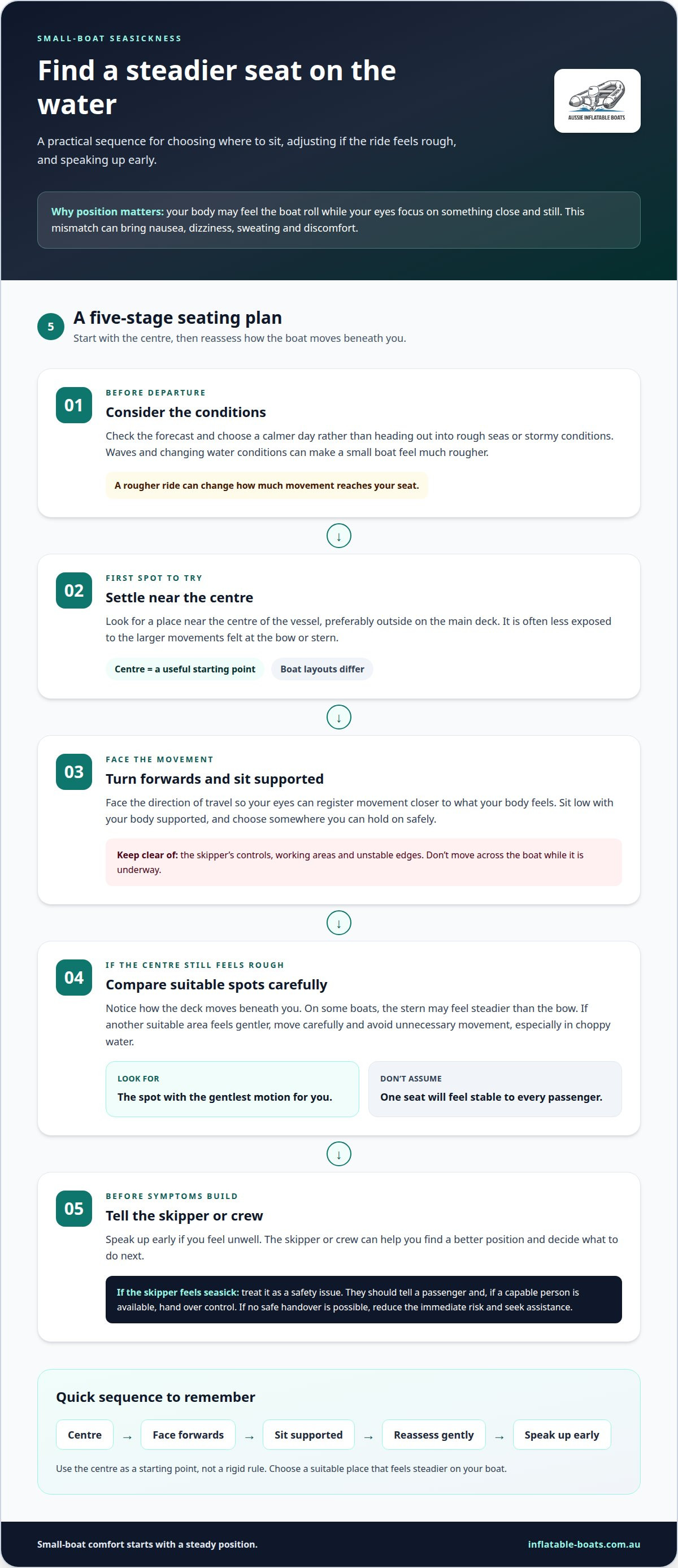
Where you sit affects how strongly you feel the boat’s motion. Start near the centre of the vessel, preferably outside on the main deck. This position is often less exposed to the larger movements felt at the bow or stern. Face the direction of travel rather than sitting backwards. A forward view can help your eyes register the same movement your body feels.
Boat layouts differ, so use the centre as a starting point, not a rigid rule. On some boats, the stern may feel steadier than the bow. If the rear of your vessel moves less, sit towards the back instead. Notice how the deck moves beneath you, then choose the spot with the gentlest motion. Once you find a comfortable position, avoid moving around unnecessarily, especially in choppy water.
Choose a seat that lets you stay steady as the boat rocks. Sitting low with your body supported can make it easier to relax and avoid bracing against every movement. Sit somewhere you can hold on safely, clear of the skipper’s controls and other working areas. Don’t perch on an unstable edge or move across the boat while it’s underway. If symptoms begin, tell a crew member so they can help you find a better position.
Conditions matter as much as location. Before departure, consider the forecast and choose a calmer day rather than heading out into rough seas or stormy conditions. A small boat responds to waves and changing water conditions, so a trip that feels manageable in calm weather may feel much rougher if conditions deteriorate. The route and the boat’s handling also affect how much movement reaches your seat. If the ride becomes uncomfortable, ask the skipper whether changing course or returning is appropriate.
Use a simple sequence when you board: find the centre, sit facing forwards and settle into a supported position. If that spot still feels rough, carefully move to another suitable area, such as the stern if it feels steadier. Tell the skipper or crew what you’re experiencing before nausea becomes severe. They know the boat’s layout and can guide you away from a spot with more pitching, rolling, spray or engine disturbance. A seat that feels stable to one passenger may not suit another, so speak up early and adjust while you can still move comfortably.
3. Looking at the horizon instead of close-up objects
On a moving boat, your inner ear registers motion while a nearby cabin wall or phone appears still. That mismatch can intensify seasickness symptoms. Give your eyes a distant, steady reference instead: look towards the horizon or a fixed point on the shoreline. Keep your head upright and let your gaze rest there rather than tracking objects moving across the deck.
Make the change as soon as you notice discomfort. Put your phone away, stop reading and pause tasks that require looking down, such as sorting tackle or checking a bag. Even a quick glance at a screen pulls your focus close while the boat continues to roll. If you need to read a message or chart, do it briefly, then look outside again. Ask another passenger to handle close-up tasks while you focus on the horizon.
Choose a clear view and a position where you can look forward without twisting your neck. Face the direction of travel and find a distant point ahead, such as the line between sea and sky or a stable landmark on shore. Avoid staring at the boat’s bow as it rises and falls. If waves obscure the horizon, choose a distant point that stays in view rather than following each wave or looking down at the water beside you.
Pair the view with fresh air. Move to an outdoor spot with circulating air, while avoiding strong wind directly in your face. Face forwards and keep your view clear of passengers, equipment and cabin openings. If engine fumes or a strong smell reaches your position, move away when it’s safe. Fresh air and a distant visual reference work together: one changes the air around you, while the other gives your eyes a steadier signal.
Keep the technique simple. Settle into a supported seat, face forwards and hold your gaze on the horizon for several breaths. Breathe slowly instead of scanning the deck, checking a screen or reading. If symptoms return, focus again on the same distant point and ask a crew member to help you find a clearer view. Don’t move around while the boat is underway just to chase a better view. Tell the skipper or crew what you need, then change position safely.
When visibility is limited, don’t replace the horizon with a close object. Keep your eyes lifted towards the most distant clear point available, such as a headland or shoreline. If no landmark is visible, face forwards, get fresh air and pause close-up activities until the view improves.
4. Over-the-counter and prescription medicines
Motion-sickness medicines can help prevent nausea, but the right choice depends on your health, trip and other medicines. Speak with a doctor before taking any motion-sickness medication, including over-the-counter products. This matters even if you’ve used a remedy before, because its suitability can change with pregnancy, other conditions or medicines.
Antihistamines are one over-the-counter option used for motion sickness. Some products are intended to prevent symptoms before travel, so timing matters. Read the product directions and get medical advice before boarding. Don’t take extra doses if nausea starts, and don’t combine products with similar ingredients unless a health professional advises you to. If you’re unsure what an Australian product contains, ask a pharmacist or doctor to explain its active ingredient and directions.
Side effects matter on a small boat. According to healthdirect, motion-sickness medicines such as antihistamines or hyoscine can cause drowsiness. This can affect alertness and balance on a moving deck, so don’t take a medicine for the first time while responsible for operating a boat. Some seasickness medicines can also contribute to dehydration. Keep water available and sip it regularly rather than drinking a large amount at once.
Children, pregnant people and anyone taking other medicines need tailored advice before using travel-sickness medication. According to healthdirect, this advice is especially important for these groups because drowsiness and other medicine effects can matter. Don’t assume a child can take an adult product at a reduced amount. Ask a doctor or pharmacist about the specific medicine, the child’s age and the directions on its Australian packaging.
Prescription options include scopolamine, also called hyoscine, which can be supplied as a patch to prevent motion sickness. A doctor can assess whether it suits longer trips or repeated, severe symptoms, and explain possible side effects, including drowsiness. Tell them about existing conditions, pregnancy and every medicine or supplement you use. Follow the prescribed directions. Don’t cut or alter a patch unless its instructions specifically allow it.
Plan before the boat trip, not after nausea takes hold. Write down the trip length, your previous reactions and any medicines you already use, then discuss those details with a health professional. Ask when to take the chosen product, how long its effects may last and what to do if symptoms continue. Carry the original packaging so the directions and active ingredient are easy to identify. Medicines differ, so no single timing or product suits every passenger.
5. Eating before a boat trip
Before boarding, have a light, balanced meal and drink some water. A slice of toast or a small bowl of oatmeal gives you something to eat without the heaviness of a large breakfast. Going out hungry isn’t helpful either, so aim for a comfortable meal rather than skipping food altogether. For a morning outing, keep breakfast familiar and straightforward, especially if you already know certain foods upset your stomach.
Choose food that’s easy to tolerate. Toast, plain bread, rice or pasta are bland options if nausea starts, while crackers are handy to bring aboard. Avoid heavy, greasy, spicy or acidic foods before departure, as they may worsen motion-sickness symptoms for some people. A rich fried breakfast or spicy takeaway can sit heavily during a rolling ride. Strong food smells can also trigger nausea, so pack mild-smelling snacks and keep them sealed until needed.
Drink water before leaving and keep it within reach during the trip. Take small, regular sips rather than drinking a lot at once. A very full stomach can feel uncomfortable when the boat moves. If you’re already queasy, cold water may be easier to sip. Other suggested drinks include milk, apple juice or ginger ale, but choose something you normally tolerate. Don’t rely on a large drink to settle symptoms quickly.
Ginger is used as a natural nausea remedy in forms such as tea, raw ginger or a candied snack. Ginger chews or ginger cake may be easy to carry on a trip. Treat ginger as one possible option, not a guaranteed solution. If you’re unfamiliar with it, try a small amount before departure rather than experimenting with a new food once the boat is underway.
Plan your food in stages: eat a light breakfast before boarding, pack plain snacks and keep water available. If nausea develops, try a cracker or a little plain bread, then pause and see how your stomach feels. Avoid forcing down a large meal or drinking a lot quickly. On a longer outing, small portions can be easier to manage than one filling meal. Keep strong-smelling food away from your seat, and ask a passenger to help prepare food if its odour is bothering you.
Before a boat trip, choose a light meal such as toast or oatmeal, drink water and pack bland snacks like crackers. Avoid heavy, greasy, spicy or acidic foods, strong food smells and alcohol. Sip fluids gradually while underway. This simple food plan may help you stay comfortable and focus on the trip rather than an unsettled stomach.
Inflatable Boats
Inflatable Boats supports your time on the water with inflatable boats, accessories, spare parts and repairs. If you’re planning outings and managing seasickness, practical preparation still matters: choose a suitable position, get fresh air and plan food and medication carefully. A well-maintained vessel and appropriate equipment help you focus on the trip and follow those steps with confidence.
Turn to Inflatable Boats when you need an inflatable boat, an accessory or spare part, or repairs for your vessel. For questions about your boat’s upkeep or equipment, contact Inflatable Boats.
Make your next trip easier to plan
Build on what you’ve learned by noticing which conditions affect you personally. After an outing, jot down the weather, where you sat and what you ate or drank. Those details can help you make a more informed plan next time, rather than relying on guesswork. A steady approach to how to deal with seasickness on a small boat can help you prepare to spend more attention on the water and less on discomfort.
Good preparation also includes having a suitable vessel and keeping its equipment in order. Inflatable Boats offers inflatable boats, accessories and spare parts, giving boaters options for their time on the water. If you’re considering equipment or need help with a boat-related requirement, contact Inflatable Boats to discuss the next step.
Take what works for you into your next outing, and leave room to adjust your plan as conditions change. A little preparation can make it easier to enjoy the adventure ahead.
Frequently Asked Questions
First off, what exactly is motion sickness?
Motion sickness is the body’s response to movement when sensory signals don’t agree. On a boat, your inner ear detects pitching and rolling, while your eyes may focus on a stationary cabin surface. The brain receives conflicting information, which can lead to nausea or dizziness. Similar discomfort can occur in cars or aircraft, so your experiences with other forms of travel may offer clues about your sensitivity.
Should I take travel sickness medication?
Travel-sickness medicine may suit some passengers, but speak with a doctor before taking it, including an over-the-counter product. The choice depends on your health, other medicines and the trip. According to healthdirect, antihistamines and hyoscine can cause drowsiness. This matters if you’ll be moving around the vessel or helping with tasks, so discuss timing and possible effects before departure.
What if I feel sick?
Tell the skipper or a crew member as soon as you feel unwell, so they know you may need help. If you’re responsible for operating the boat, tell another capable person and arrange a safe handover where possible. Sit securely, breathe slowly and avoid sudden movements. If symptoms become severe or you can’t keep fluids down, ask for appropriate medical assistance rather than trying to manage alone.
What is seasickness?
Seasickness is motion sickness that happens on the water. It can involve nausea, dizziness, sweating or vomiting as the vessel moves. Symptoms may begin during a short trip, even if the water initially seems calm, and can affect passengers differently. One person might feel unwell while another remains comfortable in the same conditions. Recognising early signs helps you respond before discomfort worsens.
What causes seasickness on a small boat and who is most at risk?
Conflicting signals from the eyes and inner ear can trigger seasickness as a small boat moves. Children aged 2 to 12 years are commonly affected, and people prone to migraines may also be susceptible. Previous queasiness in a car or on a ferry can be useful context when planning. Knowing how to deal with seasickness on a small boat starts with recognising your own triggers and telling your skipper early.
What should you do before a boat trip to prevent seasickness?
Prepare before departure: get a good night’s sleep, rest beforehand and plan a light meal. If you’ve experienced motion sickness before, discuss prevention options with a health professional before the trip. Pack water and simple snacks, and tell your skipper if you’re concerned about becoming unwell. A calm-weather forecast may also help you decide whether the planned outing suits your comfort level.
Which over-the-counter seasickness medicines are available in Australia, and how should they be used?
Motion-sickness medicines may include antihistamines, while hyoscine and prescription options can also be discussed with a health professional. Product availability and directions vary, so ask an Australian pharmacist or doctor which option suits you. Follow the packaging or prescription directions, and don’t combine medicines without professional advice. According to healthdirect, antihistamines and hyoscine can cause drowsiness, which may affect alertness aboard.
Do wristbands, ginger, or other natural remedies help prevent seasickness?
Acupressure wristbands offer a drug-free option, but scientific evidence hasn’t proven their effectiveness. Ginger, such as tea or a ginger snack, is used as a nausea remedy, though it shouldn’t replace medical advice or prescribed treatment. If you try either, use it alongside practical preparation, not as a substitute for telling the skipper when symptoms begin. Avoid trying unfamiliar remedies for the first time during a trip.