
What to Pack for Fishing on an Inflatable Paddle Board
A fishing SUP needs more than a rod and paddle: it needs a stable board, secure storage and a way to hold position or keep gear within reach. Useful inflatable paddle board accessories for fishing include an anchor or stake-out pole, rod holders, a gear crate or soft cooler, and tethers for small tools. Keep heavier items near the centre and leave your standing area clear.
Fishing from a paddle board lets you move quietly across the water and reach spots that are awkward to approach from shore. The board becomes a compact fishing platform, so balance and an organised deck matter as much as the gear you bring. This guide covers anchoring options, rod and tool holders, storage, and board design, with practical tips for choosing a setup that supports your fishing rather than getting in the way.
Key Takeaways
- Match your anchor to the water and fishing style: a 10 to 15 lb mushroom anchor on 15 feet of paracord is one setup to consider.
- Angled rod holders mounted behind you can make trolling from a paddle board more practical.
- Use gear tethers or retractable lanyards to keep small tools attached and within reach.
- Compare board width, attachment points and carrying capacity, then position heavier gear near the centre.
- A soft cooler offers a lightweight, flexible option for carrying fish and supplies.
1. Folding anchors, stake-out poles and drift socks
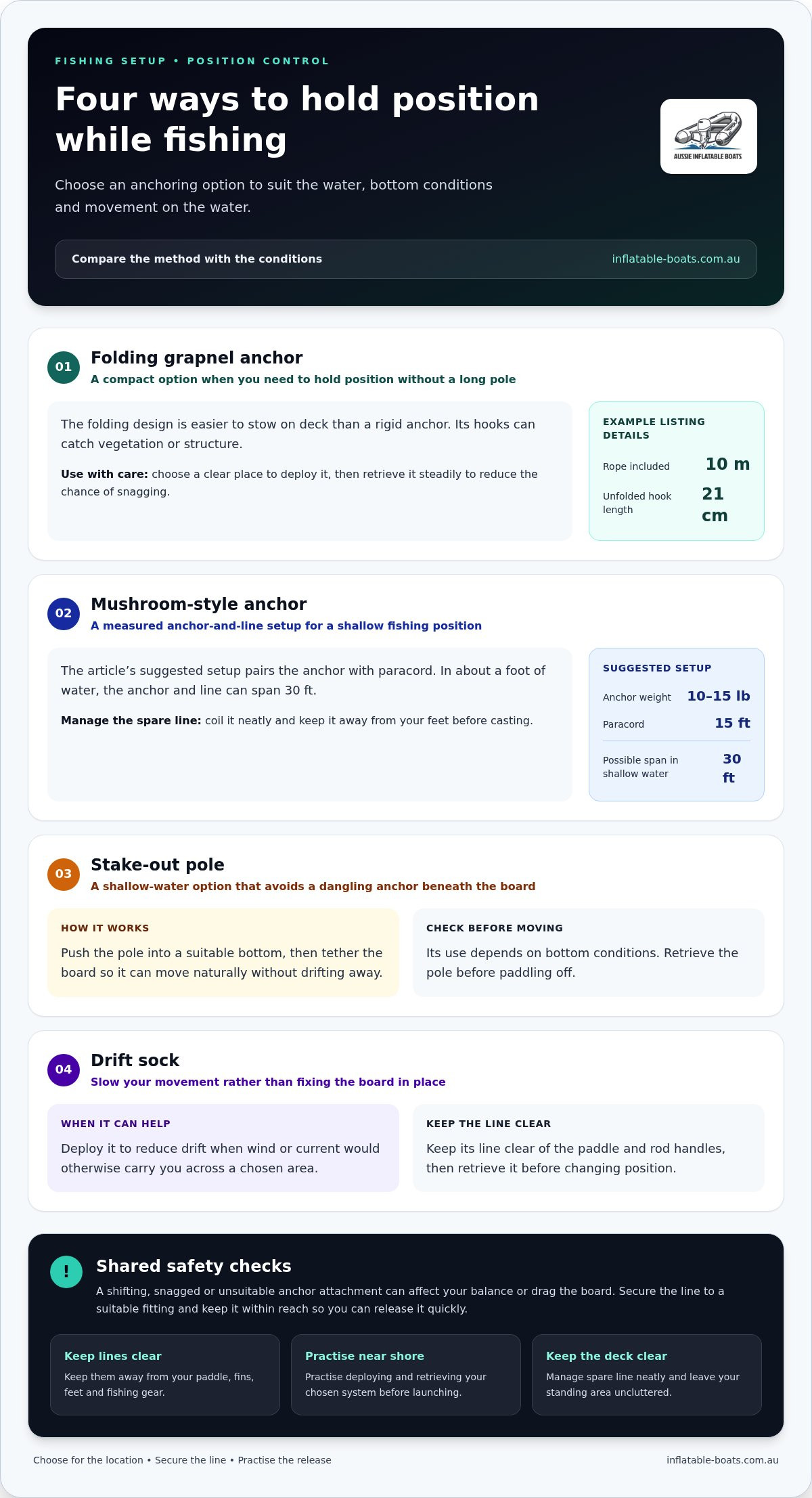
Anchoring helps you hold position, but the right method depends on water depth, bottom type and movement on the water. Folding grapnel anchors, stake-out poles and drift socks each work differently. Choose an option suited to the location, then keep its line clear of your paddle, fins and fishing gear.
Accessories and anchors can create risks if they shift, snag or pull against an unsuitable attachment point. A sudden change in tension can affect your balance or drag the board. Secure the line to a suitable fitting and keep it within reach so you can release it quickly.
A compact folding anchor is useful when you need to hold position without a long pole. One seagrass anchor listing includes 10 m of rope and gives the unfolded grappling-hook length as 21 cm. Its folding design makes it easier to stow on deck than a rigid anchor, while the hooks can catch vegetation or structure. Choose a clear place to deploy it, and retrieve it steadily to reduce the chance of snagging.
For a mushroom-style setup, the recommended anchor weight is 10 to 15 lb, tethered on 15 feet of paracord. In about a foot of water, an anchor and line can span 30 ft. That reach may suit a shallow fishing position, but line length also means more rope to manage. Coil spare line neatly and keep it away from your feet before casting.
A stake-out pole is another option for holding position in shallow water. Push it into a suitable bottom, then tether the board so it can move naturally without drifting away. The pole avoids a dangling anchor beneath the board, but its use depends on bottom conditions. Retrieve it before paddling off.
A drift sock slows your movement rather than fixing the board in place. Deploy it to reduce drift while fishing, then retrieve it before changing position. It can help when wind or current would otherwise carry you across a chosen area. Keep its line clear of the paddle and rod handles.
Before launching, practise deploying and retrieving your chosen system near shore. With a folding anchor, check that the rope runs freely; with a stake-out pole, confirm you can release the board; with a drift sock, keep its retrieval line accessible. Practising first helps you manage the system without crowding the standing area.
A typical fishing SUP setup includes rod holders, a gear crate behind the paddler, an anchor system and a balanced deck layout.
2. Paddle holders, fish finders and other accessories
A secure paddle holder frees both hands when a fish takes the bait. Choose a mount suited to your board’s attachment points and place it where you can reach it without twisting across the deck. Keep the paddle clear of rod handles and your standing area, especially when turning to land a fish.
Angled rod holders behind the paddler can support trolling from a paddle board. Their position keeps rods out of the forward paddling space, while an angled mount can direct the line away from the board. Test the reach from your seated or standing position before setting off. You should be able to retrieve a rod without stepping over the gear crate.
For a larger setup, a gear crate can sit behind the paddler and carry tackle within reach. A Tackle Web attaches to the Tackle Rac with 6 bungies, helping secure equipment across the rack. Check that rods, bags and loose line cannot foul the paddle.
A fish finder adds another device to organise. Mount its display where you can read it without leaning far, and position the transducer to suit the board without obstructing movement. Protect the power source from spray, secure cables along the deck, and leave enough slack for normal movement. A tidy layout makes the display easier to see while you fish.
Rod-holder fit depends on the board’s mounting system. Inflatable boards with compatible attachment points can take matching mounts; other setups may use a freestanding rack or crate. Don’t force a clamp onto an inflatable rail or attach hardware where it could damage the material. Match the mount to the board, then test it on shore with a loaded rod before launching.
Australian boating safety requirements vary by state, territory and waterway. Before launching, identify the local rules for lifejackets, safety equipment and operating conditions, then pack accordingly.
Accessory costs in Australia depend on the item, mounting method and whether electronics are included. A basic paddle holder and a fish-finder setup are different purchases, so compare what each includes rather than judging by the headline price alone.
For Australian brands and retailers, focus on suppliers of inflatable-watercraft accessories and SUP-compatible fishing mounts. Compare the mounting method, included fittings and intended board type; the same rod holder won’t suit every deck. A useful starting point is browsing an inflatable watercraft range alongside your board’s attachment layout.
3. Tethers for tools and small gear
A dropped pair of pliers can disappear before you finish landing a fish. Gear tethers and retractable lanyards keep tools attached to the board, reducing the chance they’ll fall into the water. Attach a short tether to pliers, scissors or a line cutter, then secure the other end to a reachable deck fitting or belt loop.
Match each tether to the tool’s purpose. A retractable lanyard suits frequently used tools, such as fishing pliers, because it returns close after use. A simple cord can work for a spare tool clipped to a gear crate. Keep each connection easy to release, so you can stow the tool without wrestling with knots while fishing.
That rating is not a reason to tether every item with heavy cord. Choose a practical tether for the tool and attachment point, and avoid pulling hard against a small fitting. The goal is to retain a dropped item, not make the deck rigid or crowded.
Set up your tools before launching. Clip pliers where you can reach them from your fishing position, then test the tether’s extension while seated or standing. Open and close the pliers, return them to their resting place, and check that the cord doesn’t cross your paddle stroke or rod handle. Repeat with scissors and a line cutter.
Keep tether lines short enough to stay clear of fins, feet and fishing line. A long cord can loop around gear when you change sides or shift position. For example, attach a line cutter near where you manage fishing line, not across the deck. Route the tether along an edge or through an existing attachment point.
Separate frequently used tools from backup items. Keep pliers and scissors immediately accessible, while a spare leader spool can stay secured inside a tackle bag. This avoids a web of cords around your standing space. Inspect each clip, knot and attachment before setting out, especially after packing the board away.
After fishing, remove detachable tethers and rinse salt or grit from their clips. Let cords dry before storing them with your tackle. If a lanyard retracts poorly or a cord is frayed, replace it before the next trip. A damaged connection may not reliably retain pliers, a line cutter or another small tool.
4. Choosing a stable fishing SUP
A fishing board needs room for you, your tackle and the movement required to cast. Fishing SUPs are typically wider, have higher carrying capacity, and provide attachment points and extra deck space. These features can make a loaded setup more manageable, but stability also depends on how you distribute the gear.
Start by adding the paddler and every item planned for the trip. Fishing paddle boards typically have a carrying capacity of 350-500+ pounds, including the paddler and gear. Treat that figure as a total load, not a gear allowance. Count rods, tackle, anchor equipment, cooler, water and electronics before choosing a board.
Width affects how much room the deck gives you to stand and move. One listed extra-wide board measures 11'6" by 35" and has a stated capacity of 450 lbs. Use those dimensions as a comparison point, not a universal requirement. Consider whether the width leaves enough space for your stance, paddle strokes and planned accessories.
Attachment points and deck space shape a useful fishing layout. Before loading, place the crate, cooler and rods where they’ll sit during your session. Keep heavier gear near the board’s centre, where its weight is less likely to pull one side down. Leave the standing area clear for balance and safer movement.
Try a dry layout on shore. Place a loaded gear bag behind you, then check whether you can reach its contents without leaning far. Move a cooler or tackle box towards the centre if the board lists noticeably to one side. Secure loose equipment so it won’t slide when you change position.
A board’s capacity alone doesn’t tell you how it will feel underfoot. Near its maximum load, it may sit lower and have less free deck space. Compare the stated capacity with your complete trip load, then consider the board’s width, attachment points and where each item will sit. A well-arranged deck leaves room to paddle and cast.
Carry safety equipment suited to your trip, including a properly fitted personal flotation device and a way to communicate if conditions change. Protect communication gear from water and keep it within reach without unpacking the board. Check local requirements for your waterway before launching, as rules vary across Australia.
For a final check, load the board on shore and sit or stand in your intended fishing position. Confirm the deck is organised, heavier items remain centred and the standing area is clear. Adjust the layout before setting off, rather than shifting bulky gear once you’re afloat.
Keep the fishing SUP’s standing area clear for balance and safety. Settle the gear into its final positions without encroaching on that space.
5. Coolers and fish storage
A soft cooler suits a fishing SUP because it’s lightweight and flexible. It can fit around rods, tackle and deck fittings more easily than a rigid-sided cooler. Choose a shape that sits securely without taking over space needed for paddling or landing a fish. A compact soft cooler can also hold lunch and drinks separately from fishing tools.
Plan the cooler’s position before loading the board. Place it where you can reach it without leaning across the deck, and secure it so it won’t slide when you change position. If you’re carrying a gear crate, keep the cooler’s opening clear of the crate and rod handles. Practise opening and closing it on shore with your fishing gear in place.
Keep your catch separate from personal items. Use a dedicated fish-storage bag or sealed container inside the cooler, rather than placing fish beside food, spare clothing or electronics. This keeps items contained and makes cleanup easier after the trip. Pack the container where you can reach it without shifting rods or stepping into your casting space.
Access matters once you’re afloat. A cooler buried beneath tackle may be difficult to reach after a catch, while one placed in the middle of your working area can obstruct movement. Before launching, practise retrieving a drink and opening the fish container from your intended fishing position. Adjust the layout if either task requires an awkward reach.
Keep the lid closed when you’re not using the cooler, and stow loose items before moving the board. Rinse the cooler and its fish-storage container after use, then dry them before packing away. Check seams, fasteners and straps for wear during cleanup. A damaged closure or loose strap can make the cooler harder to secure on your next outing.
Match storage capacity to the trip instead of bringing the largest cooler available. A short session may need room for a drink and a small fish container; a longer outing may require more space for supplies. Either way, check the loaded arrangement on shore and leave clear access to your paddle, fishing gear and standing area.
Pair your cooler with secure, practical inflatable watercraft accessories to organise your fishing setup around the board’s available deck space.
Inflatable Boats: Inflatable Boats
Inflatable Boats can help you move from planning a fishing setup to choosing inflatable watercraft and compatible gear. If your board needs a replacement part or you’re organising equipment for another outing, explore inflatable boat accessories and spare parts alongside inflatable stand-up paddle boards. The right choice depends on your fishing style, the water you plan to cover and how much gear you need to carry. A paddle board may suit a compact, quiet session; an inflatable boat can be a more suitable option when your setup calls for a different watercraft. Keep the essentials practical, secure and suited to your craft. For help with your next step, contact Inflatable Boats.
Set up for your next session
Tailor your setup to the water you’ll fish and the way you like to move across it. Before packing, lay out your gear and consider what would make your time on the board more organised, accessible and comfortable. A few adjustments can help create a purposeful fishing platform without crowding the deck.
Inflatable Boats offers inflatable boats, inflatable boat accessories and spare parts to support your watercraft and equipment. Choosing inflatable paddle board accessories for fishing is also an opportunity to build a setup around your needs, from everyday essentials to replacement components.
Ready to plan your next outing? Contact Inflatable Boats for advice and take the next step towards a well-prepared day on the water.
Frequently Asked Questions
What is a Fishing SUP?
A fishing SUP is a stand-up paddle board set up to carry fishing gear and support angling on the water. Unlike a general-purpose board used without modifications, a fishing setup may include rod mounts, tackle storage and equipment for holding position. For example, an angler might arrange a board for casting from a sheltered estuary, then remove or reposition the fishing gear for a recreational paddle.
What fishing accessories are essential for an inflatable paddle board?
Start with equipment that suits your fishing method: a way to manage your paddle, secure rods, organise tackle and keep essential tools attached. For a simple lure session, a rod holder, small tackle container and tool lanyard may be more useful than a large electronics setup. Add accessories gradually and test each item’s position on shore so fishing lines and fittings don’t interfere with paddling.
What anchor or drift sock is suitable for fishing from an inflatable paddle board?
Choose an anchor for holding position and a drift sock for slowing movement, then match the option to depth, bottom and current. A folding anchor can suit a spot where its hooks can catch securely; a drift sock is useful when you want to move slowly across a fishing area. Consider how you’ll retrieve and stow the system before deploying it, especially around weeds or submerged structure.
What cooler, tackle storage and fishing gear can be carried safely on a SUP?
Pack gear that fits within the board’s rated load and can be secured without blocking movement. A soft cooler can carry food or a sealed fish container, while a tackle bag or crate keeps small items together. Protect sharp tools, close containers before paddling, and avoid loose line across the deck. A quick shore-side rehearsal can show whether you can reach what you need without shifting your stance.
What weight capacity and stability features matter when choosing fishing accessories for a SUP?
Include your body weight and complete loaded kit when comparing a board’s capacity. Accessories also use deck space, so consider where a crate, cooler or mount will sit, not just its weight. A wider board with attachment points and room to move can suit fishing, but the final layout matters too. Arrange the equipment on shore and keep a clear route for changing position.
How much do inflatable paddle board fishing accessories cost in Australia?
Costs depend on the accessory, mounting method and whether electronics are included. Compare what each setup contains, since a basic paddle holder and a fish-finder setup are different purchases.