
Transom Wheels for Inflatable Boats: How to Choose the Right Setup
Choosing transom wheels for inflatable boats is about more than picking a wheel style. At a ramp or shoreline, wheels can make moving a boat ashore more manageable, but only if they suit the transom and can handle the boat with its motor and gear aboard. A mismatch can turn a useful aid into extra strain.
Start by checking whether the wheel system’s mounting arrangement, rated load and wheel design match your inflatable boat and the ground you’ll cross. This guide explains how transom wheels work, what they can and can’t do, and which measurements and manufacturer specifications to check before buying. It also compares common wheel arrangements and tyre considerations, and explains when to raise or remove the wheels. With your boat, load and launch route in mind, you can make a more informed choice and move your boat on land with less guesswork.
Key Takeaways
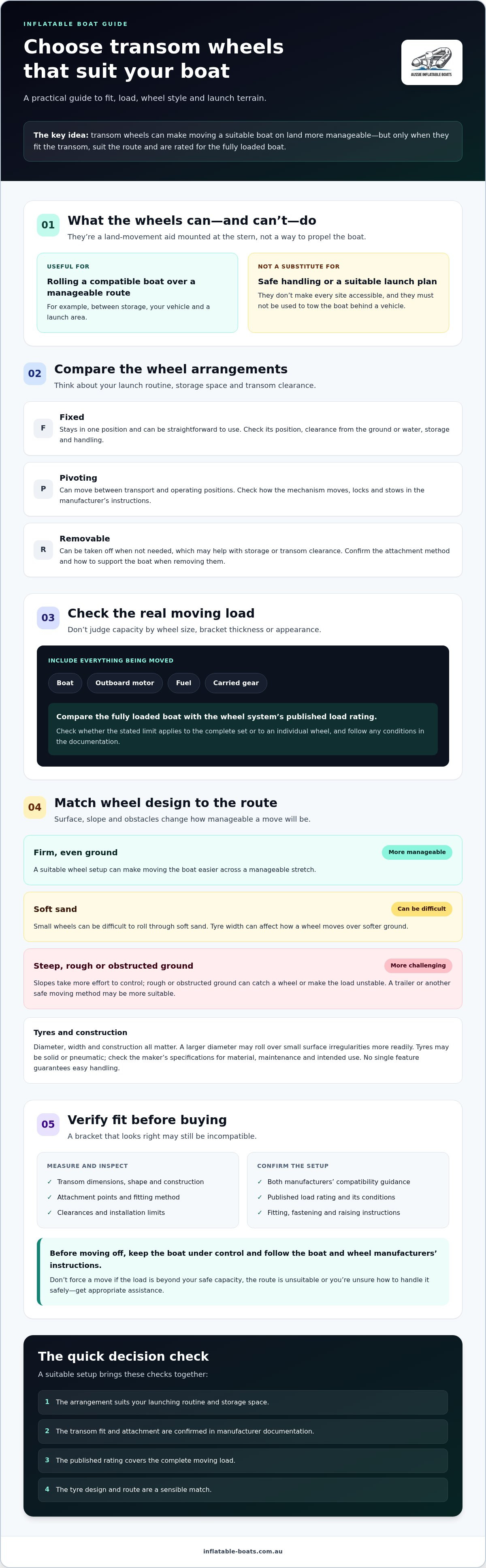
- Transom wheels for inflatable boats help move a suitable boat on land, but they don’t provide propulsion or replace safe handling.
- Compare fixed, pivoting and removable arrangements against how you launch, transport and store your boat.
- Check the transom dimensions and attachment method, then confirm compatibility in the manufacturers’ documentation before buying.
- Assess the fully loaded boat, including motor and gear, against the wheel system’s stated load rating.
- Match the wheel and tyre design to your usual terrain, and follow the manufacturers’ instructions for fitting, fastening and raising the wheels.
What transom wheels for inflatable boats can and can't do
Transom wheels are a land-movement aid mounted at the stern of a boat. They let you roll a suitable inflatable between storage, your vehicle and a launch area, reducing the effort of carrying or dragging it over a short route. They don’t propel the boat on the water, and they won’t make every launch site easy to reach.
The right setup depends on the boat, the combined load of the boat, motor and gear, the route and the surface. Treat wheels as one part of your launch plan, not a substitute for safe lifting, suitable assistance or the boat and wheel manufacturers’ instructions.
How transom wheels attach to an inflatable boat
The transom is the boat’s stern structure, where an outboard may be mounted. Its shape and construction matter because wheel brackets need to fit and secure correctly. For background, see this overview of the transom.
Wheel arrangements may be built-in, clamp-on or removable. These are broad categories, not a guarantee that a particular arrangement will suit your boat. Before buying, check the boat and wheel manufacturers’ fitting guidance for the transom shape, attachment points, clearances and installation limits. Don’t assume a bracket will fit just because it appears to match the transom visually.
When transom wheels help, and when they don’t
On firm, even ground, wheels can make it easier to move a compatible boat from storage to a vehicle or across a manageable stretch to the water. Their usefulness depends on having a route the wheels can handle and enough control over the boat as it moves.
Surface and slope matter. Soft sand can make small wheels difficult to roll. Steep slopes take more effort to control, while rough or obstructed ground can catch a wheel or make the load unstable. Assess your route before relying on wheels alone. A trailer or another safe method of moving the boat may be more suitable for difficult terrain.
Keep the boat under control and follow the manufacturers’ instructions for fitting and use. Don’t use transom wheels to tow the boat behind a vehicle, or try to move a load beyond your safe capacity. If the boat is too heavy, the route is unsuitable or you’re unsure how to handle it safely, get appropriate assistance rather than forcing the move.
How transom wheels work: wheel styles, materials and boat loads
Transom wheels carry part of the boat’s weight while you move it over land. Their arrangement affects how they work during a launch, where they sit when not in use and whether they suit your boat’s transom. Compare the whole setup, not just how the wheels look.
Which wheel style suits your launching routine?
Fixed arrangements stay in one position, which can make them straightforward to use. Check whether they remain clear of the ground or water as intended, and whether their position affects storage or handling.
Pivoting arrangements may move between a transport position and an operating position. Mechanisms differ, so check the manufacturer’s instructions to understand how the wheels lock, move and stow. Removable arrangements let you take the wheels off when they aren’t needed, which may help with storage or transom clearance. Confirm how they attach and how the boat should be supported when they’re removed.
Match tyres and capacity to the ground
Wheel diameter, tyre width and construction affect how a setup meets the ground. A larger diameter may roll over small surface irregularities more readily, while tyre width can affect how the wheel moves over softer ground. Neither feature guarantees easy handling. Wheel design, the boat’s load and the route all matter. Firm paths and ramps can present a different challenge from soft sand or uneven ground.
Tyres may use different constructions, including solid or pneumatic designs. Check the manufacturer’s specifications for material, maintenance needs and intended use rather than assuming one type suits every launch site. The bracket matters too. Its design and materials affect how it mounts to the transom, so verify compatibility and check any care guidance for marine exposure.
Check the capacity against the actual load being moved. Include the boat, outboard motor, fuel and carried equipment, then compare the total with the manufacturer-published rating for the wheel system. Confirm whether the stated limit applies to the complete set or an individual wheel, and follow any conditions in the documentation. Don’t estimate capacity from wheel size, bracket thickness or a sturdy appearance.
Use this checklist before settling on a style:
- Does the arrangement suit your launch routine and storage space?
- Are tyre construction, dimensions and intended use documented?
- Does the published capacity cover the complete moving load?
- Do both manufacturers confirm the wheel and transom are compatible?
If you’re also considering an inflatable boat, you can browse the Highline inflatable boat collection. Check a prospective boat’s transom details against the wheel documentation separately.
How to compare transom wheels for inflatable boats before buying
Begin with your boat, not a preferred wheel style. Record the transom design, available mounting area and existing fittings, then compare each option with your boat’s documented requirements. No single arrangement or material is best for every inflatable boat.
Use the table to distinguish details you must verify from practical considerations. Treat compatibility, dimensions and capacity as confirmed only when they’re stated by the boat or wheel manufacturer. Appearance alone doesn’t prove fit or strength.
| Factor | Confirm in manufacturer information | Consider for your setup |
|---|---|---|
| Attachment style | Whether the system is fixed, pivoting or removable, and whether its fitting method is approved for your transom. | How often you’ll fit, raise, lower or remove the wheels, and where you’ll store them. |
| Transom compatibility | Suitable transom shape, mounting area, dimensions and any installation limits. | Clearance around existing fittings and access to the mounting points. |
| Load rating | The stated rating and whether it applies to the whole system or individual components. | The complete load moved over land, not just the boat’s bare weight. |
| Wheel type | Wheel dimensions, tyre construction, materials and any stated use or care guidance. | Your usual route, including firm paths, ramps, soft ground or uneven sections. |
| Storage and clearance | Required operating and stowed positions, plus any fitting or removal instructions. | Whether the wheels could interfere with the outboard, hull, valves or other fittings. |
Check transom compatibility before comparing features
Check the boat maker’s guidance before drilling, clamping or using another attachment method. Don’t assume that a bracket described as removable or clamp-on is suitable for your boat. If the published information doesn’t clearly match your transom, ask the wheel supplier and boat manufacturer to confirm compatibility before buying.
Compare capacity, clearance and upkeep
Assess the boat as it will actually be moved. Include the outboard motor, fuel and the equipment you normally carry, then compare that complete load with the manufacturer-published rating. Don’t infer capacity from wheel size or a bracket’s appearance.
Check clearance with the wheels in each specified position. Review documented material and corrosion-resistance information, cleaning guidance and whether replacement parts are available. If a specification is missing, treat it as unknown rather than assuming it’s suitable.
How to measure, fit and use inflatable boat transom wheels safely
A careful check before purchase can prevent a poor fit and make moving your boat more predictable. Use the wheel maker’s measurement method, verify the boat maker’s installation guidance and don’t proceed on assumptions. Compatibility and correct fitting matter as much as the wheel arrangement.
A pre-purchase measurement and fitment checklist
- Identify the boat. Note its make, model and transom details so you can refer to the correct boat manufacturer’s information.
- Inspect the transom. Record its construction, shape, available mounting area and existing fittings. Check the boat maker’s instructions before considering drilling, clamping or another attachment method.
- Measure as specified. Take only the dimensions required by the wheel manufacturer, following its documented method. Don’t substitute an approximate measurement or assume a bracket will fit based on appearance.
- Check the moving load. Account for the boat, outboard motor, fuel and equipment you expect to move with it. Compare that load with the wheel maker’s stated capacity and any conditions attached to the rating.
- Confirm the fit and installation requirements. If compatibility isn’t clear, send the supplier clear photos of the transom and fittings and ask for confirmation. Check which tools and fasteners are specified, and whether the manufacturers advise professional fitting.
Follow both manufacturers’ installation and fastening instructions. Before each land transfer, inspect the brackets and fasteners for movement or damage, confirm the wheels are secured in the intended position, and check that they clear the outboard, hull and nearby fittings throughout the move.
Prepare for moving and launching
Before moving the boat, secure loose equipment and follow the boat maker’s guidance for the outboard motor. Plan a clear route and check the surface, slope and obstacles. Consider whether you can control the loaded boat safely or need assistance. Keep hands and feet clear of brackets and other pinch points. Stop if the boat shifts, a wheel binds or the setup feels unstable.
At the water, raise, pivot or remove the wheels as directed by their manufacturer. Don’t assume they’re designed to remain down or carry a load while the boat is underway. Check their specified operating position before launching, and prepare the boat for use according to its own instructions.
If you’re also selecting an inflatable boat, browse the Highline inflatable boat collection and confirm the prospective boat’s transom details with the wheel manufacturer before choosing a setup.
Choose your transom-wheel setup and plan the next step
Make the decision in sequence: confirm the wheels suit the transom, verify the published load rating, match the wheel setup to your usual route, then check that it’s practical to store and operate. This keeps the focus on the boat and launch combination, rather than a wheel style that looks suitable but doesn’t meet the manufacturers’ requirements.
Use your boat and launch conditions to make the final call
Consider how often you’ll move the boat, how far it needs to travel on land and what the route is like. A setup for a short roll over firm ground may not suit soft sand, a steep ramp or an uneven path. Check clearance and storage too, including whether the wheels need to be raised or removed for your boat’s normal use.
Check the fully loaded configuration, not just the boat’s length. Include the outboard motor, fuel and the gear you usually carry, then compare the total with the wheel manufacturer’s published rating and any conditions attached to it. Base compatibility, capacity and installation decisions on manufacturer documentation, not visual estimates.
If specifications conflict or a key detail remains unclear, pause before buying. Ask the boat or wheel manufacturer for fitment guidance, and keep the answer in writing so you can refer to the confirmed dimensions, attachment method and load limits later.
Where to go for compatible boat and accessory guidance
Inflatable Boats sells inflatable boats, accessories and spare parts, and offers inflatable boat repairs. For questions about available products, maintenance or repairs, use the contact page. For wheel compatibility, confirm the fitting details and load limits with the boat and wheel manufacturers before purchasing.
If you’re still comparing boats, the guide The Rugged Guide to Choosing Your First Inflatable Boat in 2026 can help you consider your broader boating needs. Treat the boat’s transom details as a separate check when assessing wheel compatibility. You can also explore Highline premium-quality inflatable boats as a boat-browsing option. Check separately whether transom wheels are included or available.
Choose transom wheels for inflatable boats only when the fit, capacity, terrain and storage plan are clear. A verified setup is a more practical starting point for moving your boat from storage to the water.
Make your next launch a more confident one
Choose transom wheels for inflatable boats by working through the essentials in order: confirm they suit your transom, check the manufacturer’s load rating against the fully equipped boat, and match the wheel arrangement to your usual terrain and storage needs. If compatibility, fitting or operating instructions are unclear, ask the boat or wheel manufacturer before buying. A careful check can help you avoid a poor fit.
Inflatable Boats offers inflatable boats, accessories, spare parts and repair services. If you’re comparing boats as well as planning your setup, explore Highline premium-quality inflatable boats. Check each boat’s transom details separately, and don’t assume transom wheels are included or available.
With the right information in hand, you can make a practical choice, move your boat ashore with greater confidence and focus on the adventure ahead. For help with inflatable boat products, accessories or repairs, contact Inflatable Boats.
Frequently Asked Questions
Do transom wheels fit every inflatable boat?
No, transom wheels aren’t universal. Compatibility depends on the boat’s transom construction and shape, available mounting area, fittings and the wheel bracket’s design. Check the boat and wheel manufacturers’ documentation for approved attachment methods and dimensions. If the fit isn’t clearly confirmed, contact the manufacturer or supplier with your boat details and photos before buying. Don’t assume a similar-looking transom means the wheels will fit.
How do I measure my inflatable boat's transom for wheels?
Follow the wheel manufacturer’s specified measurement method and measure only the dimensions it requests. These may relate to the transom shape, thickness or available mounting area, so don’t rely on a generic measurement guide. Record the boat’s make and model, note existing fittings, and take clear photos of the transom. Use these details to check compatibility with the boat maker or wheel supplier if the published fit information is unclear.
Can transom wheels carry an outboard motor?
Only if the manufacturers confirm that the complete setup is suitable for the load. Include the boat, outboard, fuel and carried equipment when assessing the weight moved on land, then compare it with the wheel system’s published rating and any conditions. Check whether the rating applies to the full set or individual components. Don’t assume the motor can stay fitted just because the wheels appear sturdy. Follow the boat and wheel manufacturers’ handling guidance.
Should transom wheels be raised before the boat is on the water?
Position or raise the wheels as directed by their manufacturer before operating the boat. Some arrangements may pivot or be removed, but mechanisms and instructions differ. Don’t assume wheels are designed to remain lowered or carry a load underway. Before launching, confirm they’re secured in the specified position and clear of the hull, outboard and other fittings. If the operating instructions aren’t clear, check with the wheel maker before using the boat.
Which transom wheels work best on sand or rough ground?
There’s no single wheel setup that suits every beach, ramp or rough track. Ground conditions, boat load and wheel design all affect handling. Compare documented wheel diameter, tyre width and construction with the surfaces on your usual route, and ask the manufacturer about intended use. Soft sand, steep slopes and obstacles can make moving a loaded boat difficult even with wheels. Consider another safe method or assistance if the route is unsuitable.
Can I fit transom wheels to my inflatable boat myself?
You may be able to fit them yourself if both manufacturers approve the method and provide clear installation instructions. Confirm the required tools and fasteners, and check whether drilling, clamping or another attachment is permitted for your transom. Follow the specified fitting and fastening process, then check security and clearance before moving the boat. If instructions conflict, fitting details are unclear or the transom needs modification, pause and seek manufacturer guidance.
How do I maintain transom wheels in Australian conditions?
Use the wheel manufacturer’s care instructions, particularly after exposure to salt water, sand or mud. Rinse away salt and grit with fresh water if the maker permits, then dry the components and inspect brackets, fasteners, moving parts and tyres for wear, corrosion or damage. Check that removable or pivoting parts operate and secure as intended. Replace parts only with suitable components, and don’t use the wheels if damage or looseness affects safe operation.