
Touring or all-around iSUP: which board suits your paddling
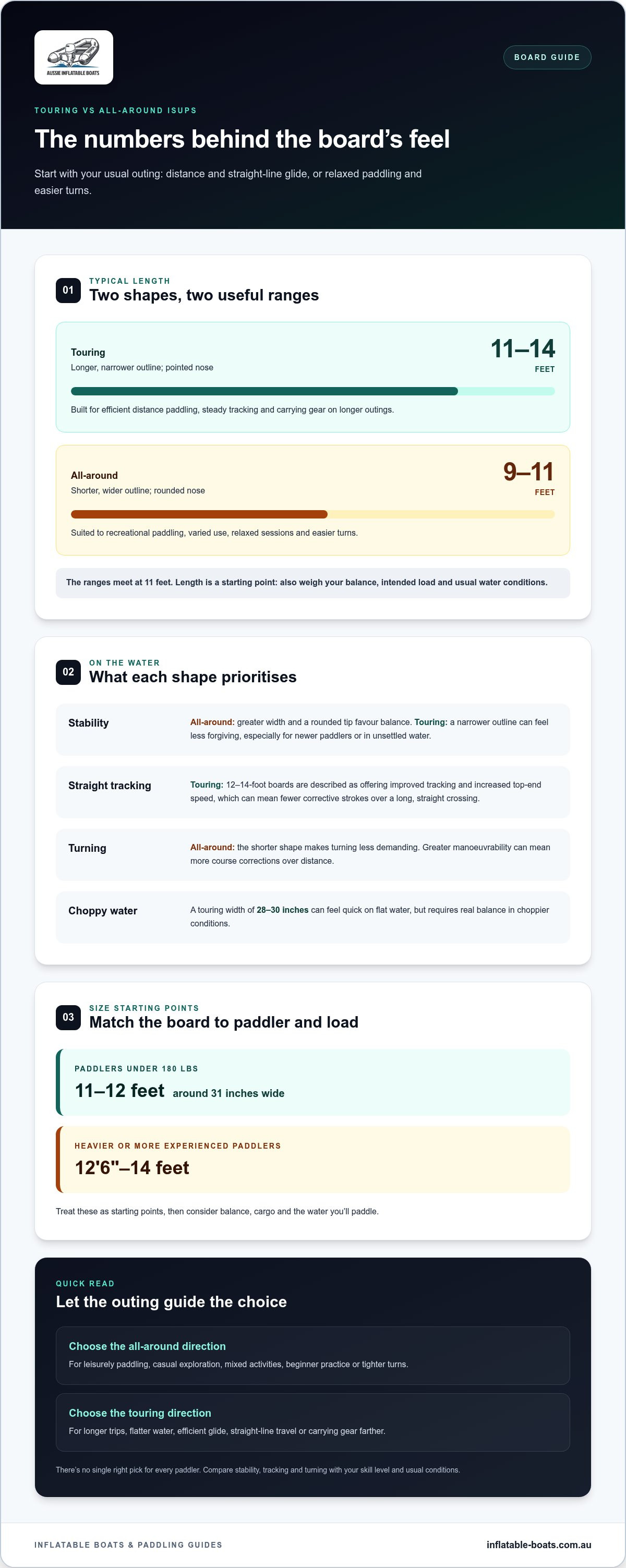
The faster board isn’t automatically the better choice. When choosing between a touring and an all-around iSUP, start with how you’ll paddle: touring boards are typically 11 to 14 feet long for efficient travel over distance, while all-around boards commonly measure 9 to 11 feet and suit more relaxed, varied outings. There’s no single right pick for every paddler.
If you want a board that feels steady and turns readily for casual paddles, an all-around shape may suit you. If you’re planning longer trips and value straight-line tracking and efficient glide, a touring design may be a better fit. Your balance on the water and the gear you want to carry also matter.
This guide explains the practical differences in stability, tracking and manoeuvrability, then looks at how board shape, fin setup, deck pads and cargo space affect your time on the water. By the end, you’ll have a clearer way to match a board to your usual conditions, paddling style and plans for exploring farther.
Key Takeaways
- Match the board to your usual outings: touring shapes favour efficient distance paddling, while all-around designs suit varied, relaxed sessions.
- Compare stability, tracking and turning together; a board that glides efficiently may feel less forgiving when the water gets choppy.
- Look at the fin setup and nose shape to understand how each board holds a straight line or responds when you turn.
- Consider deck-pad comfort and cargo space alongside performance, especially if you’ll carry gear or spend longer on the water.
- Use your paddling experience, preferred conditions and trip plans to narrow down the style that fits your next launch.
What Are Touring SUPs Best For?
Touring boards suit paddlers who want to cover distance efficiently, hold a steady line and carry gear for a longer outing. Their pointed nose parts the water, while a longer, narrower outline helps the board glide between strokes. When choosing between touring and all-around iSUP designs, start with your usual route and how you want each session to feel.
That efficiency involves a trade-off. A touring board may feel less forgiving underfoot, particularly for a new paddler or in unsettled water. All-around boards generally suit leisurely paddling, casual exploration and mixed activities, because their broader, rounded shape favours balance and easier turns.
| Board type | Typical length | Shape and feel | Best suited to |
|---|---|---|---|
| Touring | 11 to 14 feet | Longer, narrower, pointed nose | Distance paddling and racing |
| All-around | 9 to 11 feet | Shorter, wider, rounded nose | Recreational paddling and varied use |
Use your plans and experience to narrow the choice. If you’re still learning to balance or expect relaxed sessions close to shore, an all-around inflatable SUP is a practical starting point. If you already paddle confidently and want to travel farther on flatter water, a touring shape can make each stroke count. Race-focused paddlers may also value its straight-line efficiency, though handling and conditions still matter.
Board size should fit both the paddler and intended load. Paddlers under 180 lbs are advised to consider an 11- to 12-foot board around 31 inches wide. Heavier or more experienced paddlers are advised to consider boards from 12'6" to 14 feet long. Treat these as starting points, then weigh balance, cargo and the water you’ll paddle. Choosing between touring and all-around iSUP options becomes clearer when you compare size with your actual plans.
What safety equipment and local rules apply to stand-up paddleboarding in Australia? Carry a PFD and leash on open water, and take a whistle and light when paddling after dark. Follow the rules for your waterway and launch area.
What are typical Australian prices? There isn’t one typical price for either style. Construction, board size and included accessories affect cost. Compare full specifications and inclusions rather than judging by board type alone.
Which boards are best value in Australia? The best value is a board that suits your regular paddling, carries your load and includes features you’ll use. An all-around board can offer versatility for recreational outings, while a touring board’s value lies in its efficiency over distance.
Are touring iSUPs suitable for choppy water, rivers or coastal paddling? A touring board can be quick on flat water, but a narrower 28- to 30-inch width requires real balance in choppier conditions. In rivers or coastal areas, consider current, wind and water conditions as well as your paddling ability.
Differences in stability, tracking and manoeuvrability
Board width and outline affect how a SUP responds underfoot and to each paddle stroke. Compare stability, straight-line tracking and turning with your skill level and the water you’ll use.
All-round stability and manoeuvrability
An all-around SUP prioritises balance and easy handling over outright speed. Its greater width and rounded tip help it ride steadily, while its shorter shape makes turning less demanding. That combination suits beginners learning to shift their weight and paddlers who want to change direction readily. On a sheltered bay, for example, an all-around board can feel more forgiving during relaxed turns than a narrower touring design.
Stability and speed trade-offs
A touring board’s narrower outline can reduce resistance and improve glide, but it asks more of your balance. A width of 28 to 30 inches can feel quick on flat water, yet requires real balance in choppier conditions. That trade-off matters when wind-driven ripples or boat wakes disturb your stance. A wider board offers more support, though it prioritises stability over top-end speed.
Tracking describes how well a board maintains a straight course between strokes. Touring boards measuring 12 to 14 feet are described as offering improved tracking and increased top-end speed. That can mean fewer corrective strokes during a long, straight crossing. An all-round board is more responsive when you change direction, but its greater manoeuvrability can mean more course corrections over distance.
The differences aren’t simply about experience. A beginner may find an all-around board’s added stability easier to manage, while an experienced paddler may prefer a touring board’s glide for distance. REI’s guide also notes that narrower SUPs are faster and more manoeuvrable, making them suitable for racers and surfers. The right balance depends on whether speed or easy control matters more for your usual session.
Try a simple comparison before committing: paddle a short, straight stretch, then make a controlled turn in each direction. Notice how often you correct your course, how steady your feet feel and how much effort each turn takes. Repeat the test on calm water, then consider how your usual conditions might change the board’s feel.
For flat-water routes and sustained speed, a touring shape can reward confident technique. For mixed recreational paddling, beginner practice or tighter turns, an all-round shape gives stability and control more weight. If you’re weighing these characteristics against board options, compare inflatable paddleboard options with your typical water and paddling style in mind.
All-around and touring SUP use cases
Picture the outings you actually plan, not the most ambitious trip you might take. A relaxed paddle near a familiar launch, a surf-side session and a long coastal crossing place different demands on a board. A sheltered afternoon close to shore may call for easy turns, for example, while a mapped point-to-point route rewards efficient progress.
An all-around board generally suits recreational paddlers who want one board for varied outings. Its stable platform can work well for a quiet estuary paddle, gentle exploration or practising basic strokes close to shore. A shorter, rounded outline also helps when the route involves frequent changes of direction. If your plans shift between calm water and small surf, prioritise handling over covering distance quickly.
Touring boards make more sense when covering distance is the point of the outing. A pointed nose parts the water efficiently, and the narrower shape supports steady travel along a planned route. Think of a confident paddler following a long stretch of coastline or training for a race on flat water. The key question is whether efficient forward movement matters more than quick turns.
For a long day carrying supplies, cargo space becomes part of the decision. A wider SUP can offer more storage and stability for longer tours or trips with substantial cargo. Lay out the gear you expect to take, then consider where it can sit without obstructing your stance or paddle stroke. A board that glides well but has no practical room for your load may not suit the trip.
Rivers add another planning factor: a route may include bends, changing flow and narrow passages. On a winding section, manoeuvrability can matter more than straight-line speed; on a broad, open reach, efficient tracking may be more useful. Consider the launch and landing points, likely turns, and whether you’ll paddle upstream, downstream or both ways. These details help match board handling to the actual route.
- Choose all-around for mixed recreation, relaxed sessions and routes with frequent turns, such as exploring a sheltered inlet.
- Choose touring for longer routes, race training or carrying gear, especially when the planned course favours steady forward travel.
- For rivers or coastal plans, sketch the route first. Match the board’s turning response and cargo capacity to the water and trip demands.
If you’ll use one board across several settings, list your three most likely outings and rank them by frequency. Select for the most common use, then check that the board can handle your occasional adventure. A dedicated touring board suits distance-focused plans; a versatile all-around board generally suits paddlers whose days on the water vary.
Fins, deck pads, and cargo space
Small fittings affect how an inflatable SUP feels on a real outing. Compare the fin setup, standing surface and available cargo area with your planned route. A touring board intended for a long, flat-water crossing has different priorities from an all-around board used for relaxed paddling and frequent turns.
A touring SUP often uses one large centre fin to improve straight-line tracking. The fin helps the board hold its course, reducing the need for constant steering corrections on a distance paddle. This setup suits a confident paddler following a steady route across open water. A fin can also affect turning response, so consider how much manoeuvrability your usual launch and landing areas call for.
For an all-around board, assess the fin arrangement alongside its intended use. A sheltered bay with frequent direction changes rewards responsive handling more than a long, straight crossing. Before setting out, check that the fin is fitted securely and clear of weeds or shallow water. A river launch, for example, calls for attention to water depth as well as tracking.
The deck pad is the standing area that provides grip and balance. Beginners may value a broad, comfortable surface while practising stance changes and paddle strokes. Experienced paddlers should consider whether the usable pad area allows them to move, especially when stepping back to turn. Before buying, check the pad’s coverage and position relative to the carry handle and the areas where you expect to stand.
Cargo capacity becomes central when an outing includes supplies or extra equipment. A wider SUP can offer more storage and stability for long tours or trips with substantial cargo. That can make a wider touring option practical for carrying gear, though the load still needs to leave room for a secure stance and clear paddle strokes. For a short recreational outing, unused cargo space may matter less than easy handling.
Use a simple gear-fit test when comparing boards. List what you’ll take, such as water, a dry bag and a spare layer, then consider where each item can sit. Keep the standing area clear and avoid placing equipment where it interferes with paddling. If the load shifts your balance or obstructs movement, choose a setup with more suitable storage space.
For a day trip with gear, weigh cargo room and stability alongside fin tracking. For casual sessions near shore, prioritise a deck pad and fin setup that support comfortable movement and easy turns. The best fit lets you carry what you need without compromising control on your chosen water.
How do board shape and fin setup affect touring and all-around iSUP performance?
A board’s outline and fin arrangement influence how it moves, turns and holds its course. A pointed nose and single centre fin give touring designs a different feel from the broader, rounded shape common on all-around boards. These details matter most when they match your route, pace and preferred handling.
The pointed nose on a touring SUP is designed to part the water more efficiently than an all-around board’s rounded tip. As the board moves forward, its narrower outline supports a smoother glide on a straight route. Paddling across a sheltered bay between two launch points, for example, may call for steady progress rather than quick direction changes.
An all-around board’s greater width and rounded tip help it ride the water and suit varied activities. That shape can feel stable during relaxed paddling, while its shorter profile helps with tighter turns. On a gentle estuary paddle, for instance, you may value adjusting course around moored boats more than maintaining the fastest glide.
Fin setup adds another layer. Touring boards often use a single large centre fin to improve straight-line tracking. It helps the board hold direction during forward paddling, reducing the need for repeated course corrections. On a long, open stretch, that direct feel may be useful; in a narrow channel, easy turning may matter more.
Compare the board and fin as one system, not as separate features. A pointed nose with a tracking-focused fin supports efficient travel, while an all-around outline favours adaptability. Neither shape removes the effects of water conditions or paddling technique. A steady, centred stroke can help a board track cleanly, while uneven strokes can pull it off course.
Use these practical checks when comparing designs:
- For a straight route: consider a pointed nose and a centre fin designed to support tracking.
- For frequent turns: look at the board’s overall outline and how readily it responds to a change in direction.
- For mixed outings: weigh the rounded all-around shape against the touring board’s distance-focused design.
During a test paddle, hold a straight course, then make a controlled turn to each side. Notice how often you need to correct direction and how the board responds. Repeat the same sequence in the water you expect to paddle, since a sheltered launch and an exposed stretch can feel quite different.
Use your route to guide the final choice: touring geometry and a single large centre fin suit efficient tracking, while an all-around outline is built for versatility. Explore inflatable paddleboard options and compare each board’s shape and fin setup against the water you plan to paddle.
Inflatable Boats: Inflatable Boats
Inflatable Boats offers inflatable stand-up paddle boards for paddlers choosing a style to suit their usual outings. Once you’ve weighed tracking, stability, turning and cargo needs, compare board options against your plans. Consider whether you’ll mostly enjoy relaxed sessions near shore or cover longer distances, then assess the accessories and spare parts that support your setup.
Inflatable Boats also offers accessories for your watercraft and spare parts for replacement needs. If your plans extend beyond paddleboarding, inflatable boats offer another way to explore the water. Choose the option that fits how you intend to spend time afloat.
For help exploring the available options, contact Inflatable Boats.
Make your next paddle count
Before settling on a board, picture the outings you want to make easier. Are you building confidence, exploring new stretches of water or preparing for longer days afloat? Choosing between a touring and all-around iSUP becomes clearer when you decide which plan matters most, rather than trying to find one board that excels at everything.
Turn that priority into a short list: the conditions you’ll paddle in, the gear you’ll bring and the handling you feel comfortable managing. Keep it with you as you compare suitable options. A clear brief keeps the decision focused on your actual plans, not just appealing specifications.
When you’re ready to take the next step, discuss your paddleboard plans with Inflatable Boats. Then get set for more time exploring the water with a board chosen for the adventures ahead.
Frequently Asked Questions
Board Types: What’s Right for You?
Choose the board that best supports the paddling you expect to do most often. If you want one setup for varied outings, favour versatility and comfortable handling; if you’re planning trips around steady progress, prioritise efficient travel. Before deciding, write down your usual water conditions, expected gear and preferred pace. That short list helps distinguish useful features from specifications that won’t affect your regular sessions.
Ready to Find Your Perfect SUP?
Start by comparing boards against a real outing you plan to make, such as a relaxed session with a companion or a longer route with supplies. Check that the board’s dimensions suit your balance and load, then review the fin, deck-pad area and cargo layout. If possible, try the stance and movements on the board before committing. A practical fit matters more than choosing a style by name alone.
Touring SUP v All Round SUP: What's The Difference?
The difference shows in how each board supports your routine. A touring SUP is built for sustained forward movement, while an all-around model is aimed at varied recreational paddling. Think about what you do between strokes: follow a route, make frequent turns, carry equipment or practise technique. Those priorities reveal which design’s handling and layout will be more useful during an ordinary day afloat.
What About All Round Boards?
All-around boards are a practical option if your paddling plans change from outing to outing. You might practise strokes in calm water one day, then explore a sheltered inlet on another. Consider whether the board gives you room to adjust your stance and move comfortably. This style can suit paddlers who value flexibility over a specialist setup designed for one type of trip.
What Are All-Around SUPs Best For?
All-around SUPs suit recreational paddling where easy handling and versatility matter. They can work well for a quiet paddle with family, practising balance or exploring a sheltered stretch at a relaxed pace. Think about the turns and small adjustments you’ll make along the way, not only the distance. If your plans mainly involve long, uninterrupted routes, compare how a more specialised design fits that pattern.
What Is a Touring Inflatable SUP?
A touring inflatable SUP is an air-filled paddleboard shaped to cover distance efficiently. Its design supports steady forward travel, making it worth considering for route-focused paddling or training. Before choosing one, think about where you’ll inflate and pack it, how you’ll transport it and what gear your outings require. These practical details help determine whether an inflatable touring setup fits your routine.
What are the Main Features of a Touring Paddleboard?
Look for a pointed nose, a longer outline and a fin arrangement designed to support directional control. Then assess the details that affect your trip: usable deck space, cargo attachment areas and a standing position that allows a comfortable paddle stroke. For a route with supplies, lay out your expected gear and check that it won’t obstruct movement. These checks connect board features to actual use.
Which SUP is Right for You?
The right SUP fits your ability, route and expected load. A newer paddler planning relaxed outings may favour a board that feels easier to manage; a confident paddler focused on longer routes may prefer a more specialised design. Make a shortlist based on your most frequent sessions, then compare how each board handles your usual conditions. Choose for the paddling you’ll actually do.