
ISUP Stability Tips for Beginners: Find Your Balance on the Water
What if the wobble isn’t a sign you lack balance, but a clue that something needs adjusting? Feeling unsteady when you stand or shift your weight on an iSUP is common when you’re learning. A fall doesn’t mean you’re doing it wrong. The most useful iSUP stability tips for beginners start with choosing a board that suits your size and plans, finding a centred stance and practising in manageable conditions.
Small changes can make a board feel more predictable, and steady progress matters more than staying upright from the first minute. This guide explains how board fit, body position and water conditions affect stability, then sets out a practical progression for building confidence. You’ll also learn how to tell whether a wobble calls for a technique adjustment, a calmer setting or a different board choice. With patience, you can get more comfortable with the movement beneath your feet.
Key Takeaways
- Notice when the board feels unsettled, such as when you shift your weight, paddle or encounter moving water. The pattern can help identify what to adjust.
- Compare the board’s width, length and stated capacity with your size, intended paddling and the gear you’ll carry.
- Keep your knees soft, place your feet comfortably around the board’s centre and look ahead to help distribute your weight.
- Build confidence progressively: get familiar with the board, then practise kneeling, standing and gentle strokes.
- Change one thing at a time, whether it’s your stance, stroke, setup or conditions, so you can tell what makes a difference.
Why beginners feel unstable on an iSUP, and what affects balance
Stability is how steady a board feels as your weight shifts and the water moves beneath it. An iSUP responds to small changes: looking down, reaching for your paddle or placing your feet unevenly can all affect how it sits on the water. Standing also feels different from kneeling because your weight is higher above the board. Some wobbling is a normal part of getting used to that movement, not proof that you lack balance.
Board fit, stance, movement and conditions all play a part. A board that feels manageable on sheltered, calm water may feel less settled when wind, passing boat wash or small waves move it from different directions. Turning your head and shoulders can shift your weight, and gear may change how the board sits. The Standup Paddleboarding overview provides context on the activity and its equipment, but your own setup and surroundings determine how the board feels underfoot.
Is it your balance, your board or the conditions?
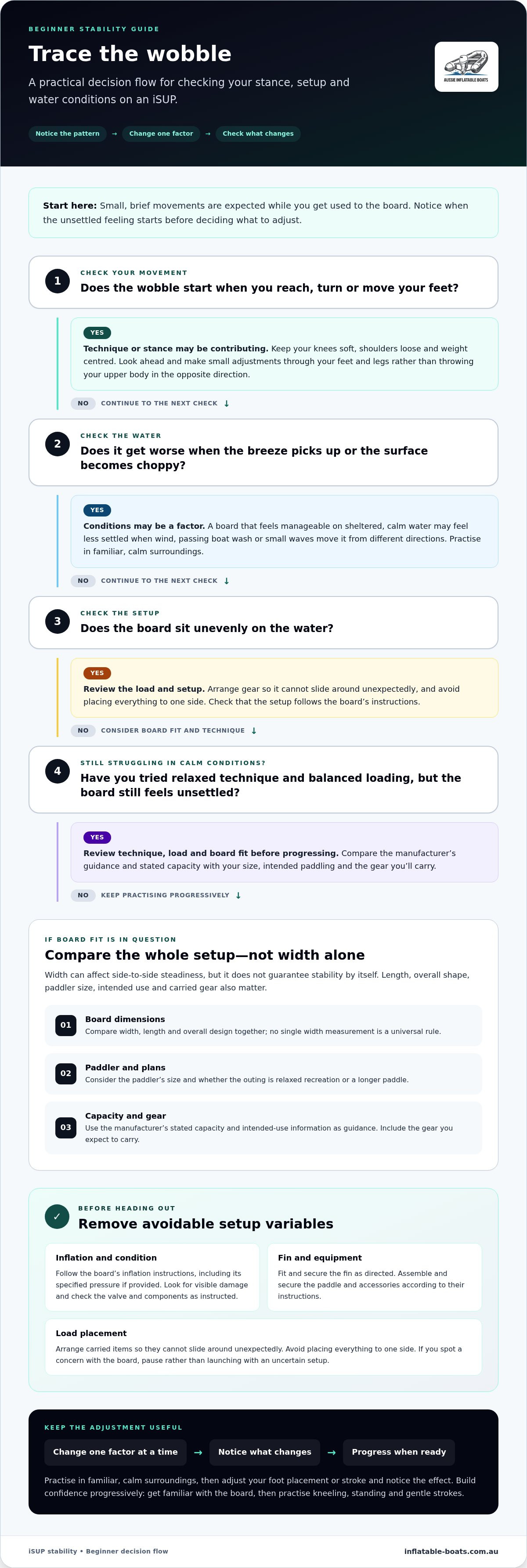
Notice when the unsettled feeling starts. If it happens as you reach, turn or move your feet, your movement or stance may be contributing. If it gets worse when the breeze picks up or the surface becomes choppy, conditions may be a factor. If the board sits unevenly, review how you’ve distributed your gear and whether the setup follows the board’s instructions.
Change one factor at a time. Practise in familiar, calm surroundings, then adjust your foot placement or stroke and notice what changes. This is more useful than guessing at a single cause. Small, brief movements are expected; if you continue to struggle in calm conditions, review your technique, load and board fit before progressing.
Why a wider board is not a universal answer
Width can affect how steady a board feels from side to side, but it doesn’t guarantee stability by itself. Length, overall shape, how the board is loaded and the paddler’s size also affect the fit. A wider option may suit one person, while a different shape may better match another paddler’s plans.
Use the manufacturer’s guidance, including stated capacity, as your starting point. Then consider who will paddle, where you plan to go and what gear you’ll carry. Don’t treat a width measurement from another board as a universal rule. If a board still feels unsettled in calm conditions despite relaxed technique and balanced loading, compare its guidance with your needs. Browse the inflatable watercraft collections to assess board options by fit and intended use.
Choose an iSUP setup that supports beginner stability
Choose a board to suit the paddler and planned outing rather than relying on one “beginner” measurement. Compare width, length and stated capacity together. Consider the paddler’s size, whether the outing is relaxed recreation or a longer paddle, and what gear needs to come aboard. Looking at the whole setup is more useful than relying on one figure.
Which board dimensions matter most for a beginner?
Width can influence how steady a board feels from side to side, but it isn’t a standalone measure of stability. Length and overall design also affect how a board handles and what kind of paddling it suits. A board carrying extra gear may feel different from the same board with only the paddler aboard, so include your expected load when comparing options.
Read the manufacturer’s intended-use information and stated capacity as guidance for choosing a suitable fit, not as a promise that the board will feel identical for every paddler. Compare options in the inflatable watercraft collections with the type of paddling you plan to do in mind. For broader context on instruction and safety, the Professional Stand Up Paddleboard Association is a reference for SUP education.
What should you check before launching?
Set up the board methodically on a clear surface. Follow its inflation instructions, including the specified pressure if one is provided. Don’t estimate or use another board’s directions. Look over the board for visible damage and check that the valve and other components are set as instructed. If you spot a concern, pause rather than launching with an uncertain setup.
- Check the fin: Fit and secure it according to the board’s instructions. Make sure removable parts are correctly seated before heading out.
- Review your load: Arrange carried items so they can’t slide around unexpectedly. Avoid placing everything to one side, which can make the board feel uneven.
- Check your equipment: Assemble and secure the paddle and any accessories you plan to use as their instructions describe.
These checks remove avoidable variables before you start practising. If you’re comparing inflatable paddle boards, browse the inflatable watercraft range with your plans, size and likely gear in mind. A suitable fit and correctly prepared board give you a more useful starting point for learning how your setup feels on the water.
Use a balanced stance and paddle technique to steady your iSUP
A relaxed stance gives you room to respond to the board instead of fighting every small movement. Keep your knees soft, shoulders loose and weight centred rather than leaning hard to one side. The board will still move, but a relaxed posture can help you respond as the water shifts beneath you.
Think of balance as a series of small corrections. If the board tips slightly, avoid throwing your upper body in the opposite direction, which can create another shift. Look ahead, breathe steadily and make a gentle adjustment through your feet and legs. Practise at a pace that lets you notice how each movement affects the board.
Where should your feet and weight sit on the board?
Use the carry handle or the board’s marked centre as a reference, if it has one. Place your feet comfortably on either side of that point, with enough room to feel relaxed rather than locked into a rigid stance. Distribute your weight evenly through both feet. Shift it gradually from side to side, then return to centre and notice the board’s response.
How can your paddle support balance?
Hold the paddle securely and use smooth, purposeful strokes. A steady stroke helps you move in a controlled direction, while frantic paddling can add unnecessary movement. Look towards where you’re travelling rather than staring at your feet. Repeatedly turning your head and shoulders can twist your body and shift your balance. As confidence grows, you can learn a low brace, using the paddle blade briefly against the water for support. Treat it as a skill to develop, not a first-session fix.
Practise in a calm, open area. Start with your feet comfortably placed and your gaze ahead. Paddle at an even rhythm, then pause and settle before making a small change in direction. Notice whether the board responds when you move your hands, rotate your shoulders or shift your weight. That awareness helps you make a measured correction instead of a sudden lunge.
- Soften your knees: Keep them unlocked so your legs can respond to small movements.
- Stay centred: Shift gradually through your feet and hips, then return to a balanced position.
- Keep the stroke composed: Use controlled paddle movements rather than rushing to correct every wobble.
- Build skills progressively: Learn basic forward strokes before practising more advanced support techniques.
Good technique comes from repetition, not force. The Paddlesports Trade Coalition offers a broader industry perspective on education and best practices. Time on the water helps you learn how your stance and stroke work together. Let the board move beneath you, make one small adjustment at a time and allow confidence to develop with practice.
Practise iSUP stability with a simple beginner progression
A calm, repeatable routine gives you time to learn how the board responds without rushing into deep water or challenging conditions. Choose a sheltered, open area with enough room to practise, and make sure the water is suitable for your experience. Wear suitable flotation equipment, check the board and paddle before setting off, and stay aware of other water users, changing conditions and your route back to shore. Practising with a companion may help you feel more prepared.
What should your first stability practice look like?
Start in a suitable shallow area where you can safely stand, away from obstacles and other activity. Take a moment to get familiar with the board while it’s stationary. If it helps, rehearse the movement from kneeling to standing on land first, so the sequence feels less unfamiliar on the water.
- Get comfortable: Begin in a stable, low position and notice how the board responds to small movements. Keep your paddle within reach and take time to settle before progressing.
- Practise kneeling: Kneel near the board’s centre and try a few gentle strokes. Focus on smooth movements and balanced loading.
- Reset if needed: If you feel tense or the board becomes unsettled, pause and return to kneeling. Take a breath, settle your position and decide whether you’re ready to continue.
- Rise with control: When you feel ready, place your hands on the board, bring one foot and then the other beneath you, and rise gradually. Keep your body relaxed and pause before adding movement.
- Add gentle paddling: Once standing feels manageable, try a few calm strokes in open space. Stop and kneel again whenever you need a steadier position.
How do you adapt when the water feels unsettled?
Adapt your practice to the conditions. If wind, chop or passing wash makes standing feel beyond your comfort, stay kneeling or postpone that part of the session. For small disturbances, keep your knees soft and strokes deliberate rather than trying to force the board steady. Choose a position you can manage, then reassess the water and your confidence before continuing.
Falling in can happen while learning. It isn’t a verdict on your ability, and you don’t need to stand straight back up. Regroup, return to a lower position when appropriate and consider whether the conditions, setup or pace need to change. Progress at your own pace, not to a fixed schedule. Finish the session while you can still make calm decisions.
Ready to match your practice plans with a suitable board? Explore inflatable paddle board options with your intended paddling and experience in mind.
Troubleshoot iSUP wobble and build confidence for your next paddle
A wobble can have more than one cause, so resist changing everything at once. Notice when it happens, make one adjustment, then see whether the board feels different. This turns a frustrating moment into useful feedback. If you can’t settle or feel in control, lower your position, take a break or end the session. There’s no benefit in pushing through discomfort.
What if the board keeps tipping to one side?
Start with the basics. Check that your feet are positioned evenly around the board’s centre, your posture is relaxed and your weight is balanced. If the board still seems persistently uneven, pause and review how it’s loaded and set up, following the manufacturer’s instructions. A tilt alone doesn’t identify a fault, so don’t guess at a cause or continue if you’re unsure about the setup.
- The wobble follows a reach or turn: Look ahead again and make the movement smaller. Check whether reaching or twisting is shifting your weight.
- The board feels unsettled with each stroke: Slow down and focus on smooth, consistent movement. Notice whether the wobble changes as your paddling becomes more controlled.
- The board seems uneven before you move: Recheck the load, fin and other removable components against the board’s instructions. Adjust only what you can identify and set correctly.
- The wobble increases as the water changes: Conditions may be contributing. Move to a more manageable area if it’s safe to do so, or stop standing practice for now.
Give each adjustment a fair try before moving to the next. First, settle your feet and posture without changing your stroke. If that doesn’t help, return to a secure kneeling position and check whether the board feels more manageable. Changing one thing at a time helps distinguish a technique issue from a setup or conditions concern without guessing.
How can beginners choose a confident next step?
Use a simple decision: if you feel composed, continue with manageable practice; if you’re tense or the water feels beyond your experience, kneel, pause or head back safely. Take a break if fatigue, frustration or repeated loss of control makes it harder to respond calmly. End the session if you can’t regain a position that feels safe.
Plan your next paddle around suitable board fit, careful setup, a centred posture and gradual practice. Aim to become familiar with the board, not to cover more distance or move faster. A few controlled strokes with a relaxed stance are still useful practice and give you a clear starting point for next time.
As you consider what suits your paddling plans, explore inflatable watercraft at your own pace.
Take your next step towards steadier paddling
Your next session doesn’t need a big target. Choose one thing to notice, such as how the board responds when you relax your grip or make a smooth stroke. That gives you a practical way to build familiarity without turning every wobble into a test. Keep your plans flexible and let your comfort on the water guide your progress.
Confidence comes from learning what works for you, one paddle at a time. The tips in this guide can help you approach each outing with more awareness and less pressure to get everything right straight away. If you’re considering your setup, browse inflatable stand-up paddle boards alongside inflatable watercraft accessories and spare parts.
Explore inflatable watercraft and choose an iSUP and accessories suited to your plans. Practise at your own pace and enjoy the progress you make.
Frequently Asked Questions
Is an inflatable paddle board stable enough for beginners?
Yes, an inflatable paddle board can suit a beginner if its design and stated capacity match the paddler and planned load. The feel also depends on setup, technique and conditions, so no board feels equally steady for everyone. Follow the manufacturer’s sizing and use guidance, and choose a sheltered practice area where wind and surface movement are manageable. Even a small amount of carried gear can affect how the board sits.
How do I stand up on an iSUP without wobbling?
Start from a stable kneeling position, keep your hands low for support and bring your feet beneath you one at a time. Rise smoothly rather than springing upright, then pause to settle before paddling. Place your feet around the board’s centre, keep your knees relaxed and look towards where you plan to go. If you tense up or the board feels unsettled, stop and kneel again before trying another rise.
Can a wider iSUP make it easier for beginners to balance?
A wider board can feel steadier from side to side, but width alone can’t determine how well it suits you. Overall design, your size, the type of paddling you plan and the water conditions all influence the experience. Compare the board’s stated guidance with your needs and expected gear, rather than relying on one measurement as a rule. A suitable fit is personal, not a universal width figure.
What should I do if my iSUP feels wobbly in choppy water?
Put control and safety first. If small waves or boat wash unsettle you, lower your position or return to kneeling, and avoid standing if the conditions feel beyond your experience. A composed stance and controlled strokes can help you respond, but technique can’t remove all water movement. If you remain uncomfortable, stop practising and try again when the water feels more manageable. Don’t force the session to meet a plan.
Should I kneel before standing on an inflatable paddle board?
Kneeling first gives you a chance to get used to the board’s movement before raising your centre of gravity. It isn’t a required step for every paddler, though. Comfort, ability and conditions vary, so choose a progression that feels manageable. If standing starts to feel uncertain, lower yourself back to kneeling and take time to reset. Building familiarity at a comfortable pace is more useful than rushing to stay upright.
Does paddling help you stay balanced on an iSUP?
Controlled paddling creates purposeful movement and a rhythm that can help you coordinate your body. Keep strokes smooth and measured; hurried or forceful movements may make it harder to respond calmly. Paddling won’t prevent every wobble or fall, since balance also depends on posture, board fit and conditions. If a stroke throws you off-centre, pause, settle your stance and resume at a gentler pace.
How can I practise iSUP balance safely as a beginner?
Before heading out, follow the board’s setup instructions and check that its components are fitted as directed. Choose water and weather conditions that suit your experience, wear suitable flotation equipment and stay aware of your surroundings. Build skills gradually, moving on only when each position feels manageable. If your confidence drops, conditions change or you feel fatigued, pause, adjust your plan or finish the session. Preparation helps, but it can’t guarantee safety.