
ISUP for Yoga Australia: How to Choose the Right Board in 2026
The widest board isn’t automatically the right one for yoga. A steady, comfortable practice depends on more than width: usable deck space, board shape and construction all affect how secure you feel as you move between poses. If you’re choosing an iSUP for yoga in Australia, the challenge is finding a calm platform without giving up the portability and paddling versatility that make an inflatable board appealing.
It’s reasonable to wonder whether an inflatable can feel stable enough for yoga, especially if you also want to paddle beyond sheltered water. The answer starts with matching the board to your practice, experience and usual conditions, rather than chasing speed or a single headline feature.
This guide compares the practical details that matter, including width, shape, deck space and construction, and weighs inflatable boards against hard boards. You’ll find a clear way to assess your options and prepare for a more comfortable session on the water.
Key Takeaways
- Learn what makes SUP yoga a distinct outdoor practice, and how an iSUP can bring paddling and yoga together.
- Discover how board dimensions, outline, deck area and stiffness can influence comfort as you move through poses.
- Use the comparison of yoga-oriented, all-round and hard-board formats to weigh practice space against portability, storage and everyday use.
- Apply a five-step checklist to match an iSUP for yoga australia to your practice, capacity needs and on-water conditions.
- Build a practical shortlist by comparing published specifications and planning the essentials before heading out.
Why choose an iSUP for yoga in Australia?
SUP yoga is yoga practised on a stand-up paddle board afloat on the water. It brings familiar poses into an open-air setting, where gentle movement, water and the surrounding landscape create a different feel from a studio session. There’s also an added balance challenge: the board responds to shifts in your weight, encouraging you to move with attention rather than rush through a sequence.
Not every paddle board will suit every practice. Comfort depends on the board’s design, your experience, the poses you intend to practise and how you’ll use the board beyond yoga. A roomy platform may appeal for a relaxed flow, while someone working towards more demanding poses may prioritise a predictable feel underfoot. The broader Paddleboard Yoga overview also describes how boards designed for yoga can provide a wider deck for stability.
What makes an iSUP different from a hard yoga SUP?
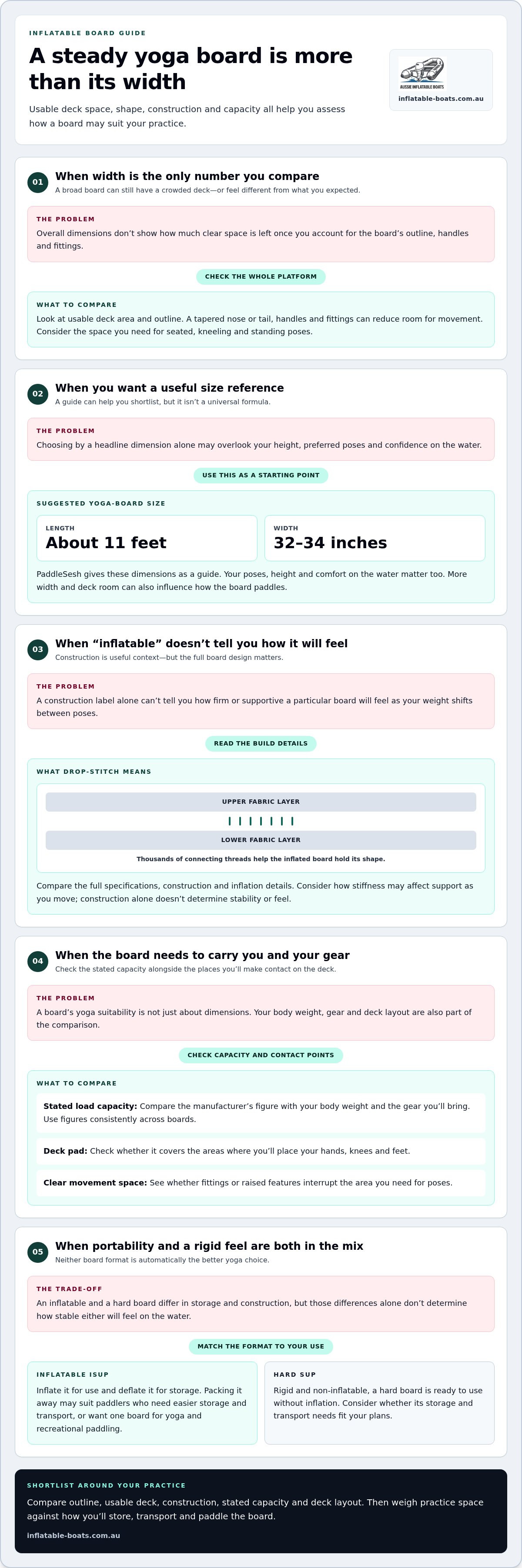
An iSUP is an inflatable stand-up paddle board that’s inflated for use and deflated for storage; a hard SUP has a rigid, non-inflatable construction. The inflatable format can suit paddlers who need to pack a board away between outings, while a hard board is ready to use without inflation. Neither format is automatically the better choice for yoga.
The feel underfoot varies with construction and individual board design. An inflatable’s firmness depends in part on its build and inflation, while a hard board has a rigid structure. Those distinctions alone don’t determine how stable either will feel on the water. Compare the specific board’s shape, deck and construction, and consider how it suits your movement and balance.
Who is an inflatable yoga SUP suited to?
An inflatable can be a practical fit if portability matters. Deflating and packing the board away may make storage and transport easier than accommodating a rigid board. It can also suit someone who wants one board for occasional yoga sessions and general recreational paddling, rather than a setup devoted solely to yoga.
Be clear about your practice. If you’re exploring gentle or familiar poses, your priorities may differ from those of someone building a routine around advanced balances. Think about the movements you’ll actually practise, how much deck room you need, and whether you’ll paddle before or after a session. Balancing yoga with everyday use makes the choice more personal than simply picking a board labelled for yoga.
For an iSUP for yoga Australia-wide, begin with your own plans, not a product label. Consider where you’ll store and transport the board, how often you expect to practise, and what kind of paddling you enjoy. Then compare options in the paddle board collections against those needs. Inflatable Boats sells inflatable paddle boards, accessories and spare parts, so you can compare board options alongside useful ownership essentials.
Which iSUP features support a steadier yoga practice?
A useful comparison starts with the space and support you need beneath you, not a single measurement. Width, outline, stiffness and deck layout work together: a board may look broad on paper yet offer less clear space once you account for its nose shape, rails or fittings. For yoga, consider how the whole platform will feel as you shift between seated, kneeling and standing positions.
Board dimensions alone don’t guarantee stability; shape, construction, inflation and the paddler’s movement all contribute to how a board feels on the water. Use specifications to shortlist options, then assess how their features suit your body, balance and planned poses.
How do width, shape and deck space affect yoga poses?
A broader outline can provide more room for seated and kneeling poses, and may make it easier to reposition your hands and feet without crowding the edges. As a general reference, PaddleSesh suggests a yoga-board size of about 11 feet long and 32-34 inches wide. That’s a guide, not a universal formula: your height, preferred poses and confidence on the water matter too.
More width and deck room can influence the board’s paddling feel, so weigh practice space against how you want to travel between yoga sessions. Compare the usable deck area, not just overall length. A tapered nose or tail, handles and fittings can reduce the clear space available for movement.
What should you look for in construction and the deck?
Drop-stitch construction is a common inflatable-board design: thousands of connecting threads join the upper and lower fabric layers, helping the inflated board hold its shape. It’s useful context when comparing construction, but the term alone doesn’t tell you how a particular board will feel. Review the full published specifications and consider how stiffness may affect support as your weight shifts between poses.
Compare each board’s stated load capacity with your body weight and the gear you’ll bring, using the manufacturer’s figures consistently. Then examine the deck layout. A deck pad covering the areas where you’ll place your hands, knees and feet may offer a more comfortable contact surface. Check whether fittings or raised features interrupt that space.
- Width and outline: Consider how much lateral room your poses need.
- Usable deck: Check clear space around handles, fittings and deck-pad edges.
- Construction and capacity: Compare stated details across boards rather than relying on labels alone.
A considered iSUP for yoga australia shortlist should balance practice space with the way you intend to paddle. Once you know which dimensions and deck features matter for your routine, browse inflatable paddle-board collections and compare published specifications side by side.
Yoga-focused iSUP or all-round board: which is the better fit?
The best format depends on how you’ll spend most of your time on the water. A yoga-oriented board may put practice space first, while an all-round iSUP aims to balance yoga with recreational paddling. A hard board offers a different format again. Compare published dimensions, capacity and intended use rather than relying on a “yoga” label alone.
| Format | Practice space | Portability and storage | Everyday paddling |
|---|---|---|---|
| Yoga-oriented shape | May prioritise a roomy platform. Check its usable deck area and dimensions. | If inflatable, it can be deflated and packed away; the exact packed size depends on the board. | Its fit for general paddling depends on its design and your expectations for travel on the water. |
| All-round shape | Could provide space for occasional practice, but assess the clear area available for your poses. | An inflatable format can be stored deflated between outings. | Designed to balance different recreational uses, though its shape and specifications still matter. |
| Hard-board format | Practice room varies by the individual board’s dimensions and outline. | Remains rigid for storage and transport, so plan for space to accommodate its full shape. | Its rigid construction gives it a different feel from an inflatable; suitability depends on the board and intended use. |
When does a yoga-oriented board make sense?
A yoga-oriented design may suit you if a roomy platform and regular yoga sessions are your main priorities. Treat design cues as a starting point, not proof of fit: compare actual width, outline, clear deck space and stated capacity with the movements you plan to practise. If you also want to cover distance or use the board for varied recreational paddling, consider whether its intended use matches those plans.
When is an all-round iSUP the more versatile choice?
If paddling is your regular activity and yoga is an occasional addition, an all-round iSUP may offer a useful balance. Check its stated shape and dimensions against the space your poses need, and compare its capacity with your weight and the gear you’ll carry. Versatility isn’t the same as yoga-specific stability; the design and specifications still need to suit your practice.
For an iSUP for yoga australia shoppers can use for more than one kind of outing, let your priorities lead. Frequent yoga calls for a practice-first assessment, while mixed plans call for closer attention to everyday paddling suitability. Compare options in the inflatable paddle-board collections using the same specifications for each board, then choose the format that best fits how you’ll use it.
How to assess an iSUP for your practice and Australian conditions
A good choice starts with your own plans, then accounts for the water and weather on the day. Use this five-step check to compare boards and prepare for a session without assuming one setup suits every paddler or location.
- Define your practice. Note the poses and transitions you expect to do, from seated stretches and kneeling poses to standing sequences. Think about how often yoga will feature compared with general paddling, too. This helps clarify whether a yoga-focused platform or a versatile iSUP better fits your routine.
- Compare dimensions and clear deck space. Review each board’s published length, width and shape, then look at the usable area available for your hands, knees and feet. Handles and fittings can affect where you can position yourself. Compare the same measurements across shortlisted boards rather than relying on a yoga label or overall length alone.
- Assess capacity. Start with your weight, then account for clothing, water and any other gear you’ll take. Compare that combined load with the board’s stated capacity, using the manufacturer’s published figures. Capacity is one part of the decision; it doesn’t replace considering the board’s dimensions and intended use.
- Check conditions. Before setting out, check the current Bureau of Meteorology forecast and consider whether the conditions suit your experience and planned session. Wind, changing weather and conditions on the water can affect how manageable a board feels. Conditions differ across Australia, so use current information for your intended area.
- Plan essentials. Take appropriate safety equipment and consult current guidance from the relevant local water-safety authority. Advice and requirements can vary by location and conditions, so don’t assume guidance for one waterway applies everywhere. Plan how you’ll transport, inflate and pack away your board, and how you’ll end the session if conditions change.
Match the board to your body, practice and paddling plans
Be specific about what you want the board to do. A paddler planning a short stretch of familiar poses may have different space needs from someone practising longer sequences with frequent transitions. Compare the clear deck area with those movements, and capacity with your body weight and carried gear. Then weigh yoga priorities against storage, transport and the recreational paddling you expect to do.
Plan a calm, prepared session on the water
Choose conditions that suit your experience and check the forecast again close to your outing. Begin with familiar poses, stay low as you get used to the board’s movement, and build balance gradually rather than forcing advanced transitions. Prepare on shore by reviewing local advice, organising appropriate safety equipment and being ready to change your plans if conditions aren’t suitable.
Use these checks to narrow your iSUP for yoga australia shortlist around your practice and the conditions you expect to encounter. Explore inflatable paddle boards and compare each option’s published details with your needs before choosing.
Choose your yoga iSUP and get ready to paddle
Your shortlist should make the trade-offs clear. Prioritise the platform and deck space your practice needs, confirm the capacity suits you and your carried gear, then consider whether the board also fits your everyday paddling plans. Compare published specifications on the same basis across every option. A consistent comparison is more useful than relying on a yoga label or a single headline measurement.
Use this final checklist before choosing
- Capacity: Compare the board’s stated capacity with your weight and the equipment you’ll take. Include items you might overlook, such as water, clothing and a dry bag.
- Dimensions and deck layout: Match the board’s shape and usable deck area to the poses and transitions you plan to practise. Consider where handles and fittings sit in relation to your hands, knees and feet.
- Intended use: Decide how often you’ll practise yoga compared with recreational paddling. A board for mixed use should make sense for both, not just suit one planned session.
- Storage and transport: Consider where you’ll keep the board and how you’ll get it to the water. For an inflatable, include the practical steps of packing it away after use.
- Specification consistency: Record the same details for each shortlisted board, including dimensions, capacity and deck layout. That makes it easier to spot meaningful differences rather than compare unrelated claims.
Build a simple first-session plan
Set yourself up for a measured introduction. Choose a familiar area that feels sheltered, and use current forecasts and relevant local water-safety guidance to decide whether conditions suit your experience. Conditions can change, so be prepared to postpone or adjust your plans rather than treating a session as fixed.
Before launching, organise suitable safety essentials and prepare your board according to its instructions. Keep the first practice focused on getting comfortable with the board’s movement: begin with a stable position, try familiar poses, and leave demanding balances for another day. A calm start gives you room to notice how weight shifts affect the platform and to find a manageable pace.
Choosing an iSUP for yoga Australia-wide comes down to a practical question: does the board suit your body, practice, storage needs and time on the water? Compare the published details across your shortlist and choose the option that reflects how you’ll actually paddle and practise.
Make your next session a reality
The first outing doesn’t need to be ambitious. Choose a session that gives you time to get comfortable on the water, notice how your board responds and enjoy the practice without rushing into challenging poses. With an iSUP for yoga australia that suits your routine, your board can become part of a broader connection to the outdoors, not just a platform for one activity.
As you make your choice, let your real plans lead: how you’ll transport and store the board, what kind of paddling you enjoy and how you want to build your yoga practice. Inflatable stand-up paddle boards are part of our range, alongside inflatable boat accessories and spare parts.
Explore our inflatable paddle boards and choose a board that fits your practice and time on the water.
Frequently Asked Questions
Is an inflatable SUP stable enough for yoga?
Yes, an inflatable SUP can provide a suitable yoga platform if its design and setup match your practice. Follow the manufacturer’s inflation instructions, as an under-inflated board may feel different beneath you. Start with seated or kneeling poses in manageable conditions, and notice how the board responds as you shift your weight. Stability is a personal feel as well as a specification, so build confidence gradually.
What size iSUP is best for yoga?
There isn’t one ideal size for every paddler or practice. Choose dimensions that give you room for the poses you plan to do, allowing for your height, stance and how much you move between positions. For example, if your routine includes wide-legged poses, check whether the usable deck accommodates that stance without your feet crowding the rails. Compare measurements across boards using the same method.
Can beginners do yoga on an inflatable paddle board?
Yes, beginners can try SUP yoga, but start with poses you already know and can adapt. A simple seated stretch or kneeling posture is a more measured introduction than attempting a standing balance straight away. Practise in suitable conditions, keep your movements controlled and pause if the board’s motion feels unfamiliar. If you’re new to yoga as well as paddling, build each skill at a comfortable pace.
Is an inflatable or hard SUP better for yoga?
Neither format is automatically better. An inflatable may suit you if packing and storing a board is a priority, while a hard SUP may appeal if you prefer a rigid board that’s ready to use without inflation. The individual board’s shape, deck layout and construction affect how it feels. Choosing an iSUP for yoga australia depends on your practice, storage options and plans for paddling beyond yoga.
Can I use an all-round iSUP for yoga?
Yes, an all-round iSUP can work for occasional yoga if its deck gives you enough room and its stated capacity suits your load. Picture your usual session: if you’ll paddle first, then stop for a few familiar poses, a versatile board may suit that mix. For frequent practice or sequences with larger transitions, check that the clear deck area supports those movements rather than relying on the all-round label.
What should I take for SUP yoga in Australia?
Pack suitable safety equipment for your location and check current local water-safety guidance before heading out. Practical extras can include drinking water, sun protection, a towel and a dry change of clothes. Check the Bureau of Meteorology forecast before launching, and have a way to keep essential items secure while you practise. Your gear list should suit the conditions, session length and your planned route.