
ISUP for Long Distance Touring: Inflatable or Hard Board
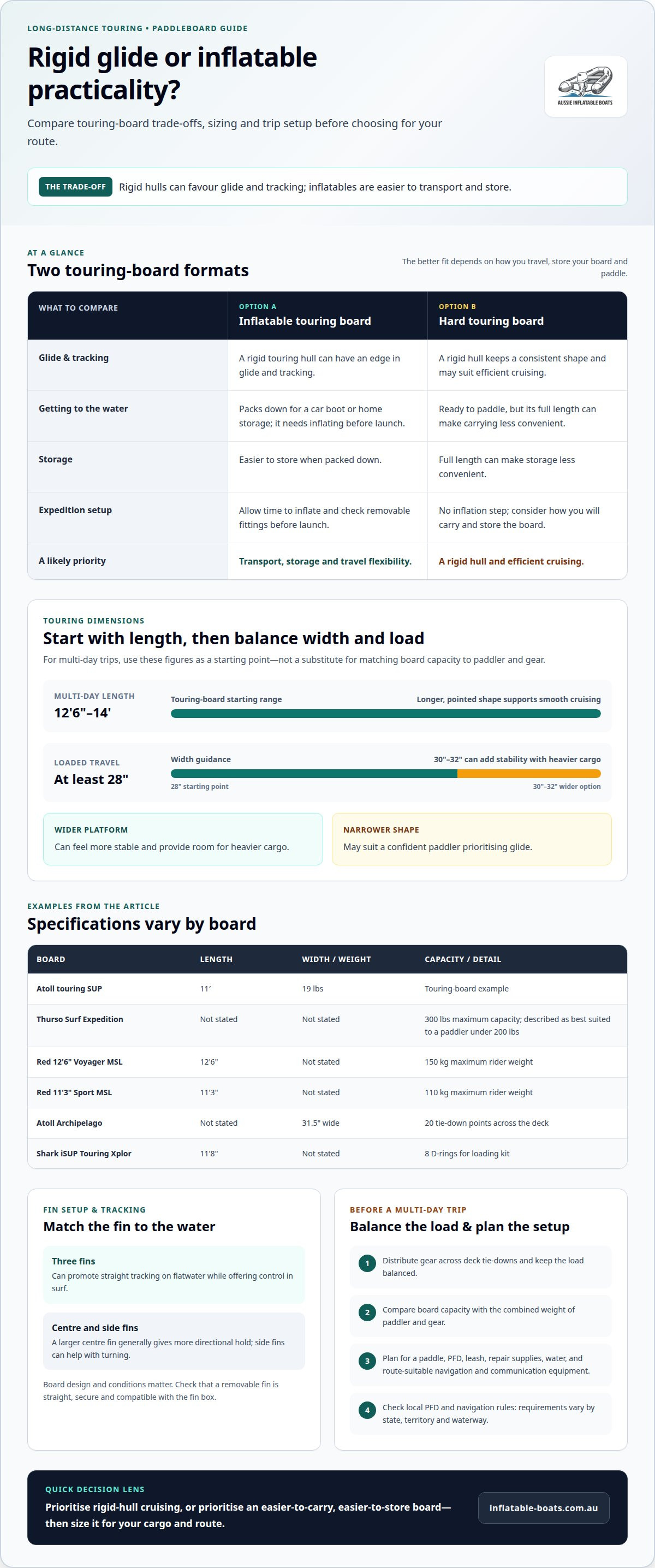
A hard board isn't automatically the best iSUP for long distance touring. A rigid touring board can have an edge in glide and tracking, while an inflatable is easier to transport and store; the better choice depends on how you travel and where you paddle. For multi-day trips, touring boards are usually 12'6" to 14' long, giving you a useful starting point for comparing designs.
When every paddle stroke adds up, performance deserves careful attention. But carrying the board to the water, storing it at home and fitting it into your travel plans matter too. An inflatable touring board is easier to transport and store, while a hard board may suit paddlers who prioritise a rigid hull and efficient cruising.
This comparison explains how inflatable and hard boards differ in tracking, cruising efficiency and overall value, including what to consider when choosing a budget-friendly touring option. You’ll also find a practical guide to matching a board to your route, cargo and storage needs.
Key Takeaways
- Weigh the hard board’s rigid-hull performance against an inflatable’s easier transport and storage when choosing for your touring routine.
- For multi-day trips, use board length and width to balance efficient travel with stability and room for cargo.
- Fin setup affects how a board tracks on flatwater and handles in surf, so match it to the water you expect to paddle.
- Compare touring options by speed, tracking, stability and durability, not just by one headline feature.
- Assess value through the whole ownership picture, including portability, cruising efficiency and the equipment your trip requires.
Inflatable Touring Board or Hard Touring Board?
For long-distance touring, weigh a rigid hull’s consistent shape against an inflatable board’s easier transport and storage. An inflatable packs down for a car boot or home storage, but needs inflating before launch. A hard board is ready to paddle, though its full length can make carrying and storage less convenient. Both involve trade-offs in portability, handling and expedition setup.
Touring boards are usually 12'6" to 14' long for multi-day SUP trips. For loaded travel, aim for at least 28 inches wide; 30 to 32 inches can add stability with heavier cargo. A longer, pointed touring shape supports smooth cruising through the water, while an all-round board favours versatility over distance efficiency. Your paddling experience matters too: a wider platform can feel more stable, while a narrower shape may suit a confident paddler prioritising glide.
Leading examples show how specifications vary. The Atoll 11′ touring SUP weighs 19 lbs; the Thurso Surf Expedition has a maximum capacity of 300 lbs and is described as best suited for a paddler under 200 lbs. The Red 12'6" Voyager MSL has a maximum rider weight of 150 kg, while the 11'3" Sport MSL has a maximum rider weight of 110 kg. The Atoll Archipelago is 31.5 inches wide.
A single-chamber iSUP has one main air compartment; a double-chamber design divides inflation between two compartments. The separate chamber can provide additional buoyancy if the other is damaged, but it doesn’t replace sound equipment or careful trip planning.
Australian safety-equipment and navigation requirements vary by state, territory and waterway. Before departure, learn the local PFD and navigation rules, and plan communication and route-finding equipment suited to the conditions.
| Option | Length | Width or weight | Capacity or touring detail |
|---|---|---|---|
| Atoll touring SUP | 11′ | 19 lbs | Touring board example |
| Thurso Surf Expedition | Not stated | Not stated | 300 lbs maximum capacity; described as best suited for a paddler under 200 lbs |
| Red Voyager MSL | 12'6" | Not stated | 150 kg maximum rider weight |
| Red Sport MSL | 11'3" | Not stated | 110 kg maximum rider weight |
| Atoll Archipelago | Not stated | 31.5 inches wide | 20 tie-down points across the deck |
For cargo, distribute gear across deck tie-downs and keep the load balanced; the Shark iSUP Touring Xplor 11 Foot 8 Inch has 8 D-rings for loading kit. A multi-day setup also needs a paddle, PFD, leash, repair supplies, water, and navigation and communication equipment suited to the route. Choose a wider touring board for a heavier load, then compare its capacity with the combined weight of paddler and gear.
Fin setups and tracking
A fin helps resist sideways drift, so its setup affects how steadily an inflatable SUP travels. On flatwater, a three-fin setup can promote straight tracking while offering control in surf. This combination may suit trips between sheltered bays and wave-exposed launches. For long-distance paddling, steadier tracking can mean fewer course corrections and a more consistent rhythm.
Fin count is only part of the decision. The fin’s position, shape and fit also affect how the board responds in the water. A larger centre fin generally provides more directional hold, while side fins can help with turning. These effects vary by board design and conditions, so don’t assume every three-fin arrangement performs alike.
For beginners, a predictable setup can make it easier to develop a straight, repeatable stroke. Start on calm water and notice whether the board consistently turns to one side. If it does, check that the fin is straight and secure, then review your stroke and stance. Uneven paddling can affect tracking as much as fin choice.
Before travelling with a removable fin, inspect the fin box and fittings. Sand or grit can prevent a snug fit, and a loose fin may shift while paddling. Use this simple pre-launch sequence:
- Clear debris from the fin box and inspect the fin for visible damage.
- Seat the fin in the correct direction and secure its fitting.
- Check that it sits straight, then test tracking in calm water.
- Pack removable fins where they won’t be crushed during carrying or storage.
Fin choice also depends on the route. A three-fin setup can balance flatwater tracking with surf control, while changing conditions may call for a different balance of directional hold and manoeuvrability. Consider the board’s intended use rather than treating fin count as a standalone measure of touring performance. Even a confident paddler can lose ground if the fin is misaligned or the stroke repeatedly pulls off course.
On an inflatable board, removable components make travel easier, but their fittings need careful handling. Keep the fin and small fittings together in your storage kit; a missing component can make it harder to set up the board as intended. A spare fin is useful only if it fits the board’s fin box.
Match the setup to your route, then assess tracking with a short, calm-water test before carrying touring cargo. For broader inflatable boating options, consider how your wider watercraft plans fit alongside your paddleboard choice.
Speed and cruising efficiency
For sustained distance, hull shape matters more than a burst of sprint speed. Paddleboards 12'6" and longer are suited to fast paddling and long-distance touring. Their longer waterline and pointed nose support efficient glide and straight tracking. That can help riders hold a steady cruising rhythm instead of spending each stroke correcting direction. A touring paddle board is built to cover ground; an all-round shape prioritises versatility.
Inflatable construction adds a separate consideration. A board that’s well inflated holds its intended shape more effectively under a paddler’s weight. Quality inflatable SUPs are designed for 12-15 pounds per square inch. Follow the board’s recommended inflation pressure, because a soft board can flex more under load and feel less efficient through the water. Carrying extra cargo also changes how the board sits, so balance the load across the deck.
Set a realistic daily distance before planning an Australian route. Most touring SUP paddlers can cover around 15 to 25 kilometres in a full day at a relaxed, steady pace. Fit, experienced paddlers can cover more than 30 kilometres in a long day. Wind, water conditions, cargo and rest stops affect how sustainable that pace feels. Treat those figures as planning context, not a race target.
Paddle choice can help reduce effort over a long session. A lightweight carbon paddle with a small or medium blade is recommended for long-distance SUP touring. A manageable blade can help you maintain a repeatable stroke, while excessive force may tire your shoulders and arms sooner. Try a comfortable cadence on a short paddle before committing to a full-day route. Keep each stroke controlled rather than reaching far across the board.
Use this practical sequence to assess cruising efficiency before a longer adventure:
- Inflate the board to its recommended pressure and secure the fin.
- Load the touring kit evenly, using the bungee or tie-down points to keep cargo stable.
- Paddle a short, familiar stretch and observe whether the board holds its line.
- Adjust stance and stroke if the nose wanders or the load shifts.
Track effort as well as distance. If a comfortable pace becomes difficult to sustain, shorten the planned leg or allow more time for breaks. A smaller blade and steady cadence may suit one paddler; another may prefer a different feel. Match the setup to your ability, expected cargo and route conditions. On multi-day adventures, efficient cruising depends on the whole system: board, paddle, trim and pacing working together.
Budget-friendly touring options
The best iSUP for long distance touring isn’t necessarily the board with the lowest upfront price. Compare its length, stability and cargo layout with the trips you plan, then consider transport and included equipment. The Red 11'3" Sport MSL and 12'6" Voyager MSL provide different shapes to assess. A shorter board may suit mixed-use paddling, while a longer touring design prioritises distance travel.
To find the best iSUP for long distance touring within your budget, assess the complete package, not just the board. A paddle, pump, backpack and leash affect what else you’ll need. Consider whether the paddle suits extended sessions and whether the backpack makes carrying the board manageable between your vehicle and the launch. Missing essentials can add expense and inconvenience after purchase.
For an expedition, assess deck layout alongside board length. Tie-down points and bungee storage help secure dry bags, but cargo still needs balanced placement. The Atoll Archipelago has 20 tie-down points across the deck, offering several positions for attaching gear. Consider whether the layout suits your bags, rather than comparing attachment-point counts alone.
Use this checklist to compare options without relying on the headline price:
- Intended distance: Match the board shape to touring rather than occasional recreation.
- Load: Include the paddler, water, food and overnight gear when assessing capacity.
- Storage: Consider how bungee cords and tie-down points secure your bags.
- Transport: Account for the backpack and the effort required to carry the packed board.
- Included equipment: Identify which essentials are supplied and which you’ll need separately.
Confidence comes from a suitable fit, not a premium label. Compare the stated capacity with your expected combined load, leaving room for expedition supplies. A stable platform can feel more controlled under cargo, while an unsuitable shape may demand more effort. The right balance depends on your ability, gear and route. Try your intended load on a short outing before planning a remote crossing.
Finally, consider how often you’ll use the board beyond touring. The Red Sport MSL may suit paddlers seeking a versatile option, while the Voyager MSL is the longer touring choice. Compare their dimensions and package contents with your trips, storage space and carrying needs. This helps you assess value without treating the lowest initial cost as the whole decision.
How do popular touring iSUPs compare for speed, tracking, stability, and durability?
Compare measurable specifications, then match them to your route and load. Board length can inform expectations for glide, while width and deck fittings affect cargo organisation. The figures below show useful differences across five inflatable touring options, but they aren’t a controlled comparison of speed or durability.
| Board | Length and width | Weight or capacity | Tracking, stability and durability detail |
|---|---|---|---|
| Atoll touring SUP | 11′ long | 19 lbs | Weight gives a portability comparison; other listed performance figures aren’t available here. |
| Atoll Archipelago | 31.5 inches wide | Not stated | 20 tie-down points across the deck for arranging cargo. |
| Shark iSUP Touring Xplor | 11 Foot 8 Inch | Not stated | 8 D-rings for deck cargo, one underside nose D-ring for towing, and a 3 year warranty. |
| Red 12'6" Voyager MSL | 12'6" long | 150 kg maximum rider weight | Longer touring length; capacity gives a load comparison. |
| Red 11'3" Sport MSL | 11'3" long | 110 kg maximum rider weight | Shorter than the Voyager; compare its capacity with your intended load. |
For cruising speed, the Red Voyager’s 12'6" length places it in the range suited to fast paddling and long-distance touring. Its longer waterline supports efficient glide, though actual pace also depends on paddler ability, conditions and cargo. The 11'3" Sport MSL is shorter, so it may suit a more mixed-use choice than a dedicated distance priority. Neither length alone proves a board is faster in every situation.
For stability and storage, the Atoll Archipelago’s 31.5-inch width and 20 tie-down points make its dimensions and cargo layout easy to assess. The Shark Xplor offers 8 deck D-rings for kit, plus a nose attachment beneath the board for towing. These features describe utility, not a measured stability ranking. Position bags evenly and compare capacity with paddler and gear weight.
Durability is harder to rank from these specifications alone. The Shark Xplor’s 3 year warranty is a concrete ownership detail, but it isn’t a direct measure of construction or resistance to damage. The Atoll’s 19 lbs weight helps compare carrying demands, not toughness. For a like-for-like decision, prioritise published construction details and warranty terms alongside length, load capacity and fittings.
Choose the Voyager for its touring length, the Archipelago for its width and tie-down layout, or the Shark Xplor when its fittings and warranty align with your priorities. Explore inflatable watercraft options to consider how your paddling plans fit within your wider setup.
Inflatable Boats
Inflatable Boats can support the wider equipment needs of time on the water alongside your touring-board decision. The business sells inflatable boats, accessories and spare parts, and provides repair services for inflatable vessels. These options are useful when you need equipment or upkeep beyond comparing board speed, tracking and cargo capacity. Match your craft and supporting gear to the way you travel and use the water.
For questions about inflatable watercraft, accessories, spare parts or repairs, contact Inflatable Boats.
Set up your next paddle with confidence
Make your next step practical: picture the trip you want to take, from getting your craft to the water through to packing away afterwards. The best iSUP for long distance touring is the one that fits your real-world plans, not just a specification sheet. Make room in your routine for the board, paddle and essential kit, and build confidence with manageable outings before taking on a bigger adventure.
If your time on the water calls for other inflatable craft or support gear, Inflatable Boats sells inflatable boats, accessories and spare parts. Explore these options when your plans extend beyond choosing a touring board.
Ask Inflatable Boats for advice as you plan your next step. Then get out there, find your rhythm and enjoy the open water.
Frequently Asked Questions
What Makes a Great Touring Stand Up Paddle Board (SUP)?
A great touring SUP combines directional glide, predictable handling and a load setup suited to your route. Look beyond length: consider your stance, where bags sit and whether the board stays balanced when loaded. For example, a paddler carrying food and spare clothing needs accessible, secure deck storage. A board that’s efficient on flatwater may feel different in wind or chop, so match its design to the conditions you expect.
Board thickness, important or not?
Yes, thickness matters because it contributes to a board’s volume and how it sits under load. But don’t assess it alone: width, construction, inflation pressure and your combined paddler-and-gear weight also affect how the board feels on the water. A thicker board isn’t automatically the better touring choice. Consider how the deck height and board response feel for your balance and paddling style, especially when carrying camping equipment for an overnight trip.
How much gear can you carry on a touring SUP?
The amount you can carry depends on the board’s stated capacity and how its deck accommodates your load. Add the paddler and all gear together, then compare the total with the relevant manufacturer rating. Don’t treat a maximum rider-weight figure as permission to carry the same weight in cargo. Pack dense items low and distribute bags evenly. Keep frequently used essentials accessible without shifting the board’s balance.
Touring SUP vs all-round SUP for long distances?
A touring SUP is designed for efficient travel, while an all-round SUP suits a broader mix of paddling. For example, a paddler planning long flatwater legs may favour a touring shape; someone alternating between short outings, relaxed paddles and other activities may prefer an all-round board. Consider your usual route, cargo and time on the water. The most specialised shape isn’t always the most useful choice for mixed weekends.
What size touring SUP for multi-day trips?
For multi-day SUP trips, touring boards are usually 12'6" to 14' long. Choose within that range by considering your gear, paddling confidence and how much manoeuvrability you want at launch and landing points. A longer board can suit sustained travel, while a shorter option may be easier to handle in tighter spaces. The right size should support your planned load without making everyday transport impractical.
What features make an inflatable SUP suitable for long-distance touring?
Look for a touring outline, secure deck attachment points and a capacity that suits your complete load. Inflation pressure matters too: quality inflatable SUPs are designed for 12-15 pounds per square inch. Packability can simplify transport between home, vehicle and launch, while well-secured bags reduce movement on the water. Check that your pump, fin and repair supplies can travel with the board, especially on routes far from easy access.
Which touring iSUPs are best for beginners, heavier paddlers, or carrying camping gear?
For a beginner, prioritise a stable-feeling setup and practise with a light load before carrying camping gear. The Red 12'6" Voyager MSL has a maximum rider weight of 150 kg. The Thurso Surf Expedition has a maximum capacity of 300 lbs and is described as best suited for a paddler under 200 lbs. For cargo, the Shark iSUP Touring Xplor has 8 deck D-rings; compare each board’s rating with your total load.
How do single-chamber and double-chamber iSUPs compare for long-distance touring safety?
A single-chamber iSUP has one main air compartment. A double-chamber design adds a separate buoyancy compartment if the other is damaged, but still requires sound equipment and careful trip planning.