
Inflatable Stand Up Paddle Board Reviews Australia: How to Choose
The highest-rated board isn’t automatically the right one for your next paddle. If you’re searching inflatable stand up paddle board reviews australia, star ratings are a useful starting point, but they won’t tell you whether a board’s shape, dimensions and construction suit your experience, the water you’ll paddle or the space you have to transport and store it. Specifications can also be hard to compare when reviews focus on different details. A compact packed size matters, but so does how the board fits your plans on the water.
A useful iSUP review looks beyond the score. This guide explains what to check, from width, length and thickness to construction, carrying weight and included equipment. It also compares common board styles against different paddling needs. Use it to build a shortlist, identify the specifications worth confirming and check current product details before purchase. The goal is to find a board that suits your time on the water and the practicalities before and after each session.
Key Takeaways
- Useful inflatable stand up paddle board reviews australia assess how a board may suit your paddling plans, not just its rating.
- Compare dimensions and construction details consistently, then consider what they may mean for fit and handling.
- Match board style to your intended activity, and check that the product information supports the claimed use.
- Use a checklist to separate verified owner feedback from promotional language and claims without evidence.
- Shortlist boards around your paddling, transport and storage needs, then confirm current specifications and included equipment in the product listing.
Inflatable stand up paddle board reviews Australia: what should a useful review tell you?
A useful iSUP review assesses suitability, construction and likely use on the water. It does more than present a star rating or repeat a list of features. When comparing inflatable stand up paddle board reviews australia, ask whether the board fits the paddler’s size, experience and plans. A high score can’t answer that by itself. For example, a board praised for touring may not suit someone who prioritises easy handling on calm water.
Check what evidence supports each claim. Manufacturer specifications state measurements and materials; retailer descriptions present product information; owner feedback shares individual experience; and independently verified testing reports results from a defined assessment. These sources can all be useful, but they aren’t interchangeable. Hands-on testing and current model-specific performance claims haven’t been independently verified in this guide, so treat specifications as product information, not observed test results.
What does an inflatable SUP review actually assess?
Look for discussion of stability, tracking, manoeuvrability, carrying comfort and setup. Tracking means how well a board holds a straight line. These practical details help you picture the experience from packing up to paddling. For a general overview of the sport and its variations, see Stand-up paddleboarding.
How a board performs depends on its design and condition, whether it’s inflated to the manufacturer’s specified pressure, and the paddler and conditions. Wind, water movement, load and technique can all affect how it feels. If a reviewer hasn’t tested a model, they should make that clear rather than presenting listed dimensions or construction as proof of stability, speed or durability.
Why Australian paddling plans matter
Start by thinking about where and how you expect to paddle. Are you planning relaxed outings on calm water, longer touring sessions, fitness paddling or another activity? Your answer helps identify which design priorities matter and which review details need closer attention. Also consider transport and storage: check how the packed board will fit in your vehicle and where you’ll keep it between outings.
Conditions vary across Australia, so a review based on one setting may not reflect the waterway where you plan to paddle. Check current local waterway rules and lifejacket requirements with the relevant authorities before heading out, as obligations can depend on location and conditions. Use reviews to narrow your options, then verify current specifications and suitability for your intended use before purchase.
How to compare iSUP construction, dimensions and key specifications
Compare like with like. Record the details from each current product listing, making sure they refer to the exact model you’re considering. Then weigh them against your paddling and practical needs. This table is a guide to what to verify, not a set of specifications for any particular board.
| Verified specification | What it means | Who may value it |
|---|---|---|
| Width, length and thickness | Dimensions influence fit, stability and handling, but their combined effect depends on the board’s shape and design. | Paddlers comparing comfort, intended activity and transport needs. |
| Volume and paddler guidance | Volume relates to buoyancy. Check the manufacturer’s recommended paddler size or load information as well. | People choosing a board for their body size or carrying additional gear. |
| Construction materials | Confirm which materials are specified, such as drop-stitch construction or PVC. Don’t assume these details from photos or generic descriptions. | Buyers assessing build information and what remains unclear. |
| Pressure rating and weight limit | These are model-specific figures. Follow the listed inflation guidance and distinguish a stated maximum load from recommended paddler guidance. | Anyone checking setup requirements and suitability. |
| Included equipment | Check each item individually, including fins, paddle, pump, leash and carry bag. | Paddlers confirming what they’ll need to supply separately. |
How board dimensions can affect stability and handling
As a broad design tendency, a wider board may provide a more settled-feeling platform, while a longer shape may be intended to support straighter travel. Neither is a performance guarantee. The outline, fin arrangement, inflation and paddler’s technique also matter. Compare the manufacturer’s guidance and the exact dimensions, then consider how they fit your plans, body size and ability to carry and store the packed board.
What construction and included gear can tell you
Drop-stitch describes an internal construction method used in many inflatable products. The term alone doesn’t confirm a particular board’s rigidity or durability. Check the listing for material, construction details and pressure guidance. If any of these details are missing or unclear, ask the seller to confirm them before purchase. For broader safety preparation, consult Paddle Australia safety standards and check current local requirements.
Included gear can affect setup and readiness, so don’t assume a package contains every item you expect. These checks also make inflatable stand up paddle board reviews australia easier to compare: separate confirmed specifications from claims that still need verification. To see the options currently listed, browse inflatable paddle board options and confirm each product’s specifications and included equipment before deciding.
Which inflatable paddle board style suits your paddling plans?
No single board style suits every paddler. Labels such as all-round, touring and activity-focused can help organise a shortlist, but they’re useful only when the product listing supports the category with clear design details. Treat the label as a clue, not a guarantee of stability, speed or suitability. The table below is a comparison framework, not a claim about currently listed models.
| Intended use | Design priorities to compare | Questions to check before purchase |
|---|---|---|
| Relaxed paddling or learning | A settled-feeling platform, usable deck space and dimensions suited to the paddler. | What rider size and conditions does the manufacturer recommend? Are the board’s dimensions and load guidance stated? |
| Touring or covering distance | Tracking, glide, storage for essentials and practical carrying requirements. | Does the listing explain the shape and any storage features? Are claims about straight-line travel supported by reliable feedback or testing? |
| Fitness or another focused activity | Deck space, stability for the intended movement and any activity-specific design features. | Does the product information identify the intended use and provide details that support it? |
| Mixed use or progression | A balance of handling, comfort and versatility, matched to the paddler’s likely activities. | Which trade-offs matter most, and can the board’s specifications support more than one use? |
Choosing a board for relaxed paddling or progression
For calm outings or building confidence, look beyond a “beginner” label. Check how a review describes stability, how much usable deck space the board has and whether the manufacturer’s rider-size guidance fits you. A comfortable platform may help, but no category guarantees an easy learning experience. Conditions, inflation and technique all affect how a board feels. Don’t treat an unverified model as the best beginner option.
Choosing a board for distance, fitness or varied activities
For longer paddles, compare claims about tracking and glide with verified dimensions and design details. A shape intended to travel in a straighter line may involve a trade-off in manoeuvrability, so consider where you’ll paddle and how often you’ll need to turn. For fitness or varied use, check deck space, storage and carrying needs alongside reliable owner feedback. A category label alone isn’t evidence.
Use inflatable stand up paddle board reviews australia to guide your questions, not to skip verification. Current models and their categories aren’t confirmed here, so check live listings before assigning a board to a style. Match the evidence to your plans, then shortlist options that fit both your paddling and practical needs.
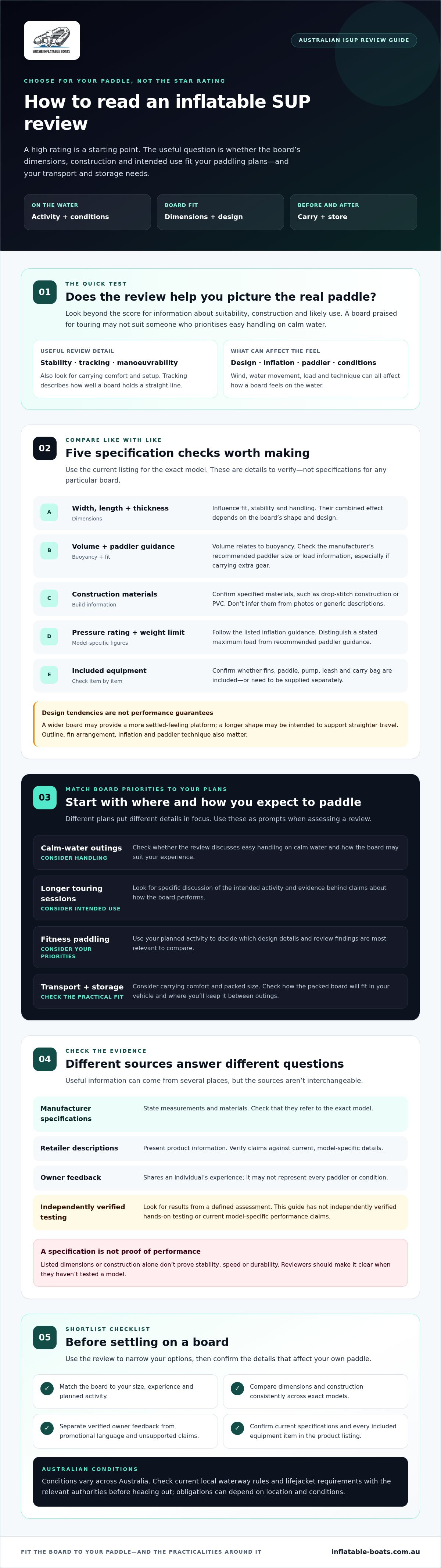
How to assess inflatable stand up paddle board reviews before buying
Use this checklist to turn review reading into a practical decision. It helps you judge whether the evidence supports your shortlist instead of relying on a persuasive description or star score alone.
A five-step iSUP review checklist
- Write down who’ll paddle and where. Note each paddler’s experience, intended water and likely activities. This gives you a basis for deciding whether a review applies to your situation.
- Compare verified specifications. Check dimensions, construction details and manufacturer guidance on rider size. Make sure each figure refers to the exact model and version you’re considering.
- Check what’s included and what’s unclear. Confirm the listed equipment, care information and setup instructions. If material, pressure or load details are missing, ask the seller to clarify them rather than filling the gaps with assumptions.
- Assess the quality of the evidence. Separate owner feedback and documented testing from retailer or manufacturer descriptions. Look for specific observations and context, not unsupported superlatives or unexplained ratings.
- Confirm the current listing. Before committing, recheck product details, stock status and available support information. Listings can change, so don’t rely on an older review to confirm what’s currently offered.
Questions to ask when a review makes a strong claim
Did the reviewer actually use the board? Do they explain the paddling conditions, setup and experience level? Does “stable” describe a particular situation, or is it just a broad claim? Useful feedback gives you details you can relate to your own plans. Promotional copy may still provide specifications, but don’t mistake it for independent testing.
If a relevant product demonstration is available, the inflatable SUP video library may help you inspect visible details. Treat video as supporting material, not proof of performance in conditions you haven’t seen. For inflatable stand up paddle board reviews australia, a strong shortlist is one where each important claim can be traced to a current specification, credible owner experience or clearly described test.
Before paddling, check current Australian and local waterway requirements, including any applicable lifejacket rules, with the relevant authorities. Ready to compare available options? Explore inflatable stand up paddle boards and verify the current listing details before you choose.
Explore Australian iSUP options and choose your next step
Build your shortlist around your intended paddling, then compare rider guidance, dimensions, construction, included equipment and practical needs such as transport and storage. When reading inflatable stand up paddle board reviews australia, treat rankings and broad category labels as starting points, not substitutes for checking the evidence. Current model-specific review results haven’t been verified here, so this guide doesn’t rank or name individual boards.
Inflatable Boats offers inflatable stand up paddle boards, but current models, specifications and availability need to be checked against live listings. Browse the inflatable paddle board collections to see the options presented, then assess each listing against your own criteria.
What to confirm on a product listing
Check the exact model name and make sure the details apply to that model, not just to a general product category. A careful final check can prevent assumptions about suitability or what’s supplied.
- Dimensions and guidance: Confirm the listed measurements and any manufacturer advice on rider size or use.
- Construction: Look for clear material and construction information. Don’t infer a specific build from a photo or broad description.
- Included items: Check which equipment is listed, rather than assuming a paddle, pump, leash, fins or carry bag comes with the board.
- Availability and claims: Recheck the live listing and verify claims about performance, testing or stock. Don’t infer warranty terms or delivery conditions from category-level information.
If a specification is absent, unclear or inconsistent, ask before deciding. The retailer’s contact options provide a route for product questions. Where relevant, confirm any answer against the current listing.
When to ask for help before choosing
Contact the retailer if you can’t establish whether the listed dimensions and rider guidance suit your intended use, or if construction and included equipment need clarification. For a focused enquiry, note the exact listing and the detail you’re checking. That makes it easier to compare confirmed information rather than rely on assumptions.
Once you’ve checked the details, compare the remaining options with how and where you plan to paddle. Explore the inflatable watercraft options, confirm current product information and choose a board using evidence that fits your needs.
Choose a board that fits your next paddle
The most useful inflatable stand up paddle board reviews australia help you look past ratings and match a board to your paddling plans. Compare verified dimensions, construction details and included equipment, then weigh those specifications against your experience, transport and storage needs. Board-style labels can guide your shortlist, but they don’t guarantee performance or fit.
Before choosing, confirm the current product listing and clarify missing details rather than relying on assumptions or unverified claims. Inflatable Boats offers inflatable stand up paddle boards, as well as inflatable watercraft accessories and spare parts. Explore the available options and check the product information that matters to you.
Explore inflatable watercraft options and take the next step towards finding a board suited to your time on the water. A considered choice can make getting out there feel simpler and more rewarding.
Frequently Asked Questions
Can an inflatable stand up paddle board be as stable as a hard board?
An inflatable SUP can feel stable, but that depends on the board and paddler, not simply on whether it’s inflatable or hard. Compare verified width and volume, the manufacturer’s rider guidance, inflation requirements and intended use. Reviews are most useful when they explain who tested the board, under what conditions and how stability was assessed. A star rating alone can’t tell you how it may feel for your size, experience or paddling plans.
What should I look for in an inflatable SUP review?
Look for a clear review method, the reviewer’s experience and the conditions in which they used the board. Useful inflatable stand up paddle board reviews australia discuss stability, tracking, manoeuvrability, setup and transport, then relate observations to verified specifications. Check whether comments come from firsthand use or repeat manufacturer descriptions. Specific observations are more useful than unexplained star scores or unsupported superlatives such as “best”.
Are inflatable paddle boards suitable for beginners?
Some inflatable paddle boards may suit beginners, but the right choice depends on the paddler, board design and intended conditions. Check the manufacturer’s rider guidance and compare the board’s dimensions and setup requirements. Look for review details that explain who used it and how it handled, rather than relying on a “beginner-friendly” label alone. New paddlers should also consider their planned waterway and experience before choosing where to paddle.
How do I choose the right inflatable paddle board size?
Start with your intended activity, paddler size and the manufacturer’s rider guidance. Compare the exact product’s length, width, thickness and volume, then consider whether its packed size suits your transport and storage needs. Dimensions can help you assess fit, but they don’t guarantee performance or suitability. Check that the specifications refer to the precise model you’re considering, and ask the retailer to clarify missing or conflicting details before deciding.
What pressure should I inflate an iSUP to?
Inflate an iSUP to the pressure specified by its manufacturer for that particular board. There’s no single setting to assume for every model, and you shouldn’t exceed the stated limit. Check the board’s instructions and use the pressure gauge as directed during setup. If the product listing or manual doesn’t clearly state the correct pressure, confirm it with the seller before inflating. Inspect the valve and seams as part of your setup checks.
Do inflatable paddle boards come with a pump and paddle?
Included equipment varies by product, so check the current listing for the exact board. Look for an explicit inventory that identifies whether a pump, paddle, fin, leash and carry bag are included. Don’t assume a package contains an item because it appears in a photograph or is mentioned in general category information. If an accessory isn’t listed or the wording is unclear, ask the retailer to confirm what comes with the board before purchase.
Do I need a lifejacket when paddling in Australia?
Lifejacket requirements depend on the state or territory, waterway and paddling conditions, so check current advice from the relevant authority before heading out. Rules can vary, and a product review can’t replace official safety guidance. Consider the conditions, your experience and the safety equipment appropriate for your trip, even where wearing a lifejacket may not be required. Confirm any legal or safety information before relying on it.