
Inflatable Dog Paddle Boards: Australian Buying Guide
What if the best inflatable paddle board for dogs isn’t simply the widest or most rugged-looking option? Choosing an inflatable paddle board for dogs australia means weighing how the board handles a moving passenger, how much usable deck space you both need and whether its capacity suits you, your dog and your gear. Looks alone won’t answer those questions.
It’s understandable to want a stable setup and to think about claws, shifting weight and changing conditions on the water. Start with practical details rather than assumptions. This guide explains how to compare deck space, load capacity, board styles and dog-friendly features, so you can narrow your options with confidence.
You’ll also find steps for preparing your board and supporting gear for Australian waters, then introducing your dog to paddling gradually. A calm first outing begins well before you launch. With a considered setup, you can focus on building confidence together and enjoying the water.
Key Takeaways
- Choosing an inflatable paddle board for dogs australia starts with your dog’s comfort and the fit of your shared setup, not the board’s appearance.
- Compare usable deck space with the room you and your dog need to move and settle comfortably.
- Count the rider, dog and equipment together when assessing a board’s stated capacity.
- Weigh the space and handling priorities of all-round and touring-style boards against the outing you have in mind.
- Plan around the forecast and waterway advice, then compare inflatable SUP categories and relevant accessories on the Collections page.
Is an inflatable paddle board for dogs in Australia the right choice?
Calm water, open space and your dog alongside you can make for a memorable outing. But a pleasant paddle depends on more than the view. An inflatable stand-up paddleboard, or SUP, is a portable board inflated before use on the water. Its portability can make it a practical option to explore, but the right choice depends on the rider, the dog, how they fit on the board and the conditions on the day. Standup paddleboarding covers a range of equipment and ways to enjoy the activity. Sharing a board with a dog adds its own comfort and handling considerations.
Think of the board as one part of a complete setup. You need room to paddle and adjust your balance; your dog needs a place to settle without being jostled by each movement. A dog that shifts, stands or becomes anxious can change how the board feels underfoot. That doesn’t mean paddling together is out of reach. It means fit and your dog’s response matter as much as the board category.
Choose a setup by matching your dog, your needs as a rider, the board and the conditions. Don’t assume a board is suitable for dogs based on its appearance or category name. Compare its actual layout and specifications with the way you plan to use it.
What makes a SUP outing suitable for a dog?
Start with your dog, not the shopping list. Consider whether they’re comfortable near water, can settle when asked and cope with unfamiliar surfaces under their paws. A board can move or feel different from solid ground, so don’t assume your dog will enjoy it straight away.
Introduce the board gradually in a calm, familiar setting before considering a short paddle. Let your dog investigate at its own pace and watch for signs that it can relax. Deciding to try paddling is separate from deciding whether your individual dog finds the experience comfortable. If it shows signs of distress, pause and reassess rather than pushing on.
What should owners decide before comparing boards?
First, picture the outing you actually want: a short recreational paddle close to your launch point, or a longer session that calls for more time on the water. Your intended use helps determine how much space and capacity to look for. No single board suits every trip.
Next, account for the combined load of rider, dog and everything you plan to carry. Conditions matter too. Weather, water movement and your dog’s comfort can change between planning and launch, so be ready to adjust the plan or stay ashore. Choose a setup that supports a calm outing, not one that pressures you to go ahead when circumstances aren’t right.
Which inflatable paddle board features matter when your dog comes along?
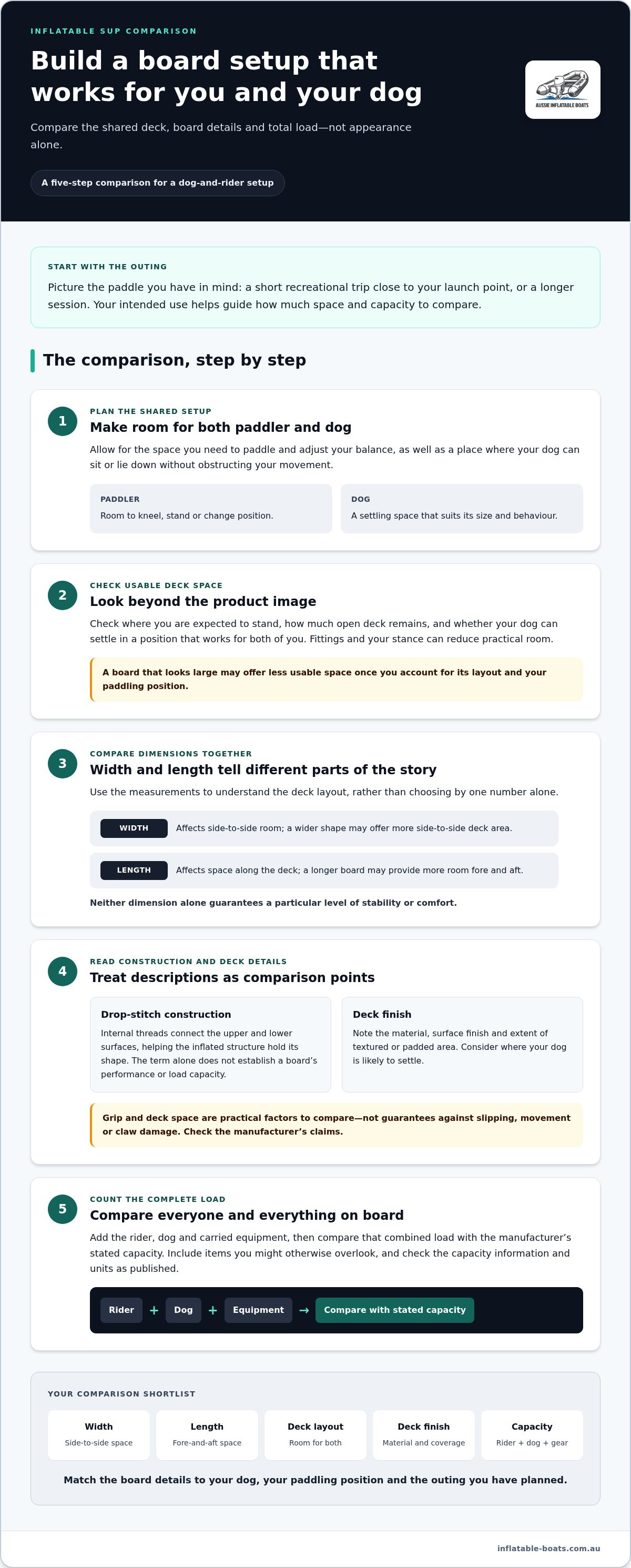
Compare the board as a shared platform, not just by its headline dimensions. Width affects how much room there is side to side, while length affects the space available along the deck. Neither measurement tells the whole story. You need room to kneel, stand or adjust position, while your dog needs a place to sit or lie down without obstructing your movement.
Look at the usable deck layout: where you’re expected to stand, how much open space remains and whether your dog can settle in a position that works for both of you. A board that looks large in a product image may have less practical room once you account for fittings and your stance. The right fit depends on your dog’s size and behaviour, your paddling position and the outing you have planned.
How do width, length and deck space affect the shared setup?
Width and length work together, but they don’t guarantee a particular level of stability or comfort. Consider how the dimensions translate into usable space for your setup. For example, a longer board may provide more room fore and aft, while a wider shape may offer more side-to-side deck area. Compare the measurements with the board’s layout rather than choosing by one number alone.
There’s no universal size that suits every dog and rider. Use your dog’s size, the space you need to paddle and the gear you’ll carry to judge whether the deck looks workable. Check whether your dog can settle without taking up the space you need to change position or paddle.
How should construction and deck finish enter the comparison?
Drop-stitch construction is a general method used in inflatable boards. Internal threads connect the upper and lower surfaces, helping the inflated structure hold its shape. The term is useful context when comparing construction descriptions, but it doesn’t establish how a particular board performs or what load it can support. Use the manufacturer’s stated specifications for those comparisons.
Read the deck description too. Note the material, surface finish and extent of any textured or padded area, then consider where your dog is likely to settle. Grip and accessible deck space are practical factors to compare, not guarantees against slipping or movement. Don’t assume a surface will resist claw damage unless the manufacturer specifically says so.
Assess capacity using the complete loaded setup. Add the rider, dog and carried equipment, then compare that combined load with the manufacturer’s stated capacity. The dog and gear contribute to the total, so include items you might otherwise overlook. Check the units and capacity information as published, and don’t substitute a visual impression for the stated figure.
For an inflatable paddle board for dogs australia comparison, keep a simple shortlist of width, length, usable deck layout, deck finish and stated capacity. Comparing inflatable SUPs and accessories by these details can help you focus on how a setup fits your outing, rather than appearance alone.
All-round or touring inflatable SUP: which style suits paddling with a dog?
An all-round board and a touring-style board are useful categories for narrowing your comparison, not a verdict on which board will suit your dog. Broadly, all-round designs are considered for general recreational paddling, while touring styles are shaped around covering distance. With a dog aboard, weigh the type of outing you want against the space both of you can actually use.
A dog doesn’t automatically make every board unstable. The effect depends on how the board fits its load and how the dog moves. A dog that stays settled presents a different challenge from one that shifts position or stands suddenly. Neither category label tells you how a particular board will feel with your setup. Compare the published dimensions, deck layout and rated capacity, then consider how they work together for your intended use.
| Comparison point | All-round style | Touring style |
|---|---|---|
| Intended outing | General recreational paddling | Outings where distance is a stronger priority |
| Usable space | Assess the available deck area for the rider and dog | Check whether the layout leaves enough space for both |
| Handling priority | Consider how the board’s dimensions suit your planned use | Consider how its layout supports your paddling priorities |
| Trade-off to weigh | General-purpose suitability still depends on fit and specifications | Distance-focused priorities must be balanced against dog space |
When might an all-round board be the more practical comparison?
For a general recreational paddle, an all-round style can be a sensible category to assess first. Its broad category description may suit a trip where shared deck space and flexible use matter more than distance. Still, don’t treat “all-round” as a promise of stability or a guarantee that your dog will fit comfortably. Compare the specific board’s dimensions and layout with the room you and your dog need.
When should owners compare a touring-style board?
If covering more distance is central to your plans, include touring-style options in the comparison. Look closely at how the board’s length and deck arrangement affect the space available for your dog, and weigh that against your paddling priorities. A touring label doesn’t establish a board’s suitability. That depends on its stated dimensions, rated capacity and the fit of your complete setup.
Use categories to organise your shortlist, then assess each option against the facts that matter. Does the layout leave your dog a place to settle without crowding your paddling position? Do the published dimensions and capacity match the intended load and outing? Choose the category whose actual specifications and usable space suit your circumstances, not the one with the most appealing label.
How to prepare a dog-and-rider inflatable SUP setup for Australian waters
A measured plan gives you options if the weather turns, the water feels different from shore or your dog needs a break. Before setting out, check the Bureau of Meteorology forecast and current advice for your chosen waterway. Rules can vary between waterways and jurisdictions, so consult current official guidance for your destination rather than assuming the same advice applies everywhere.
Use this sequence to prepare an inflatable paddle board for dogs australia outing, from the first forecast check to your final decision at the launch point.
- Check the forecast. Review expected wind and weather through the Bureau of Meteorology. Consider whether the conditions suit your experience and your dog, and be prepared to postpone if they don’t.
- Review waterway advice. Find current official guidance for the specific waterway, including any relevant local conditions or restrictions. Don’t rely on assumptions based on another location.
- Introduce the board on land. Give your dog time to sniff and explore the board while it’s stationary. Reward calm investigation, and avoid rushing from first contact straight to a launch.
- Prepare the dog and essentials. Consider a properly fitted canine flotation device, along with fresh water and a way to provide shade where practical. These are useful parts of your comfort planning, but don’t assume your dog will automatically feel at ease on the water.
- Inspect the setup. Before use, check the board surface and valves, and prepare the equipment according to its care and use instructions.
- Reassess on the day. Observe the conditions at the launch point and your dog’s response. Shorten or abandon the plan if conditions change or your dog appears distressed.
What should owners consider before the first paddle?
Make your dog’s first introduction calm and low-pressure. Practise around the board on dry land before an outing, allowing your dog to approach and settle at its own pace. A properly fitted canine flotation device is a prudent part of preparation, but it doesn’t replace your judgement. If your dog remains unsettled, choose a different activity and try again another time only if it seems appropriate.
How can owners reduce avoidable wear and discomfort?
Small checks can help you spot issues before they interrupt an outing. Keep your dog’s nails maintained, and inspect the deck for damage before and after use. After paddling, rinse and dry the board and related equipment in line with the manufacturer’s care instructions. Follow the guidance for your particular setup rather than making assumptions about how a surface will handle claws or saltwater.
Preparation also means being willing to change course. A forecast is one part of the decision; actual conditions and your dog’s comfort matter too. Compare inflatable SUPs and accessories as part of building a setup that suits your planned outing.
Choose an inflatable paddle board for dogs with a clear comparison plan
A clear order keeps the choice practical: start with your dog’s comfort, then assess the complete load, usable deck space, intended outing and published specifications. This helps you compare boards against your real setup, rather than being swayed by a category name or product image. A useful inflatable paddle board for dogs australia comparison is built around fit.
Before narrowing your options, work through this final checklist:
- Dog comfort: Consider whether your dog can settle on a moving, unfamiliar surface, and let its comfort guide whether the outing is suitable.
- Complete load: Compare the manufacturer’s stated capacity with the combined weight of the rider, dog and all carried equipment.
- Dimensions and deck layout: Look beyond length or width alone. Consider how much usable space remains for your dog while leaving you room to paddle.
- Intended outing: Match the board category and layout to the kind of session you have in mind, whether recreational paddling or a longer outing.
- Specifications and care: Review the board’s published details and care guidance, then consider which relevant accessories fit your plans without assuming an unstated feature.
What belongs on a final board comparison checklist?
Make a side-by-side note of each option’s published dimensions, stated capacity and usable deck arrangement. Record the total load you expect to carry, including equipment, so you compare capacity against the complete setup. Then read the care guidance and consider relevant accessories as part of your planning. Keep board specifications distinct from assumptions about dog-specific features.
How can readers move from comparison to choosing a board?
Inflatable Boats sells inflatable stand-up paddle boards and accessories. Its inflatable SUP collection lets you compare available categories and related gear. Use the checks above as you review the published details, keeping your dog’s comfort and planned use at the centre of the decision.
There’s no need to rush the final choice. Settle on the requirements that matter for your dog and outing, then compare options against them. Browse Inflatable Boats’ Australian range of inflatable SUPs and accessories to continue your comparison.
Make your next paddle a confident choice
The best setup is the one that fits the outings you and your dog are ready to enjoy. Before choosing, separate essentials from preferences: decide what your dog needs to feel settled, then use your intended outing to guide the comparison. That gives you a practical basis for weighing options without expecting one board to suit every dog, rider and waterway.
Keep your shortlist focused on boards whose published details support your plans, and leave room to adjust as you learn what works for your dog. Inflatable Boats serves customers nationally across Australia, with inflatable SUP options and related gear to explore. Choose your inflatable paddle board for dogs australia setup with care, then introduce it at a pace that keeps the experience comfortable for both of you.
Explore Inflatable Boats’ inflatable paddle boards and accessories to compare options for your next outing.
Frequently Asked Questions
Can I take my dog on an inflatable paddle board?
Yes, many dogs can be introduced to paddling, but a SUP won’t suit every dog. Begin with the board stationary on dry land and watch how your dog responds to its surface and movement. If you progress to water, choose a short outing in suitable conditions and use appropriate flotation equipment. Signs of unease, such as repeatedly trying to leave the board, are a reason to pause rather than press on.
Will my dog’s claws puncture an inflatable paddle board?
Claws may contribute to surface wear or damage, but the risk depends on the board’s materials, condition and how it’s used. Don’t assume an inflatable board is claw-proof. Keep nails maintained and follow the manufacturer’s care guidance. Check for damage after each outing, especially if the board has been used on rough ground or around debris, and don’t rely on an unverified puncture-resistance claim when comparing options.
Does my dog need a life jacket on a paddle board in Australia?
A properly fitted canine flotation device is a sensible precaution, as even a confident dog can tire or become unsettled in the water. Make sure it fits your dog securely without restricting comfortable movement. Requirements can depend on the activity and waterway, so this isn’t legal advice. Check current official guidance for your planned location before setting out, and treat your dog’s comfort and swimming ability as separate considerations.
How do I get my dog comfortable with a paddle board?
Start on dry land, then build a familiar routine around the board. Let your dog approach it voluntarily, reward relaxed behaviour and practise a simple cue to settle in the place you’ve chosen. Keep the first sessions brief and end while your dog is still comfortable. Only consider moving to water if it appears relaxed; don’t force participation if it keeps avoiding the board or seems distressed.
Can a paddle board carry me, my dog and our gear?
Assess this against the particular board’s stated capacity and usable layout. Add the paddler, dog and everything carried, including items that may be easy to overlook, such as water, a bag or spare clothing. If you’re unsure of the combined load, weigh the packed gear and account for your dog’s current weight. Don’t exceed the manufacturer’s limit, and check that the deck arrangement leaves room for both rider and dog.
What should I check before taking a dog paddle boarding in Australia?
Check the Bureau of Meteorology forecast and current official advice for the waterway, then reassess conditions at the launch point. Consider whether the wind, water and return route remain manageable for your experience and your dog. Bring fresh water and plan for shade or rest where appropriate. Waterway guidance can differ, so an inflatable paddle board for dogs australia outing calls for checking advice specific to your destination.