
How to Store a Hard Boat When You Don't Have Storage Space
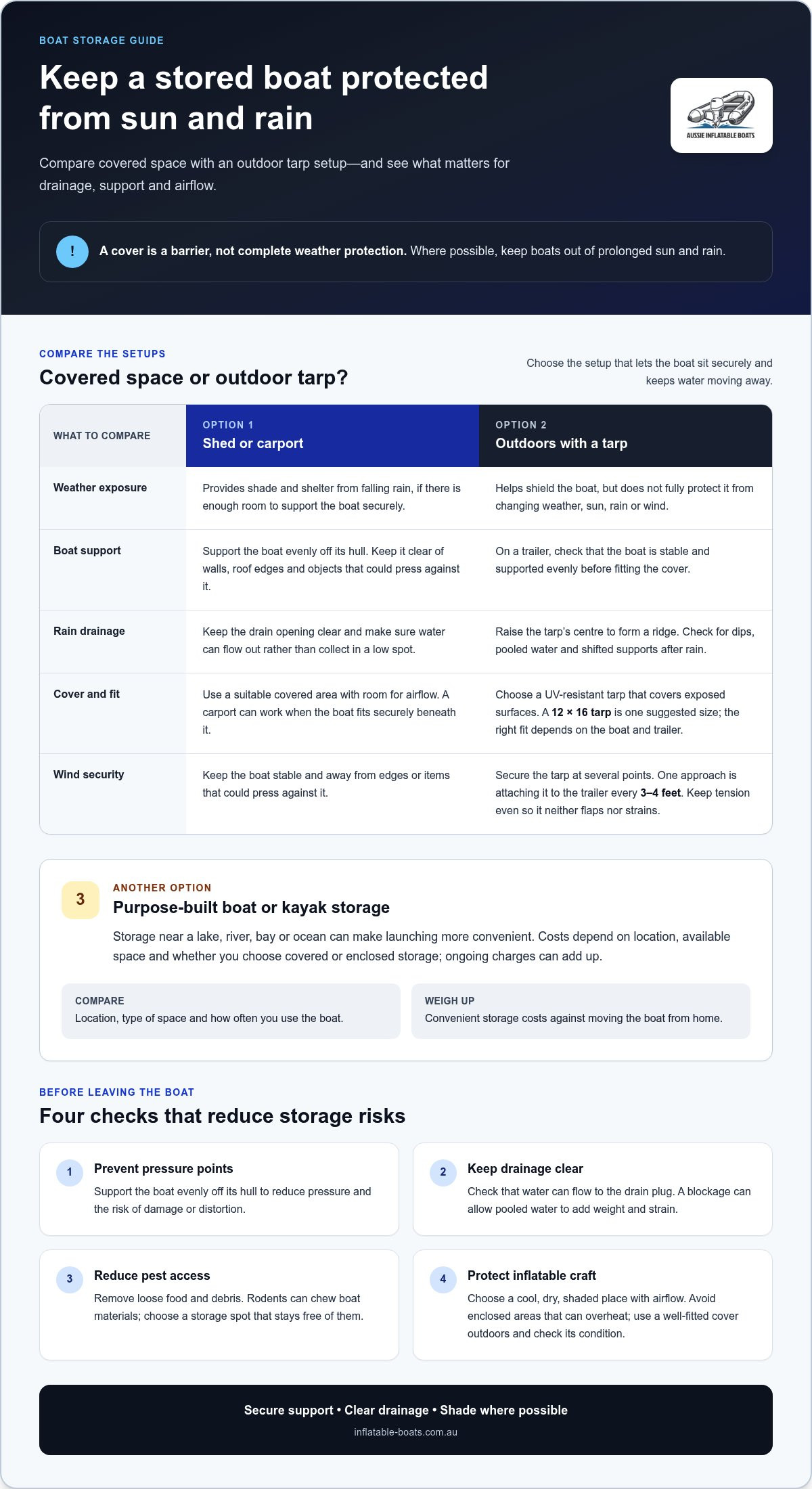
A tarp alone isn’t a storage plan. If you’re deciding what to do when you can’t store a hard boat, use a shed or carport if available. Otherwise, support the boat evenly off its hull and secure a cover on the trailer, shaping it so rain can drain away. Purpose-built storage is another option, with costs depending on location, space and whether you choose covered or enclosed storage.
When a boat takes up more room than you have, leaving it exposed can put its surfaces and fittings at the mercy of sun, rain and wind. Aim to prevent pressure points, stop water pooling and make the space less inviting to rodents. A well-secured cover helps, but it doesn’t provide complete protection from the elements.
This guide covers ways to store a hard boat or kayak without a dedicated shed, reduce exposure and pest risks, and compare storage costs. It also explains how to save space with an inflatable boat by cleaning, drying and folding it carefully before storage.
Key Takeaways
- Support a hard boat or kayak evenly off its hull to reduce pressure points and the risk of distortion.
- If storing a boat outdoors, pitch its cover so rain can drain away and secure it against wind; a tarp is a makeshift shelter, not complete weather protection.
- Compare storage options by location and level of cover, and consider how ongoing costs fit your budget.
- Before storing an inflatable boat, rinse it, let it dry completely and deflate its chambers gradually and evenly.
- Keep stored boats clear of heavy items and rodents, and protect them from prolonged sun and rain where possible.
Storing a boat or kayak off its hull
- Choose supports that carry the boat securely instead of leaving its full weight on the hull. Storing a boat or kayak directly on its hull can concentrate pressure and increase the risk of damage or distortion. For a simple support arrangement, use a couple of 2×4’ in place of an expensive trailer-attached kick stand. Position supports to keep the vessel stable, then check that it doesn’t rock or press against a sharp edge. A kayak also needs broad, steady contact rather than a narrow point bearing down on its hull.
- Arrange the supports so water can drain. A dedicated kick stand for a drift boat or dory can keep the drain plug able to release water if a cover rips and snow melts into the boat. Drainage matters even under cover. Before leaving the boat, check that it sits securely and water can flow to the plug instead of collecting in a low spot. Keep the drain opening clear: a blockage can allow pooled water to add weight and strain.
- Use a shed or carport if it provides a suitable place to support the boat. If indoor space isn’t available, consider purpose-built boat or kayak storage near the water you use. A spot near a lake, river, bay or ocean can make launching more convenient, but ongoing charges can add up. Compare the location and type of space with how often you use the boat. Consider whether convenient storage is worth the cost compared with moving it from home.
- Reduce rodent access before leaving a boat unattended. Rodents can chew boat materials, so choose a storage spot that stays free of them and remove loose food and debris from the vessel. If the boat’s shape allows, roll it up and store it inside a large plastic rubbish bin as a physical barrier. For a boat with a drain opening, secure thick wire mesh over the hole to allow water through while helping keep rodents out. Keep the drainage path clear.
- Remove valuable loose equipment unless it’s in secure, lockable storage. Take out bags and removable accessories, then store them separately where practical. Rinse and dry accessories before putting them away, and inspect moving parts for wear. These checks can reveal a damaged fitting before your next trip. Keep heavy items off an inflatable vessel, too: stored weight can create pressure points even when the boat is folded or supported.
- Review your insurance policy before settling on long-term storage. Cover for theft or weather damage, including for a boat kept on its trailer, can vary with the insurer and storage setup. Note where the vessel will sit, whether it’s covered and how it’s supported, then compare those details with your policy wording. Don’t assume every shed, carport or storage space is treated alike.
Avoiding outdoor exposure to sun and rain
- Use a shed or carport when it provides shade and room for airflow. A designated covered area shields the vessel from direct sun and falling rain. A carport can work if you can support the boat securely beneath it. Keep the hull clear of walls, roof edges and stored objects that could press against it. If no covered space is available, treat an outdoor cover as a barrier against some exposure, not complete protection from changing weather.
- Choose a UV-resistant tarp that covers the boat and its exposed surfaces. On a boat stored outdoors on a trailer, secure the tarp with bungee cords so it stays in place rather than flapping against the hull. A 12 x 16 tarp is one suggested size, but fit depends on the vessel and how it sits on the trailer. Check that the cover reaches over the sides without dragging on the ground or leaving vulnerable sections exposed.
- Pitch the tarp with a raised centre so rainwater runs off. A flat cover can sag under pooled water, putting extra pressure on the tarp and the boat beneath it. Arrange supports to create a raised ridge, then check for dips where water could collect. After rain, inspect the cover again: a shifted support or loose tie-down can turn a useful slope into a water trap.
- Secure the cover at several points, especially where wind can catch its edges. Bungee cords connected to tarp grommets underneath the boat can help hold the cover in strong wind. Another practical approach is attaching an outdoor cover to the trailer every 3-4 feet, which limits loose sections that can billow. Keep tension even: cords pulled too tightly can strain the tarp, while slack edges can flap, wear and allow rain to blow beneath the cover.
- Keep drainage holes clear, but don’t cut a hole at the tarp’s lowest point without considering the hull design. A hole can let snowmelt escape from a cover, but this approach isn’t suitable for a boat that isn’t self-bailing. For a boat stored on a trailer, inspect under the tarp after rain and safely remove standing water. Check the drain plug and surrounding area, too, so water inside the hull can escape.
- For inflatable craft, prioritise shade and ventilation, particularly in Australia’s high-UV conditions. Choose a cool, dry, shaded spot and avoid enclosed areas that can overheat; airflow also helps limit condensation. If the boat must remain outside, use a well-fitted cover and check its condition as it weathers. Exposure and storage pressure affect inflatable materials differently from a rigid hull, so review inflatable-boat materials when considering a suitable craft for limited storage.
Where possible, keep boats and kayaks out of sun and rain, since prolonged exposure can damage hulls. Another contributor said pool liners used as boat covers can last 10-15 years if kept in a shaded spot.
What council rules apply to storing a boat at home in Australia?
- Start with the local council for the property’s street address. Planning information relevant to a home in one area may not apply to another address. Describe the boat, its trailer and the proposed storage spot, such as a side driveway, rear yard or carport. Ask which local planning information applies to that specific setup. Keep the council’s written response with your storage notes in case the boat’s position or arrangement changes.
- Explain whether the boat will sit on a trailer, stand or other support. Include its approximate dimensions if known, and say whether it will be covered. A small kayak beside a garage presents a different layout from a large boat on a trailer across a front yard. Ask whether the council’s planning information addresses the proposed placement, any shelter structure and the property’s existing layout. Don’t assume a carport automatically covers every arrangement; describe the boat and support method.
- Show where the boat will sit in relation to the street, driveway, boundary and neighbouring properties. A simple site sketch can mark the house, fence, access path and proposed storage area. Explain whether the boat could affect vehicle access, pedestrian movement or shared space. Ask the council which location-specific controls or planning guidance apply. Focus the question on the boat’s position rather than asking generally whether boat storage is allowed.
- Separate council planning questions from private property conditions. If you rent, read the relevant tenancy documents and ask the property manager about placing a boat or trailer on the premises. For a strata property, review the scheme’s by-laws and identify whether the proposed spot is common property or part of your lot. These checks are separate from a council enquiry. For example, council information about a driveway won’t resolve a disagreement about shared strata parking or a lease condition.
- Describe any shelter you plan to add, not just the boat beneath it. A carport or other structure can raise different planning questions from a boat stored under a removable cover. Give the council the intended location and basic form of the shelter, then ask what published planning guidance applies. Don’t assume a tarp makes every placement acceptable. Include the property address, storage position, boat and trailer, and whether the setup includes a structure.
- Keep a concise record before settling on a storage arrangement. Save the address, site sketch, photographs of the proposed area and the council’s written guidance together. If you later move the boat from a rear yard to a front driveway, make a fresh enquiry describing the change. This clarifies which guidance relates to each setup. A practical council check is specific: one address, one proposed location and an accurate description of the boat and shelter.
Deflating evenly
- Deflate each chamber gradually rather than collapsing one side first. Inflatable boats have separate air chambers, and releasing pressure unevenly can pull the fabric out of shape while other areas remain firm. Open the valves in sequence and let air escape progressively across the boat. Don’t fully flatten one tube while leaving the opposite tube inflated. A steady, balanced release makes the hull easier to handle and fold.
- Clear a clean area before folding the deflated boat. Choose a flat surface free from grit, sharp edges and loose fittings that could press into the fabric. Wipe away sand and debris before folding, as trapped particles can rub against the boat between its layers. Check the floor as you work. A clean groundsheet can provide a practical barrier on a garage floor or paved area.
- Fold the tubes without making sharp creases around valves, seams or fittings. Start with broad, controlled folds that follow the boat’s natural shape, adjusting as you reach protruding components. A valve caught beneath a tight crease can bear pressure from the layers above. Keep joins and fittings visible as you work, and reposition the fabric rather than forcing it into a compact bundle. Gentle folds reduce unnecessary strain during storage.
- Keep sand and debris out of every fold, especially along seams and around valve bases. As each section comes together, pause to brush away grit before covering it with another layer. If dirt remains near a join, reopen the fold and clean the area. This close inspection also gives you a chance to notice abrasion, scuffs or a loose fitting. Address visible wear before storage so you can assess the boat more easily next time.
- Place the folded boat in its carry bag without compressing it as tightly as possible. Leave enough room for the folds to sit naturally rather than forcing extra material into a small space. Don’t stack heavy gear on top: sustained weight can create pressure points against the folded fabric. Store seats, bags and removable accessories separately where practical, so buckles or hard edges don’t press into the boat between outings.
- Choose a cool, dry, shaded storage spot with ventilation and no pressure points. Avoid leaving the packed boat where direct sunlight can reach it or where a damp corner could affect the fabric. Keep the bag away from rodents, which can chew inflatable materials, and avoid placing it beneath stacked equipment. If a compact, deflatable craft better suits your available space, explore inflatable boat options as you plan your storage setup.
Inflatable boats should be deflated gradually across all chambers rather than collapsed unevenly. Keep that balance in mind throughout the release, not only at the start. As pressure falls, compare the chambers and avoid allowing one area to become fully slack while another still holds its shape. If the release begins to look uneven, slow the process and let the remaining pressure ease more evenly before continuing. The aim is a progressive change across the boat, with no single chamber taking the full change all at once. A measured approach gives you time to notice whether one side is losing air much faster than the rest, and to adjust your pace accordingly. Continue to treat all chambers as parts of the same deflation process, rather than finishing one completely and then turning to the next. Keep your movements unhurried, making the release a continuous, balanced task instead of a series of abrupt changes. When the boat has relaxed evenly, handle and fold it with the same care. Staying attentive to how the whole boat changes helps keep deflation controlled from beginning to end and avoids an abrupt shift from an inflated form to a collapsed one.
Inflatable Boats: Inflatable Boats
Inflatable Boats can suit boaters whose homes have limited room for a rigid hull. Deflated storage is often practical when space is tight or the boat will be unused for an extended period, provided it’s cleaned, completely dry and folded without sharp bends around valves or fittings. Inflatable Boats also offers accessories, spare parts and repairs to help owners maintain their craft and equipment. If a smaller storage footprint is your priority, consider whether an inflatable boat fits your plans and available space. Contact Inflatable Boats to explore the options.
Choose a setup that supports your next adventure
If you’re still weighing what to do when you can’t store a hard boat, consider how your next outing will shape the decision. Think about how easily you can prepare, transport and put away the vessel afterwards. A storage arrangement that fits your routine is more likely to keep boating practical rather than turn it into another job competing for space at home.
If an inflatable craft better suits your available space, Inflatable Boats offers boats, accessories and spare parts to support your setup. Choose an option that matches how and where you plan to get on the water, then make room for the trips you want to take.
Contact Inflatable Boats for help exploring your options, and take the next step towards more time on the water.
Frequently Asked Questions
Should You Store Inflated or Deflated?
For most owners, deflated storage is practical when space is limited or the boat will be unused for an extended period. If you have a large, dry, temperature-controlled space, light inflation can be suitable, provided the boat is protected from ultraviolet exposure and pressure damage. Choose based on the available room and conditions, then follow the boat manufacturer’s storage instructions for its materials and construction.
Where Can You Store a Boat?
Possible places include a shed, carport, suitable covered area at home or purpose-built boat storage. The right option depends on the vessel’s size, how it will be supported and whether the space protects it from weather and pests. An inflatable boat may fit in a dry indoor area after preparation, while a hard boat may need trailer access and room to manoeuvre.
What are alternatives to hard storage for a boat in Australia?
If you’re deciding what to do when you can’t store a hard boat, consider a covered carport, a securely supported boat under a pitched outdoor cover, or paid storage. A deflatable inflatable boat is another option if you have limited space, as it can be packed away once dry. Compare the space, protection and access each option provides rather than treating a tarp as a substitute for enclosed storage.
Can you keep a boat on the street or in a driveway in Australia?
A driveway may provide a home storage spot if the boat fits without obstructing access, but street parking depends on local requirements and the specific location. Before leaving a boat or trailer on a public road, check the relevant council’s parking information for your address. For a driveway, consider household access, visibility and neighbours, and review any applicable rental or strata conditions before choosing the spot.