
How to Prevent Sun Damage on an iSUP: A Practical Care Guide
The biggest sun risk to an iSUP often starts when it’s ashore, not out on the water. If you’re wondering how to prevent sun damage on iSUP, manage both UV exposure and heat: UV can gradually fade and age materials, while heat can warm the air inside an inflated board and increase pressure on its structure. That’s worth keeping in mind if you leave your board inflated during a sunny break.
Protection doesn’t need to be complicated. A few repeatable habits can help you care for your board without cutting short your time on the water.
This guide explains how sunlight and heat affect an inflatable SUP, then outlines a practical routine for before, during and after a paddle, as well as longer-term storage. You’ll learn when shade, rinsing and thorough drying matter, why the board maker’s advice on pressure and care products should come first, and when to seek guidance about possible damage. That gives you a clear way to look after your gear between sessions.
Key Takeaways
- UV exposure and heat can affect an iSUP in different ways. Know what changes to look for.
- For how to prevent sun damage on iSUP, start with the board’s manual, inflate as directed and plan shaded breaks.
- After paddling, move the board out of direct sun and follow its care instructions for cooling, drying and storage.
- If your board has been left in the sun, check its shape, seams, surface and firmness before using it.
- Use a simple care routine, but let the manufacturer’s guidance take priority over general advice.
How sun and heat can damage an iSUP
Sun damage isn’t one single effect. Ultraviolet (UV) exposure can cause gradual changes, while warming the air inside an inflated board can cause a short-term pressure increase. The risks may overlap when a board is left in direct sun, but they are not the same. UV exposure can age a board’s surface over time; heat can warm the enclosed air and increase internal pressure.
That distinction matters when considering how to prevent sun damage on iSUP. Good care accounts for both the board’s materials and the conditions it is exposed to. The extent of either effect depends on the board’s construction and the manufacturer’s instructions.
What UV exposure can do to an inflatable paddle board
Repeated, unprotected UV exposure can contribute to colour fading and gradual surface ageing. The chemical process known as photo-oxidation can affect polymers, but don’t assume every iSUP uses the same material or responds in the same way. Check the board’s manual for its construction and care guidance. A paddle in sunshine is different from leaving a board exposed ashore for an extended period.
Why heat and internal pressure matter
Air expands as it warms. In an inflated board, this can increase internal pressure and place extra strain on the structure, including the seams. Pressure limits and recommended inflation procedures vary by model, so follow the manufacturer’s instructions rather than relying on a universal figure or rule. Don’t assume every board should be deflated in hot conditions; check its manual first.
Think of UV as a gradual exposure concern and heat as a pressure-management concern. They can occur together, particularly when an inflated board sits in direct sun on shore, but the right response depends on the board’s design and care requirements. Keep the two risks separate when planning your routine: limit unnecessary sun exposure and manage inflation according to the manufacturer’s guidance.
How to prevent sun damage on an iSUP before and during a paddle
A simple plan makes hot-weather care easier. Before heading out, check the board’s manual for inflation instructions and any advice about temperature or sun exposure. Inflate it as directed, then think ahead about where you can move it into shade during breaks. This reduces guesswork and unnecessary exposure without adding complicated steps to your paddling day.
Prepare your iSUP for a hot day
Review the manufacturer’s care guidance before leaving home, and take a suitable shade option if you expect to stop ashore. A towel or cover may be useful only if the maker says it is suitable for your board. Avoid dragging the iSUP over rough ground or folding it around obstacles to reach shade. Most importantly, don’t leave it inflated and unattended in direct sun for an extended period.
Protect the board during breaks on the water
When you pause, choose a shaded spot where conditions and safe access allow. Keep the board out of direct sun while it is ashore and not in use, and avoid placing it on a surface that has become hot in the sun. If shade isn’t available, consider shortening the stop or returning to the water rather than leaving the board exposed. Follow the manual if it gives specific advice for breaks.
Don’t release air or change pressure based on a general rule. Board designs and manufacturer instructions differ, so check the guidance for your model before making an adjustment. A quick equipment check and a plan for shade help you stay prepared without taking the focus off your paddle.
Simple on-water routine: inflate as directed, take breaks in shade, keep the board off hot surfaces and check its manual before adjusting pressure.
That’s the practical core of how to prevent sun damage on iSUP while keeping equipment care manageable. If you’re exploring board options, you can also view inflatable stand-up paddle boards available through Inflatable Boats.
What to do after paddling and when storing an iSUP
After a sunny session, give your board a careful reset. Move it into shade and let it cool, then follow the manufacturer’s instructions for cleaning, drying and packing. Cooling is a sensible handling step, not a repair. It won’t reverse wear or damage that may already have occurred.
Cool, inspect and pack the board carefully
Before deflating or rolling the board, look over its shape, surface and seams for anything unusual. This is a visual check, not a diagnosis. If you notice a change, note where it is and consult the manual or an appropriate repair professional before packing the board tightly or taking it back on the water.
Use the maker’s directions for rinsing, drying, deflation and rolling. If you have used the board in salt water, follow its cleaning guidance before storage. Dry it as instructed, paying particular attention to areas where moisture could be trapped when the board is rolled. Don’t assume that cleaning products or packing methods recommended for one board will suit another.
Choose storage that limits ongoing exposure
Store the iSUP in a cool, dry place away from prolonged direct sunlight and avoidable heat. A hot vehicle or exposed outdoor area can subject a packed board to heat and further sun exposure. Follow the board’s storage instructions, including whether it should be stored inflated or deflated and how it should be positioned.
UV exposure can contribute to the ageing of plastic materials; a report held in the NOAA Institutional Repository discusses the impact of solar UV radiation on their durability. That general information doesn’t confirm the material or care needs of your particular iSUP, so use it as context, not as a substitute for the manufacturer’s advice.
For how to prevent sun damage on iSUP, make the post-paddle sequence part of your routine:
- Move the board into shade and let it cool.
- Check for visible changes without assuming what caused them.
- Clean and dry it as the manufacturer directs.
- Pack and store it according to its specific care instructions.
Consistent care helps limit unnecessary exposure, but it can’t guarantee that a board will remain undamaged. If you notice a seam concern, a persistent change in shape or signs of air loss, pause before using it and seek advice from the manufacturer or an appropriate repair professional.
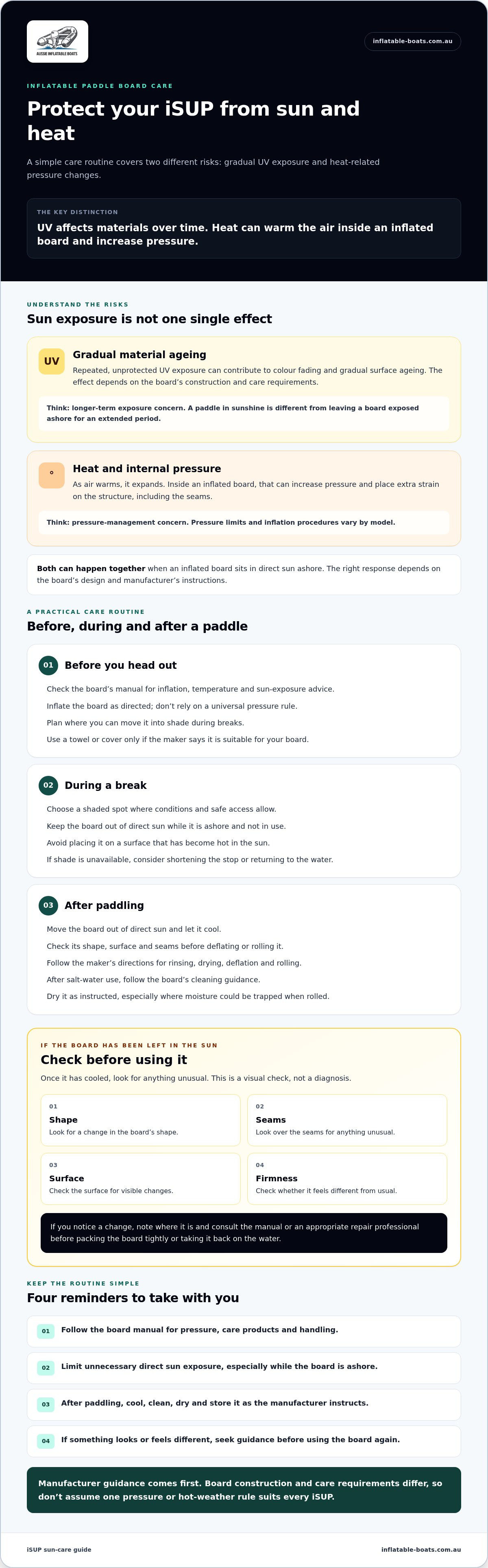
How to check an iSUP after it has been left in the sun
Find shade first. If your board has been sitting in direct sun, move it out of the exposure and let it cool before handling it further. Check its manual before changing pressure or releasing air, as the correct response depends on the board’s instructions. Don’t rush to adjust the valve based on a general rule.
A cautious post-exposure inspection
Once the board has cooled, look it over without trying to diagnose the cause of any change. Compare its shape and firmness with what is normal for that board, and inspect the surface and seams for visible damage or separation. Also note signs it may be losing air, such as a change in firmness or an audible hiss.
- Shape: Look for unusual bulges, dips or deformation.
- Seams: Check for visible gaps, lifting or separation.
- Surface: Note cracking, peeling or other changes.
- Firmness: Check for a noticeable loss of firmness or signs of escaping air.
A visual and touch check can reveal changes in shape, seams, surface condition and firmness, but it can’t confirm their cause or determine whether the board is safe to use. Follow the manufacturer’s guidance and seek an expert assessment if you’re unsure.
If the board looks compromised, don’t paddle it while you work out what’s wrong. A change in firmness or a seam concern calls for caution, not a test run on the water.
When to seek repair or manufacturer advice
Contact the board’s manufacturer or an appropriate repair professional if you suspect structural damage, seam separation or ongoing air loss. Explain what happened, including that the board was left in the sun, and describe the changes you observed. Avoid presenting a guess about the cause as a diagnosis. Keep the board out of use until you’ve received suitable advice.
These checks are a practical part of how to prevent sun damage on iSUP, but they don’t replace the board’s care instructions or a qualified assessment. If you’re looking to explore inflatable stand-up paddle boards, view the available iSUP range.
Build a simple iSUP sun-care routine that lasts
Good care is easiest to maintain when it follows the same rhythm as your paddle: check before you launch, limit exposure during breaks, then pack the board as its maker directs. You don’t need special products or complicated steps. Consistency matters, and the board’s own care instructions always take priority over general advice.
A quick checklist for every paddling session
- Before launch: Check the manual for inflation and temperature guidance. Inflate as directed, and think ahead about where you can place the board in shade during a break.
- During your paddle: If you stop ashore, avoid leaving the unused board exposed to direct sun longer than necessary. Choose shade where conditions and safe access allow.
- After paddling: Move the board out of direct sun and let it cool. Inspect for visible changes, then follow the manufacturer’s instructions for cleaning, drying, deflation, rolling and storage.
Keep the manual accessible, or save the relevant care instructions on your phone, so you can check them before making decisions about inflation, pressure or packing. If you notice a change in the board’s shape, seams, surface or firmness, don’t treat the routine as a substitute for assessment. Pause use and ask the manufacturer or an appropriate repair professional for advice.
That’s the practical answer to how to prevent sun damage on iSUP: follow the board-specific guidance, seek shade when it’s resting, avoid unnecessary heat and store it carefully. Don’t assume all inflatable boards use the same materials or respond identically to exposure. Use the manual for your model, particularly if its instructions differ from general recommendations.
Accessories or spare parts may be relevant to some board-care needs, but suitability depends on the board and the item. Check compatibility with the manufacturer before using an accessory or replacing a part. This guide doesn’t confirm specific items or care products for your iSUP.
If you’re considering inflatable watercraft for your next outing, you can explore inflatable boards and boats through Inflatable Boats. For the board you already own, keep its care instructions close and let them guide your routine from launch to storage.
Make sun care part of every paddle
Protecting an iSUP starts with recognising that UV exposure and heat create different risks. UV can contribute to fading and material ageing, while warming the air inside an inflated board can raise pressure. Knowing how to prevent sun damage on iSUP comes down to a steady routine: check the board’s manual, inflate as directed, seek shade during breaks and store it according to its care instructions.
After a sunny session, let the board cool in shade and check for visible changes to its shape, seams, surface or firmness. If anything seems wrong, don’t paddle it until you’ve consulted the manufacturer or an appropriate repair professional. A visual check is useful, but it can’t replace board-specific guidance or an expert assessment.
Careful habits help you spend less time worrying about your gear and more time enjoying the water. Explore inflatable watercraft and iSUPs from Inflatable Boats when you’re planning your next outing, and follow the care guidance for the board you choose.
Frequently Asked Questions
Can I leave my iSUP inflated in the sun?
Avoid leaving an inflated iSUP in direct sun when it’s ashore and not being used, especially for an extended period. As the board warms, the air inside can expand and raise internal pressure, while UV exposure can contribute to fading and material ageing. Move it to shade during breaks and check the manufacturer’s instructions for model-specific advice about inflation, temperature and pressure.
What happens if an inflatable paddle board gets too hot?
Heat can warm the air inside an inflated board, causing it to expand and increase internal pressure. That may place extra strain on the board’s structure, including its seams. The effect and the board’s limits depend on its construction, so don’t rely on a universal temperature or pressure figure. Move a hot board into shade, let it cool and consult its manual before making adjustments.
Should I deflate my iSUP when it is hot?
Don’t automatically deflate an iSUP just because the weather is hot. The right response depends on the board and its manufacturer’s instructions. Check the manual before releasing air or changing pressure, and follow its guidance for inflation and temperature. If the board has been sitting in direct sun, move it to shade and let it cool before assessing it. Avoid paddling if it appears damaged or unusually soft.
How do I protect an iSUP from UV damage?
Limit unnecessary exposure: keep the board in shade when it’s ashore and not in use, and store it out of direct sunlight. A cover may help only if the manufacturer considers it suitable for that board. Follow the manual for cleaning, drying, packing and storage, as materials and care requirements can vary. These simple habits are a practical starting point for how to prevent sun damage on iSUP.
Can I store my iSUP in a hot car?
A hot car isn’t a good storage spot for an iSUP. Heat can affect the air pressure in an inflated board and expose its materials to avoidable warmth, while a vehicle may also sit in direct sun. After transporting your board, take it out rather than leaving it in the car. For storage, follow the manufacturer’s instructions and choose a cool, dry place away from direct sunlight and heat sources.
How can I tell whether sun exposure has damaged my iSUP?
Let the board cool in shade, then check its shape, seams, surface and firmness. Look for unusual bulges or deformation, visible seam separation, surface changes, or signs of air loss such as a noticeable drop in firmness. These observations can’t diagnose the cause or confirm the board is safe to use. If anything seems wrong, consult the manual or manufacturer, and don’t paddle a board that appears compromised.
Does an iSUP need special care in Australian sunshine?
Follow the care instructions for your specific board rather than assuming there’s one special routine for every iSUP in Australia. On sunny days, reduce unnecessary exposure by using shade during breaks and storing the board away from direct sunlight and heat. Check the manual for inflation, temperature, cleaning and storage guidance. If you notice a change after sun exposure, pause use and seek advice from the manufacturer or an appropriate repair professional.