
How to Make a Boat Purchase a Shared Decision
A boat is a better shared dream than a surprise purchase. If you’re thinking about convincing your partner you need a boat, start by discussing what you both want from time on the water, not by making a sales pitch. The strongest case is one you build together.
It’s easy to picture quiet anchorages, new coastlines and weekends shaped by the weather. But owning a boat can also affect how you spend your time, what you budget for and how much room you have for other priorities. Your partner deserves a clear picture of both sides before you commit.
This article will help you talk through the cruising dream, connect it with your partner’s interests and weigh the practical lifestyle changes together. You’ll also consider ways to try boating before deciding, how to discuss a boat as a possible gift, and why mutual enthusiasm matters more than finding the perfect argument. A shared plan makes for a steadier start, whether it leads to a purchase now, later or not at all.
Key Takeaways
- Make the cruising vision collaborative by connecting it to activities and destinations your partner enjoys.
- Talk openly about what boat ownership involves, and give each partner room to share priorities and concerns.
- Discuss the changes cruising can bring to space, storage, budgeting and time before making a commitment.
- If you’re considering a boat as a gift, treat it as the start of a shared decision rather than a purchase your partner must accept.
- Explore how an inflatable boat, suitable accessories, spare parts and repairs could support the kind of time on the water you both want.
1. Making the cruising dream a shared decision
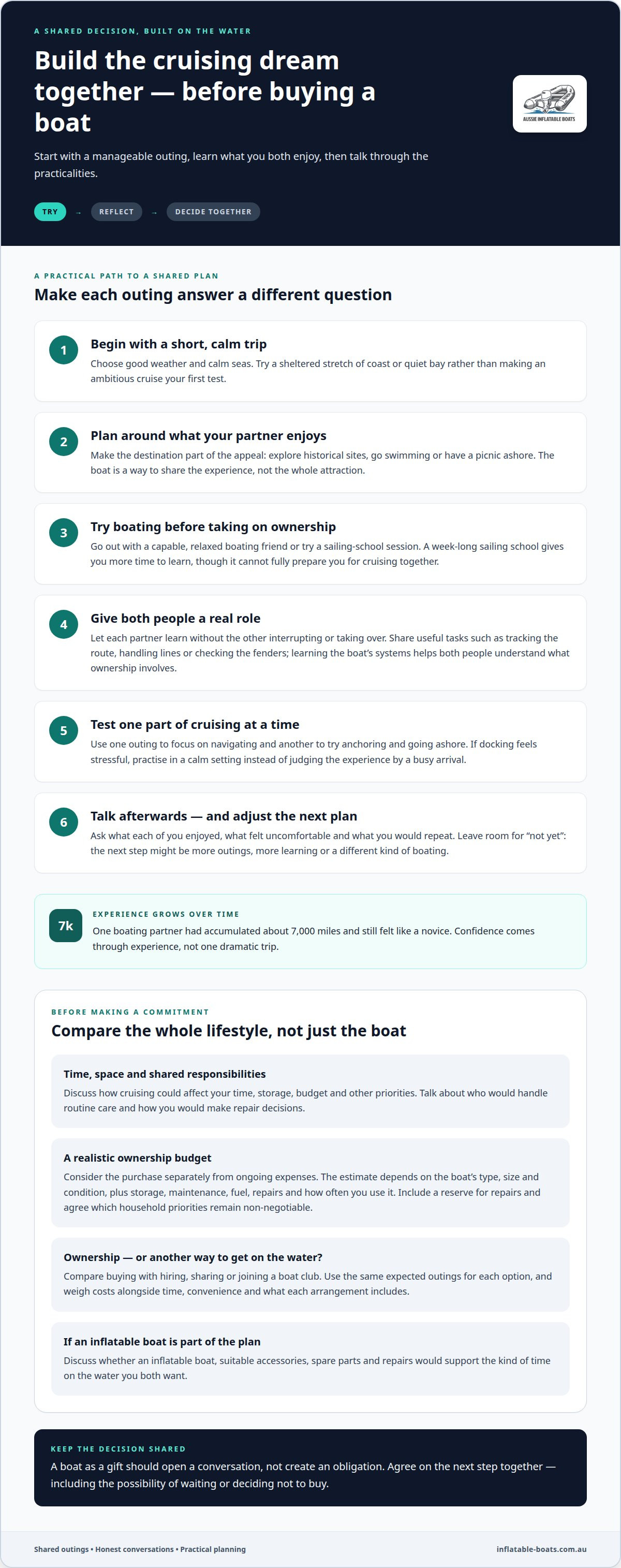
Start with a shared outing, not a sales pitch. Choose a short trip in calm weather, then ask what each of you enjoyed and what felt uncomfortable. A quiet bay, a sheltered stretch of coast or time exploring ashore can reveal more than a long discussion about buying.
To try boating before buying, ask a capable, relaxed boating friend to take you out for a short trip. A sailing-school session can also introduce the basics without committing to ownership. A week-long sailing school offers more time to learn, though it cannot fully prepare you for cruising together.
Build the outing around your partner’s interests. If they enjoy history, plan a destination with historical sites; if they prefer swimming or a picnic ashore, make that part of the day. The boat should be a way to enjoy an experience together, not the whole attraction. Afterward, discuss what you would both want to repeat.
Keep the first outings manageable. Choose good weather and calm seas, and avoid making an ambitious cruise your trial run. A boating partner may have accumulated about 7,000 miles and still feel like a novice, so confidence grows through experience rather than one dramatic trip. Invite relaxed, capable sailors along when their presence helps both of you feel at ease.
Let each partner learn independently. Agree that one person won’t interrupt or take over the other’s instruction. Then give both people meaningful roles, such as tracking the route, handling lines or checking the fenders. Shared responsibility turns a passenger into an engaged crew member, while learning the boat’s systems helps both partners understand what ownership involves.
Use each trip to test a different part of the dream. One outing might focus on navigating; another might include anchoring and going ashore. If docking feels stressful, practise in a calm setting rather than treating a busy arrival as the measure of success. Anchoring in an uncrowded spot and taking a tender ashore can be an alternative when conditions allow.
When you’re focused on convincing your partner that you need a boat, leave room for a genuine “not yet”. Ask what would make the next outing more enjoyable, then adjust the plan together. A shared decision could mean more trial trips, more learning or a different kind of boating. The goal is a cruising dream both partners can picture, not a purchase one person has to defend.
A Trawler Forum participant said his new partner became interested in cruising after a short trip with stops at several destinations in Florida (40). A brief outing with several places to visit can make the idea of cruising more tangible, while giving both people a chance to notice what they enjoy. The stops need not be elaborate; the value lies in sharing the experience and seeing how each person responds.
A partner’s interest in historical sites can help shape a cruise you’ll both anticipate. Choosing a destination around that interest makes the outing feel worthwhile beyond time aboard and gives you a natural starting point for discussing what to include in a future trip. Let those preferences guide your next plan, rather than assuming the same parts of cruising will appeal equally to both of you.
2. Communicating with a partner about a boat purchase
Choose a calm time to discuss the idea, not the middle of a stressful week. Open with one specific plan, such as exploring a nearby bay or spending a day on the water. Then ask what your partner would want from the outing. Listen before proposing a boat size, destination or purchase date.
Separate the dream from the decision. You might both enjoy coastal trips but disagree about how often you’d go, the work involved or the effect on other plans. Write down each person’s priorities, then identify the points you share. A boat show can help turn broad ideas into a practical discussion, but agree beforehand to browse without treating attendance as a commitment to buy.
How do boat ownership costs compare with hiring, sharing or joining a boat club? Ownership combines the purchase with ongoing expenses, while hiring, sharing or club membership involves a different cost arrangement. Compare each option against how often you expect to go, the time involved and which costs each arrangement includes.
How much does it cost to buy, maintain and run a boat in Australia? The total depends on the boat’s type, size and condition, as well as storage, maintenance, fuel, repairs and how often you use it. Build a realistic estimate around the specific boat and your plans, rather than relying on a single figure for every owner.
Make the financial discussion concrete. List the purchase funds separately from recurring expenses, then include maintenance and a reserve for repairs. Use realistic assumptions about trips and usage, not the most optimistic season. Discuss what spending would need to change and which household priorities remain non-negotiable. A clear budget shows whether the idea fits your shared finances.
How can you make a realistic financial case for buying a boat to your partner? Compare ownership with hiring, sharing and club membership, using the same expected outings and including costs, time and convenience. Agree on the assumptions together, then revisit the comparison if your intended use changes.
Talk through concerns without trying to win every point. If your partner worries about maintenance, discuss who would handle routine care and how you’d make repair decisions. If limited use is the concern, compare ownership with hiring or sharing before deciding. Write down unanswered questions and resolve them before buying, rather than expecting the purchase to settle the discussion.
End with a joint next step, not a deadline. You could agree to gather information about suitable boat types or pause until your budget and intended use are clearer. A sound conversation makes room for enthusiasm and caution alike. The aim is a choice both partners can explain and support.
Agree on a low-pressure next step, such as presenting a sailing cruise as an intimate adventure connecting you with nature. Rather than promising sailing will always be easy or romantic, keep the discussion grounded in shared exploration and practical considerations. Give both partners room to decide whether the experience fits their expectations before committing.
3. Discussing lifestyle sacrifices before committing
Agree on the cruising lifestyle before buying a boat. A purchase won’t persuade a reluctant partner to accept less storage, overnight watches or more time spent maintaining a vessel. Start with an honest conversation about what each of you would change and what you’re unwilling to give up.
Space is one practical trade-off. Even a luxurious 45- or 50-foot boat won’t offer the room or comfort of a small apartment on land. Talk through which possessions you’d leave behind, how you’d manage limited onboard refrigeration and storage, and what you’d do when two people want different things close at hand. A trial stay aboard can make those compromises tangible.
Time and money also shape the routine. Cruising can involve planning around conditions, caring for the boat and sharing overnight sailing watches. Discuss how those duties fit alongside work, family commitments and time ashore. For example, agree who will take each watch and how you’ll handle days when one person needs rest. Put likely expenses into your household budget alongside other priorities, instead of committing all available funds to the cruising dream. Keep a fallback home if possible.
What are the risks and responsibilities of owning a boat, including safety and environmental obligations? Both partners need to understand the boat’s systems, prepare for changing conditions and know how they’ll respond to an emergency. Agree to manage waste carefully, prevent fuel or other pollutants from entering the water, and share responsibility for safe operation.
Before deciding, test the lifestyle rather than relying on a short introduction. A live-aboard sailing school lasting several days or weeks can give you both a clearer sense of boat routines and close-quarters living. A session lasting only a few hours a day on a small boat may not reflect cruising life, especially for someone who isn’t already a sailor.
How can couples assess whether a boat suits their lifestyle and budget? Compare the boat’s intended use with the trips you genuinely want, the time you can give it, the space you need and the ongoing costs you can accommodate. Then weigh those needs against a realistic live-aboard trial, rather than choosing a vessel around an imagined routine.
Use the trial to identify specific pressure points. Does preparing meals in limited space feel manageable? Can both partners accept the storage limits and the prospect of watches at night? Write down what worked and what didn’t, then discuss possible adjustments. A smaller cruising plan, more time ashore or a different ownership approach may better match your shared priorities.
Make the final decision together, with room to pause. If one partner still feels pressured, delay buying and revisit the plan after more experience. A boat should fit the life you both want to lead, not require one person to abandon theirs.
4. Framing a boat as a gift
A boat can feel like a generous present, but a surprise purchase can also impose a major decision. Treat the gift as an invitation to shape a boating plan together. For a birthday or anniversary, present a card describing the shared experience you hope to enjoy, then discuss what kind of boat fits both of you. That keeps the gesture thoughtful without assuming your partner has agreed to ownership.
Start with the reason behind the gift. Perhaps you want quiet afternoons on a sheltered river, fishing trips with family or access to beaches that are easier to reach by water. Describe a real outing you would both enjoy, including what you might do after arriving. Your partner can then respond to the experience itself, rather than feeling obliged to approve a specific purchase.
If you want the present to be tangible, make it a first step rather than the whole commitment. You could give a handwritten itinerary for a day on the water, a boating-themed keepsake or an invitation to plan a future purchase together. The distinction is clear: the gift expresses enthusiasm, while the final decision remains shared.
For a more substantial gesture, agree on the process before choosing a vessel. Set aside time to discuss intended use, storage, maintenance and who will handle ongoing tasks. A gift that includes a proposed plan can be more useful than a bow-wrapped boat. For example, show how you would compare a compact option for local outings with a larger boat intended for longer trips. Leave the choice open until both people understand the trade-offs.
Pay attention to your partner’s response. If they’re excited about exploring but hesitant about ownership, don’t treat that as a problem to overcome. Ask which part feels uncertain, such as the workload, budget or commitment to regular outings. Then adapt the idea. A shared planning session may be a better present than a purchase, especially if your partner wants time to consider the practical details.
Make the surprise about care, not pressure. A note might say, “I’d love to plan more time on the water with you. Let’s decide together whether owning a boat suits us.” That message recognises your partner’s say in the decision. It also gives you both room to refine the idea, postpone it or choose another way to enjoy boating.
Before giving anything connected to ownership, decide what the gift actually promises. Is it an invitation to explore, a contribution you’ll discuss together, or a commitment to buy a particular boat? State the answer plainly. Clear expectations protect the relationship and keep a romantic gesture from becoming an unwanted obligation.
5. What are the practical benefits of owning a boat in Australia?
Owning a boat gives you more control over when and how you get on the water. You can plan a morning outing around local conditions, pack for the day and head to a familiar launch point. For couples with different schedules, that flexibility can make short trips easier to arrange than a tightly planned holiday.
A boat can also make some shore-based destinations easier to reach. Where your boat is moored, a tender lets you go ashore and visit nearby shops. That can turn a waterfront stop into a practical outing, whether you need supplies or want to explore on foot. Plan the route and shore stop as part of the day, rather than treating the boat as the only destination.
For a couple who enjoys fishing, swimming or exploring, having a boat close at hand makes it easier to shape an outing around shared interests. One day might focus on fishing; another could include a quiet anchorage and time ashore. The value is in choosing the activity together and making the journey part of it, rather than relying on one fixed itinerary.
Boat ownership can also support regular practice. Repeating familiar tasks, such as preparing the boat, checking equipment and planning a route, helps both partners get involved. Share navigation and deck responsibilities so each person contributes. That practical teamwork can make a short local trip more rewarding than leaving all the decisions and duties to one person.
Access matters. A boat suited to the waterways you actually plan to use can help you make the most of nearby opportunities, instead of building every trip around distant travel. Before committing, map out a typical outing: where you’d launch, what you’d do on the water and where you’d stop. That simple plan shows whether ownership fits your everyday routine.
There are trade-offs alongside the benefits. Weather can change plans, and every outing involves preparation and care for the vessel. A realistic plan for two includes an alternative for days when conditions don’t suit boating, such as staying ashore or postponing the trip. This keeps time together from depending on the water being suitable every time.
To explore options for making your shared time on the water practical, browse boating possibilities. Then compare the kind of outings you want with the boat, storage and upkeep your household can manage. A useful decision connects a real routine with a clear purpose, whether that’s easy access to local water, shared recreation or reaching shore from a mooring.
Inflatable Boats
Once you and your partner have agreed on the kind of boating you want, Inflatable Boats can help with the next practical step. Explore inflatable boats with your intended outings in mind, then consider which accessories and spare parts support your plans. If a boat needs attention later, Inflatable Boats also provides repair services to help maintain its condition.
Keep the choice grounded in your shared routine: where you expect to go, who will use the boat and what equipment you’ll need. That turns a broad cruising dream into a more informed decision about the right setup for you both.
For a conversation about your boating needs, contact Inflatable Boats.
Make your next step a shared one
The decision can move forward without becoming a contest of persuasion. Agree on one practical next step together, such as defining what you want your first outings to look like or identifying questions that still need answers. That keeps the conversation open and gives both partners a real say in what happens next.
Rather than focusing on convincing your partner that you need a boat, make room for a choice that suits you both. When you’re ready to explore options for your plans, Inflatable Boats offers inflatable boats, accessories and spare parts to support your time on the water.
Contact Inflatable Boats to explore your options. A thoughtful decision, made together, is a strong start to whatever adventure you choose.
Frequently Asked Questions
What questions should partners discuss before buying a boat together?
Discuss how you’ll make decisions about the boat and what happens if your plans change. Who can approve upgrades, repairs or changes to how it’s used? Will friends or family be invited aboard, and how will you agree on those trips? Talk about what you’d do if one partner wanted to sell or stop boating. Clear expectations around ownership, guests and future decisions can prevent misunderstandings after purchase.