
How to Clean an Inflatable Boat After Winter Storage
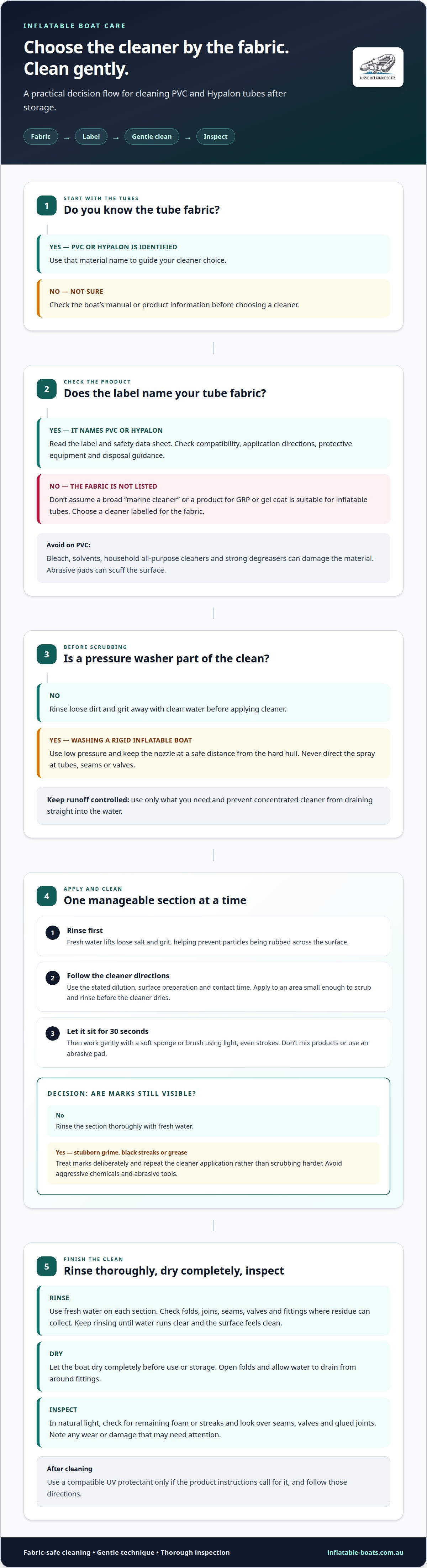
The wrong cleaner can leave an inflatable boat looking worse than it did after winter storage. For PVC and Hypalon, choose safe cleaning products for inflatable boats that are purpose-made and labelled for the boat’s fabric, rather than reaching for household all-purpose cleaner, strong degreaser or solvent. Rinse away loose dirt first, let the cleaner sit for 30 seconds, scrub gently with a soft sponge or brush, then rinse thoroughly with fresh water.
It’s natural to want to remove every mark before the first launch, but aggressive products can damage PVC and abrasive tools can scuff the surface. A careful clean is more reliable and helps you spot anything that needs attention before heading back on the water.
This guide explains how to choose a cleaner for PVC or Hypalon, apply and rinse it, and tackle black streaks and grease without turning a spring clean into a repair job. You’ll also learn what to inspect once the boat is clean and dry, so it’s ready for the season ahead.
Key Takeaways
- Identify whether the tubes are PVC or Hypalon before choosing a cleaner, as the materials can respond differently to cleaning agents.
- Work on black streaks and grease deliberately, treating each mark without resorting to abrasive pads or aggressive chemicals.
- Keep cleaning controlled and prevent concentrated cleaner from running into surrounding waterways.
- Pay close attention to seams, valves and glued joints, where residue and hard-to-reach grime can collect.
- Use the post-clean inspection to spot wear or damage that may need attention before the next trip on the water.
How do I clean a PVC boat after winter storage?
Rinse the inflatable boat with clean water first, then use a cleaner labelled for its fabric. Clean when salt or grime builds up, and apply UV protectant after cleaning if the product instructions call for it. There’s no fixed cleaning interval. Bleach, solvents and strong degreasers can damage PVC, while abrasive scrubbers can scuff it. A pressure washer used close to the boat can also harm the material or fittings.
-
Check Marine Cleaner Safety Sheets
Read the marine cleaner’s safety data sheet and label before use. Check surface compatibility, application instructions, protective equipment and disposal guidance, then follow those directions. Keep the cleaner off surfaces not listed on the label. A product intended for GRP or gel coat, for example, isn’t automatically suitable for PVC tubes.
-
Avoid Harsh Chemicals and Protect Marine Life
Choose a purpose-made cleaner intended for inflatable boat fabric, and avoid bleach, solvents, all-purpose cleaners and strong degreasers on PVC. Aggressive cleaners can attack the plasticisers that keep PVC flexible, leaving it yellow, dull, tacky, dry or discoloured. Small cracks can also develop. Use only what you need, and manage runoff so concentrated cleaner doesn’t drain straight into the water.
-
Remove Salt Deposits and Marine Grime
Rinse the tubes thoroughly with clean water before applying cleaner. This lifts loose salt and grit, reducing the chance of rubbing particles across the surface. Apply a suitable cleaner and let it soak for 30 seconds before gently working the area with a soft sponge or brush. Rinse thoroughly with fresh water afterwards. For stubborn grime, repeat the application rather than scrubbing harder.
- Use polishing products only on compatible hard surfaces. GRP and gel coat can need different care from flexible PVC, so use polish or wash-and-wax products only where the label permits. Don’t apply GRP polish to inflatable tubes unless its directions explicitly include PVC. Rinse away product residue and prevent it from running across fabric or fittings.
- Use a pressure washer cautiously around a rigid inflatable boat. Don’t aim it close to the tubes. If washing a RIB, use low pressure and keep the nozzle at a safe distance. Never direct the spray at seams, valves or the fabric. Let the boat dry completely before storage, then apply a compatible UV protectant according to its instructions.
Cleaner application and rinsing instructions
Apply inflatable boat cleaner in controlled sections, following the label rather than guessing the amount. Work methodically through application, rinsing and drying.
-
Apply Cleaner Using Suitable Methods
Follow the cleaner’s directions for dilution, surface preparation and contact time. Apply it to a manageable area so it doesn’t dry before you can scrub and rinse. Use a soft sponge or brush, not an abrasive pad. Gentle, even strokes lift grime without concentrating pressure in one spot. Keep the area wet for the stated cleaning time.
- Give the cleaner 30 seconds on the surface before gentle scrubbing, as directed for this cleaning method. Use light pressure and short strokes, especially around textured areas where dirt can sit. Don’t mix cleaning products or extend contact time without instructions. If marks remain, apply again, allow a longer soak where the product permits, then scrub gently.
- Clean one section at a time, moving from cleaner areas towards dirtier ones. This helps stop loosened grime spreading across the inflatable boat. Use a separate rinse cloth or sponge to remove residue, and rinse it when it gets dirty. Follow the product label if it recommends a different sequence or tool.
-
Rinse the Cleaned Surfaces
Rinse each section thoroughly with fresh water after cleaning. Pay attention to folds, joins and areas around fittings, where cleaner residue can collect. Don’t let foam or streaks dry on the surface. Residue may attract dirt or leave visible marks, so keep rinsing until the water runs clear and the surface feels clean.
- Keep pressure washers away from inflatable material. If pressure washing a rigid inflatable boat, use low pressure and keep a safe distance from the hard hull. Never direct the jet at tubes, seams or valves. A concentrated stream can damage vulnerable areas, even if the surrounding hull can tolerate stronger cleaning.
- Let the boat dry completely before use or storage. Open folds and allow water to drain from around fittings, then inspect for remaining foam or streaks in natural light. If cleaning reveals wear or damage that needs attention, explore the inflatable boat range as you plan your next steps.
Cleaning products suitable for PVC and Hypalon
Choosing safe cleaning products for inflatable boats starts with identifying the tube fabric and following its care instructions. Choose products labelled for that material, then apply them gently to avoid damage or discolouration.
-
Choose Cleaners for PVC and Hypalon
Check the boat’s manual or product information to identify the tube material before choosing a cleaner. Select a product that specifically names PVC or Hypalon on its label. Some cleaners suit both fabrics and may also list fibreglass, rubber and plastic, but a broad “marine cleaner” description alone doesn’t confirm compatibility. Hypalon is less likely than PVC to become sticky after exposure to aggressive cleaning agents, but compatibility still matters.
- Match the cleaner to the surface you’re treating. An inflatable boat tube needs a product suitable for its fabric, while a GRP hull may need separate care. A cleaner labelled for fibreglass, for example, isn’t automatically right for PVC. Keep products for hard marine surfaces off the tubes unless their directions expressly include the tube material.
-
Check Cleaner Compatibility with Seams and Valves
Before cleaning, read the product directions for compatibility with seams, valves and glued joints. These areas bring fabric together with fittings or bonded sections, so don’t let an unsuitable product pool around them. Work carefully with a soft sponge or brush, then rinse away residue from edges and recesses that are easy to miss.
- Pay attention to the cleaner’s intended uses and application instructions, not just its list of compatible surfaces. The directions may explain how to apply it and whether a follow-up treatment is recommended. If the label covers PVC but excludes another material on your boat, use it only on the compatible area. Don’t mix cleaners or add solvents to make them stronger.
-
Follow Product Recommendations to Prevent Damage
Use the boat manufacturer’s care guidance alongside the cleaner label. If the manual names a suitable cleaner or protectant, follow its directions for the relevant material. When choosing safe cleaning products for inflatable boats, prioritise clear fabric compatibility over broad claims such as “all-purpose”. Before using a new cleaner, test a small, inconspicuous patch and check for changes before treating a larger area.
- Keep cleaning and protection separate. A cleaner removes grime; a compatible UV protectant is a separate treatment to apply according to its label. Don’t use polish intended for a hard hull on flexible tubes unless the product specifically allows it. Matching each product to PVC, Hypalon or GRP helps care for the surface without relying on stronger chemicals.
Removing black streaks and grease
- Start by rinsing the marked area with fresh water to remove loose grit. Identify whether the stain is a black streak or grease, then choose a cleaner labelled for the tube material. A product suitable for PVC or Hypalon is a safer starting point than an unlabelled household stain remover, which may contain ingredients unsuitable for inflatable fabric.
- Apply the compatible cleaner to the black streak, following the label for application and contact time. Work with a soft sponge or brush, using light strokes across the mark rather than scrubbing hard in one spot. Abrasive pads can scuff the surface, and aggressive cleaning products can damage inflatable boat material.
- Use a cleaner specifically labelled for the fabric when treating grease. Avoid reaching for a strong degreaser or solvent, even if it seems suited to oily residue. These aggressive products can attack the plasticisers in PVC that help keep it flexible. A product’s cleaning strength doesn’t make it suitable for every marine surface.
- Rinse the treated patch thoroughly with fresh water before assessing the result. Cleaner residue can hide a remaining mark, so inspect the surface after rinsing. If the stain persists, reapply the compatible product and allow a longer soak only if its instructions permit. Then scrub gently instead of increasing pressure or switching to a harsher remover.
- Treat black streaks separately from other areas. Apply cleaner only where needed, and use a clean section of sponge for each patch. This helps prevent loosened grease or grime from spreading across the tube. Rinse the sponge as it collects residue, and don’t combine different products to tackle a stubborn stain.
- Finish by thoroughly rinsing the treated area, including nearby folds and fittings where cleaner can collect. Let the fabric dry completely, then inspect the mark in good light. If it remains, repeat the compatible cleaner’s process rather than using bleach, solvent or abrasive scrubbing. Persistent stains may need another careful application, not more force.
After treating streaks, use the cleaner to remove salt deposits, bird droppings and other grime. Treat these as separate patches rather than spreading residue from one area to another. Check that the product is labelled for the tube material, and follow the application method and contact time on its label. Use a soft sponge and light strokes, then rinse each patch with fresh water so loosened dirt and cleaner don’t remain on the fabric.
For a small patch of remaining grime, apply cleaner only to that area and avoid letting it run onto untreated sections. Keep the sponge clean as you work, and rinse it when it picks up residue. Don’t mix cleaners or switch to a stronger product if the first application doesn’t remove the mark. After rinsing, let the surface dry fully and inspect it in good light. If grime remains, repeat the same compatible cleaning process only as the instructions allow. This keeps salt deposits, bird droppings and other grime within the same careful routine, without extra pressure or an unlabelled remover.
Are marine inflatable boat cleaners safe for seams, valves, and adhesives?
A marine cleaner’s suitability depends on the materials named on its label and how it’s applied. Clean seams, valves and glued joints with particular care.
- Read the cleaner label before using it near a seam, valve or bonded joint. Confirm that it names the tube fabric, such as PVC or Hypalon, and follow the application directions. A broad claim that a cleaner is suitable for marine use doesn’t establish compatibility with every material or fitting on an inflatable boat.
- Apply cleaner with a soft sponge or brush, using a controlled amount around fittings. Don’t spray directly into valve openings or let product pool along a seam. These areas can trap liquid in narrow edges and recesses, so a small, carefully applied amount is easier to remove thoroughly than a heavy coating.
- Clean around seams with gentle strokes along the join, rather than scrubbing across it. Avoid abrasive pads and stiff brushes that could wear the surface or catch on an edge. If grime sits beside a glued joint, clean the surrounding fabric without pulling at the join or forcing cleaner underneath it.
- Keep cleaner away from valve openings and moving components unless the product directions specifically include them. Use a damp cloth around the outer valve area, then rinse away residue with fresh water. Don’t push a brush into a valve or aim a concentrated pressure-washer jet near a fitting, seam or tube.
- Rinse seams, valves and glued joints carefully after cleaning. Run fresh water over the area, then check folds and edges where foam or residue can remain. Cleaner left behind may dry on the surface, so keep rinsing until no visible product remains. Let the boat dry completely before storage.
- Inspect the cleaned areas in good light. Look for lifting edges, visible gaps, wear or changes in the material around a seam or valve. Cleaning won’t repair a damaged joint, and continued scrubbing can worsen wear. If the inspection reveals damage, get help with an inflatable boat repair before returning the boat to use.
Pay particular attention to seams, valves and hard-to-reach areas as you clean. Check these spots carefully to make sure no residue remains in the folds or edges.
Inflatable Boats
Inflatable Boats offers replacement parts, accessories and repair services to help keep your watercraft ready for the season. If cleaning reveals a worn seam, damaged valve or another concern, Inflatable Boats’ repair services can help address it before it affects your plans on the water. The range also includes inflatable boats and accessories for needs beyond routine cleaning.
For help with your boat, parts or a repair, contact Inflatable Boats.
Get set for your next launch
A clean boat is a chance to prepare your equipment for the season. Choosing safe cleaning products for inflatable boats is part of that care, but it’s also important to make sure the boat itself is ready for the water. Choose your cleaning approach to suit the boat’s materials and condition.
Inflatable Boats offers inflatable boats, accessories and spare parts for boat owners planning what comes next. If you’re weighing up care options or have a question about your setup, contact Inflatable Boats for cleaning advice. A considered approach now helps you head into your next outing with confidence. Here’s to clear water and many good days afloat.
Frequently Asked Questions
How do I prevent a sticky inflatable boat?
Prevent a sticky PVC surface by avoiding harsh cleaners and removing residue after each wash. If a tube feels tacky, rinse it again with fresh water and let it dry before applying protectant. Test a small area first when using a new care product. If the tackiness remains or the material looks changed, stop cleaning that spot and inspect the fabric for deterioration.
What is the best cleaner for a Hypalon Neoprene boat?
Choose a purpose-made inflatable boat cleaner whose label specifically lists Hypalon or Hypalon Neoprene. Follow its stated dilution and contact time, and use a soft cleaning tool. Hypalon is less likely than PVC to become sticky after exposure to aggressive cleaners, but that doesn’t make harsh chemicals suitable. Keep the boat’s care instructions in mind when choosing a cleaner or protectant.
Why don’t I see damage from using the wrong inflatable boat cleaner straight away?
Damage from a cleaner may develop over time rather than during the first wash. Repeated exposure to aggressive products can affect PVC’s plasticisers, with dullness, tackiness, yellowing or small cracks becoming noticeable later. A surface that looks clean immediately after washing doesn’t prove the product is compatible. Stop using a cleaner if the fabric changes in appearance or feel.
Which cleaning products are safe for inflatable boat materials such as PVC and Hypalon?
Use a purpose-made cleaner that names the boat’s fabric, such as PVC or Hypalon, on its label. Check the directions for the intended surface rather than assuming a general marine cleaner suits every part. A product may list several materials, including rubber or plastic, while still having limits. Treat the tubes and a hard GRP hull as separate surfaces unless the cleaner covers both.
Which household cleaners should be avoided on inflatable boats, and why?
Avoid bleach, solvents, all-purpose cleaners and strong degreasers on inflatable boat fabric. These products can be too aggressive for PVC and may attack the plasticisers that help it stay flexible. The surface can become dull, discoloured or tacky, with damage developing over time. Avoid abrasive household scouring pads too, as they can wear or scratch the fabric.
What are the best eco-friendly and biodegradable cleaners for inflatable boats in Australia?
Choose a biodegradable cleaner that explicitly lists your boat’s fabric, such as PVC or Hypalon. The word “biodegradable” alone doesn’t confirm material compatibility or mean the product can run into waterways. Read the label and safety data sheet, use only the directed amount, and manage wash water carefully. Avoid cleaners without clear surface-use directions, even if they’re marketed as environmentally friendly.