
How to Carry an iSUP on a Roof Rack Securely
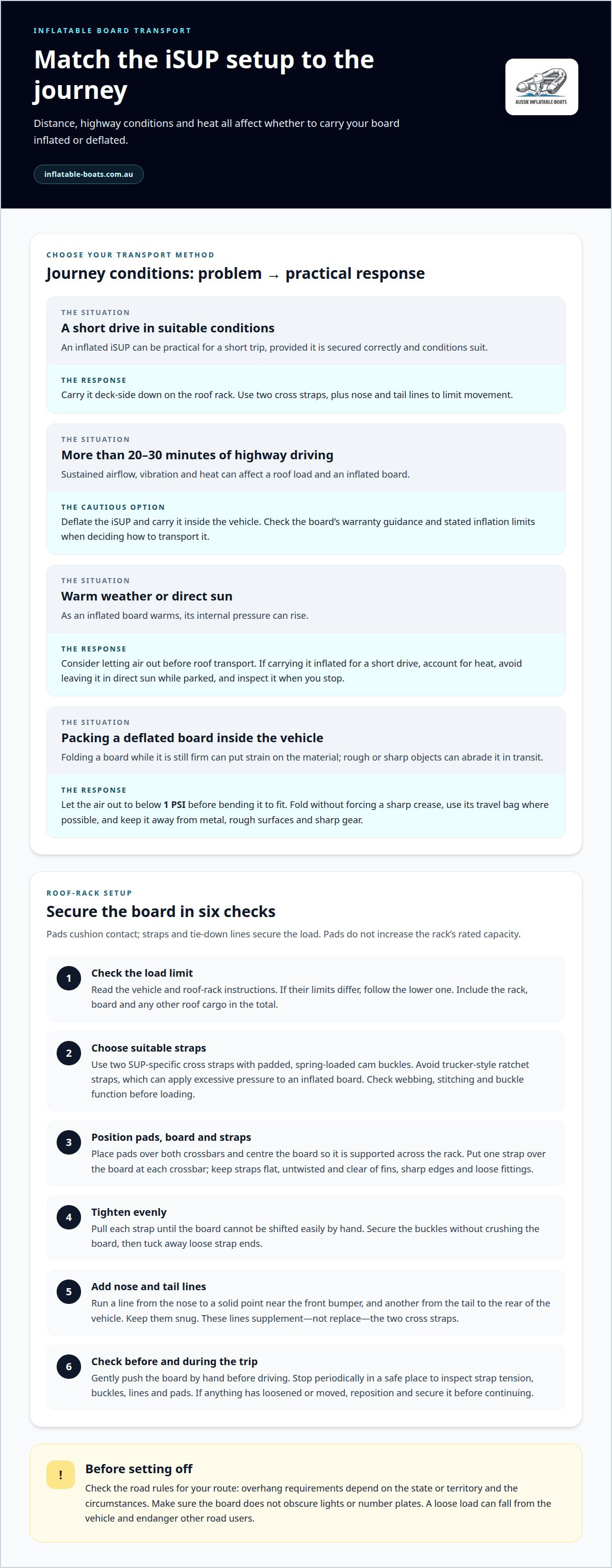
An inflated iSUP isn’t always the best choice for the drive. For a short trip, carrying an iSUP on a roof rack can work with the board deck-side down, secured by two cross straps and nose and tail lines. For more than 20-30 minutes of highway driving, deflating it and carrying it inside is the more cautious option.
It’s tempting to inflate your board at home and head straight to the water. For a short drive, that can be practical. The key is to match the transport method to the distance, heat and road conditions, then secure the board so it cannot shift.
This guide explains how to position an iSUP, choose and tighten the straps, and check the load during your trip. You’ll also learn when to reduce pressure or deflate the board, and how to protect it when transporting it inside your vehicle. A few careful checks before setting off can make the journey steadier and help you focus on the water ahead.
Key Takeaways
- Choose between roof transport and carrying the board inside based on drive length, highway conditions and heat.
- Position the board to reduce wind resistance, then use secure straps and tie-down lines to limit movement.
- Recheck strap tension and board stability during the journey, especially on longer drives.
- Allow for pressure changes in hot conditions and decide whether deflating the board is the safer option.
- Protect a deflated board from rough or sharp surfaces when packing it inside your vehicle.
Checking strap tension during transport
There is no single roof-rack load limit for every Australian vehicle and rack. Use the lower limit specified for your vehicle or rack, and include the board, rack and any other roof cargo in the total.
- Check the load limit before loading. Read the vehicle and roof-rack instructions for their maximum roof loads. If the limits differ, follow the lower one. Roof-rack pads cushion the board where it contacts the bars, but do not increase the rated capacity. Include the rack’s weight and any other roof cargo when calculating the total.
- Choose straps made for a SUP. Use two SUP-specific cross straps with padded, spring-loaded cam buckles. They are designed to secure a paddleboard without the force of trucker-style ratchet straps, which can put excessive pressure on an inflated board. Before loading, check for frayed webbing, damaged stitching or a buckle that will not hold.
- Fit pads and position the straps. Place roof-rack pads over both crossbars, then centre the board so it is supported across the rack. Position one strap over the board at each crossbar. Keep the straps flat, untwisted and clear of sharp edges, fins and loose fittings. A twisted strap can rub against the board during the drive.
- Tighten each cam strap evenly. Feed the strap through its cam buckle as directed, then pull the free end until the board cannot be shifted easily by hand. It should sit securely on the rack without being crushed by excessive tension. Close each buckle securely and tuck away loose strap ends so they cannot flap against the vehicle.
- Add nose and tail lines. Run one line from the board’s nose to a solid point near the front bumper, and another from the tail to the rear of the vehicle. These lines supplement the two cross straps, they do not replace them. Keep each line snug, without slack that could let the board lift or swing.
- Recheck after setting off and during the trip. Before driving, gently push the board by hand to confirm it does not shift. Stop periodically in a safe place to inspect the strap tension, cam buckles, tie-down lines and pads. If a strap has loosened or the board has moved, reposition and secure it before continuing.
Choosing whether to transport an inflated or deflated iSUP
- Match the board’s condition to the trip. For a short drive, an iSUP can travel at full pressure if it is secured correctly and conditions are suitable. A longer journey, highway travel or hot weather calls for more care: heat can raise the board’s pressure, and prolonged exposure adds another factor to manage. Consider the route and forecast, not just the convenience of inflating at home.
- Read the board’s warranty before roof transport. Check the terms for instructions on travelling with the board inflated. Warranty guidance may affect whether you carry it at full pressure, reduce the pressure or deflate it. Follow the board’s stated inflation limits, and do not assume every inflatable paddleboard has the same transport guidance.
- Consider reducing pressure before loading. NRS advises letting air out of an inflatable SUP before carrying it on a roof rack, rather than transporting it fully inflated. Pressure can rise as the board warms. If you choose to carry it inflated for a short drive, account for heat and inspect its condition when you stop.
- Deflate before folding the board for the vehicle. An inflatable SUP should be below 1 PSI before you bend it to fit inside a car. Let the air out through the valve, then fold it without forcing a sharp crease into the material. A board that still feels firm needs more air released before you pack it.
- Protect a deflated board from abrasion. NRS advises keeping the board away from metal, rough surfaces and sharp objects inside the vehicle. Road vibration can make an unprotected inflatable paddleboard rub repeatedly against hard edges, eventually wearing a hole. Place it in its travel bag where possible, and keep paddles, tools and other gear from pressing against the folded material.
- Choose the option you can secure and monitor. An inflated board avoids packing and reinflation, while a deflated board reduces the need to carry it pressurised on the roof. Compare the actual route, heat exposure, vehicle space and warranty guidance before deciding. If your plans also include a boat rather than a paddleboard, explore inflatable watercraft options for a different way to get afloat.
Distance and highway driving considerations
Australia has no single overhang allowance that applies to every vehicle and load. Requirements depend on the state or territory and the circumstances. Before departure, check the road rules for your route, and make sure the board does not obscure lights or number plates.
Highway wind, vibration and heat can shift a board, loosen straps or raise the pressure in an inflated iSUP. A loose load can also fall from the vehicle and endanger other road users.
- Choose transport for the distance. For more than 20-30 minutes of highway driving, the cautious option is to deflate the iSUP and carry it inside the vehicle. Highway airflow places sustained force on a roof load, while longer exposure gives vibration more time to work straps loose. For a shorter trip, carrying it inflated may be practical if the board is secured and conditions suit.
- Plan for heat and pressure changes. Long drives, especially in hot Australian conditions, can warm an inflated board and raise its internal pressure. Avoid leaving it in direct sun while parked, and stop periodically to inspect its condition. If you travel through changing temperatures or elevation, do not assume the pressure will stay constant from your driveway to your destination.
- Inspect the load during the journey. Stop in a safe place at intervals, especially after joining a highway or travelling over rough surfaces. Check that the board has not shifted, the straps remain snug and the tie-down points are secure. If you use ratchet straps, avoid overtightening them, as excessive force can damage an inflatable board.
- Consider the vehicle setup before loading. A roof rack gives straps a stable route across the board. Without one, straps through luggage rails may be an alternative; routing them through vehicle windows is recommended only for shorter trips. Check that the doors close properly and that straps do not interfere with the driver’s view or vehicle controls.
- Assess overhang before setting off. The board’s length, vehicle shape and rack position affect how far it projects beyond the vehicle. Where possible, position it to minimise overhang, then check the relevant state or territory requirements for any projection and required warning measures. Do not rely on a measurement from another vehicle or jurisdiction.
- Reassess if conditions change. A setup that is secure on a calm local road may behave differently in highway wind or heavy rain. If the board moves, a strap loosens or pressure rises in the heat, pull over safely and reassess before continuing. For a long highway journey, transporting the deflated board inside avoids prolonged exposure on the roof.
Positioning a SUP deck-side down
- Place the deck towards the roof. Set the SUP deck-side down on the padded crossbars. This position reduces wind resistance and helps the board sit securely. Centre it across the rack so its weight rests over both crossbars, rather than leaving one end unsupported. Adjust the board before adding straps, while it is still easy to move.
- Orient the tail towards the front of the vehicle. Turn the board so its tail faces the bonnet and its nose points towards the rear. Choose an orientation that keeps the board stable and clear of the vehicle. Check the fin area before loading, as a fitted fin can interfere with the rack or contact the vehicle.
- Remove the fins before loading. NRS advises removing fins before placing an inflatable SUP on a roof rack. Take them off carefully and store them inside the vehicle, where they will not be crushed beneath other gear. Removing the fins lets the board sit flatter against the crossbars and prevents a projecting part from pressing against the rack.
- Align the board with the crossbars. Position the crossbars beneath firm, supported sections of the board, then check that it sits level from side to side. Uneven overhang can expose one side to more airflow. Keep the deck pad and fittings clear of sharp rack edges, and use pads to cushion the contact points during travel.
- Stack boards from largest to smallest. If carrying several SUPs, put the largest board on the bottom and align the stack over the crossbars. Keep each board flat, and do not let fins or loose accessories sit between the board surfaces. Arrange the stack before tightening the straps so the boards stay aligned as you secure the load.
- Check the buckle and strap path against the final position. Run the straps over the board where they cross the rack, keeping them flat and clear of handles, fins and other fittings. Tighten them until the board stays in place, without excessively compressing an inflated SUP. Position each buckle away from the board’s edge so it cannot rub against the vehicle during travel.
- Inspect the profile before driving. Look along the vehicle from the front and side. Confirm that the board is deck-side down, centred and supported at both crossbars. Check that no strap or loose fin extends into a door, window or moving part. If the board looks skewed or a buckle has moved, reposition it before starting the trip.
When to deflate an iSUP instead of carrying it on a roof
- Deflate for a long highway trip. For roof journeys involving more than 20-30 minutes of highway driving, the cautious option is to deflate the iSUP and carry it inside the vehicle. This limits the time an inflated board is exposed to airflow, vibration and changing conditions. It also avoids relying on roof straps for the entire highway leg. If the route is shorter, an inflated board can be practical when properly secured.
- Choose the inside option in hot conditions. Long drives, especially in hot weather, can warm an inflated board and raise its pressure. Consider the full route, including traffic and stops, rather than judging only the time spent driving. A board left on a hot vehicle roof can continue warming while parked. Deflating it avoids carrying it fully pressurised in those conditions.
- Follow the board’s inflation guidance. NRS advises releasing air from an inflatable SUP before roof transport, rather than carrying it fully inflated. Check the board warranty and manufacturer’s transport instructions before deciding. If you travel with it inflated for a short drive, account for heat and pressure changes, and stop periodically to inspect the board.
- Release enough air before folding. An inflatable SUP should be below 1 PSI before you bend it to fit inside a vehicle. Open the valve and let air escape, then check that the board has lost its firmness before folding. Don’t force a rigid, inflated section around a tight corner in the boot. Work gradually, keeping the folds controlled and the material free from sharp creases.
- Prevent rubbing inside the vehicle. NRS advises protecting a deflated board from metal, rough surfaces and sharp objects. Vehicle vibration can make an unprotected paddleboard rub against hard edges and wear a hole. Put it in its backpack or travel bag, and separate it from tools, rack fittings and loose equipment. Keep the folded edges off concrete or other hard surfaces while loading.
- Use the route to make the final call. A short local drive, mild weather and a secure load may favour carrying an inflated board. A long highway leg, high temperatures or limited opportunities to stop favour deflating it and packing it inside. For another way to plan time afloat, explore watercraft equipment alongside your paddleboard setup.
Inflatable Boats
Inflatable Boats can help you explore another way to get afloat when a paddleboard no longer suits your plans. The range includes inflatable boats, accessories and spare parts, and repair services for inflatable vessels that need attention. Whether you are considering a boat for your next outing or need parts or repairs for one you already own, these offerings can support preparation and ongoing care. The right choice depends on how you plan to use your craft and what it needs. For help with an inflatable boat, accessories, spare parts or repairs, contact Inflatable Boats.
Make your next launch easier to plan
Let each trip help you refine a transport routine that suits your vehicle, board and destination. Note what made loading straightforward, where the gear sat securely and what you would change next time. A small adjustment can make your next launch feel more organised, especially when you are heading out early or returning with wet equipment.
Over time, you can develop a familiar setup without relying on memory alone. Keep your board and transport gear in good condition, and choose a carrying method that suits the journey ahead. If you are considering inflatable watercraft, accessories or spare parts as your plans evolve, Inflatable Boats can help you explore the options.
For advice about your next step, contact Inflatable Boats. With a considered approach to carrying an iSUP on a roof rack, you can spend less time sorting the journey and more time looking forward to the water.
Frequently Asked Questions
Forward, backward or upside down?
Place the board deck-side down, with its tail facing the front of the vehicle. This position reduces wind resistance and gives the board a stable orientation on the rack. Remove the fin before loading, as NRS advises, so it does not press against a crossbar or the vehicle roof. Check the board from the front and side before tightening the straps, especially if its nose or tail extends beyond the rack.
How do you secure an iSUP to a roof rack step by step?
First, centre the board across the padded crossbars, deck-side down and tail towards the front. Remove the fin, then loop two SUP-specific straps over the board at the crossbars. Tighten each cam buckle until the board resists a firm shift by hand, without crushing it. Add a nose line to a solid point near the front bumper and a tail line to the rear of the vehicle. Inspect the full setup before departure.
Can you carry an inflatable SUP inflated on roof racks?
Yes, an inflated SUP can travel on a roof rack, particularly for a short drive, but heat and journey length matter. Check the board’s warranty and transport instructions first. NRS advises letting air out before roof transport rather than carrying the board fully inflated. If you travel with it inflated, avoid leaving it in direct sun, and inspect its pressure and stability during stops.
How do you protect an iSUP from damage when tying it to roof racks?
Use roof-rack pads between the board and crossbars, and keep straps flat rather than twisted. Remove the fin and position buckles away from board edges, handles and fittings. Tighten the straps enough to prevent movement, but not so much that they compress the inflated surface. Before travelling, check for grit beneath the board or pads, as rubbing against debris can abrade the outer material.
What straps are best for carrying an iSUP on a roof rack?
Choose two SUP-specific tie-down straps with padded, spring-loaded cam buckles. Their cam mechanism lets you tension each strap by hand, helping you avoid excessive force on an inflatable board. Trucker-style ratchet straps can tighten more aggressively, so they are not the preferred option. Before use, inspect the webbing, stitching and buckle for damage, and replace any strap that is frayed or will not hold tension.
How do you transport an iSUP safely at highway speeds?
For carrying an iSUP on a roof rack during more than 20-30 minutes of highway driving, consider deflating it and transporting it inside. If the board remains on the roof, stop periodically in a safe place to check its pressure, position and tie-downs. Highway airflow and vibration can affect the load. Don’t continue driving if the board shifts or a strap loosens; secure it again before setting off.
Are iSUP roof-rack pads or crossbars better?
Crossbars support the load, while pads cushion the contact between the board and the bars. Pads alone do not provide the same rack structure as crossbars. Use compatible crossbars and place pads at the contact points to reduce rubbing. The vehicle and rack load limits still apply, so include the board, rack and other roof cargo when checking the permitted load.