
Boat in a bag for travel, transport and storage
A trailer isn’t essential for every boating trip. A boat in a bag can be packed and transported without a trailer or tow bar, making it practical for caravanning and travel. Its suitability depends on whether you can manage the packed load and fit it into your vehicle or caravan.
Portability is only part of the picture: weight matters too. Even a compact pack must be lifted, stored securely and carried alongside your other travel gear. Choose a setup that suits how you’ll reach the water and the space you have available.
This guide explains how weight, packed size and handling affect trailer-free transport in Australia. You’ll learn what to consider for vehicle storage, caravan trips and storing the boat between outings, so you can decide whether a bagged inflatable suits the way you travel.
Key Takeaways
- Compare the packed load with what you can comfortably lift and the space available in your vehicle or caravan.
- Plan the full trip, including where the boat will be stored during travel and how you’ll move it from vehicle to water.
- Assess whether travelling without a trailer suits your route, storage setup and boating plans.
- Consider the boat, bag and any accessories together when weighing up portability and overall value.
- Inflatable Boats offers inflatable boats, accessories, spare parts and repairs to support your boating plans.
Boat weight and lightweight design
A boat in a bag is portable, but its full carrying load includes more than the hull. Add the floor, seats, pump, oars and any motor when judging weight. A Victorian customer paired a T300LX with a 6 hp motor, showing how equipment changes the load. Before choosing, consider who will lift each component and where it will sit during travel.
The MIARCO Travel Cat 290 is a 2.9 m inflatable fishing boat. Its length gives a useful example of why packed dimensions and weight matter alongside hull size. Compare the complete configuration, including floor and fittings, with your storage space. An easy-to-carry boat in a bag should suit the person handling it, not just fit inside its carry bag.
An open bow leaves the front of the boat unobstructed, which can make access and loading easier. A self-draining design allows water to escape through its drainage arrangement instead of collecting inside. These features affect how you use and manage the boat, but don’t remove the need to handle water and gear carefully. Consider whether the layout suits your planned outings.
A removable Tube Transom® separates the transom from the inflatable hull for packing. Pack it with the other components, keeping its edges from pressing against the tubes. Although this design changes how the boat breaks down, the load still includes every part. When comparing a boat in a bag, consider how the transom and floor will fit in your vehicle.
Lightweight catamaran designs have two hulls, with the space between them shaping the craft’s footprint. This arrangement can provide a stable feel, but the frame and hulls still need to be transported and assembled. Consider both the assembled structure and the packed components before choosing a portable setup for travel.
An inflatable boat may be easier to store and transport when deflated, though packing and handling needs vary by design. Each type has different carrying and storage demands, so compare the full load and assembly process for your intended use. A boat in a bag can suit travellers who prioritise compact storage.
Safety equipment requirements for an inflatable boat depend on the state or territory, the waters and how the vessel is used. Include suitable safety gear in your planning. The boat’s inflatable construction alone doesn’t determine which requirements apply.
Registration and licensing requirements vary by state or territory and depend on the vessel and how it’s operated. Don’t assume an inflatable boat is automatically exempt. Consider its configuration and intended use.
Durability depends on construction, care and use. Sharp objects and abrasion can puncture the hull, while seams, valves and fittings need inspection. Keep the hull clear of rough surfaces when packing, and dry it before storage. Careful handling helps protect a boat in a bag between outings.
The boat is described as European designed and built. Consider this detail alongside the full carrying load and packed components when comparing options. The description alone doesn’t show how easy the boat is to lift or transport, so assess its handling needs separately.
Transporting a boat without a trailer
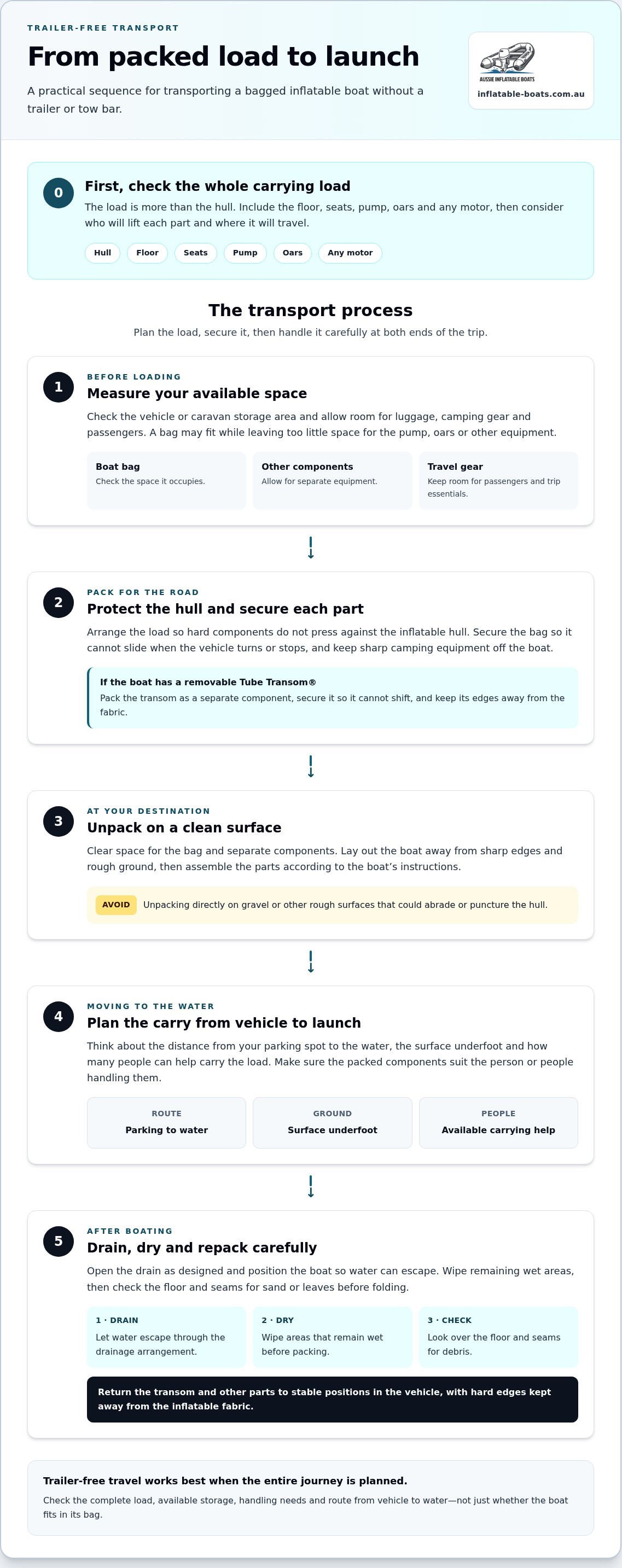
A boat in a bag can be packed and transported without a trailer or tow bar. Instead of towing a hull, you carry the boat and its separate components in your vehicle. Before leaving home, lay out the packed load and plan how you’ll move each item from your vehicle to the water.
Start by measuring your storage space, not by choosing a launch point. Check the area available in your vehicle, then allow for luggage, camping gear and passengers. A bag that fits in the boot may leave little room for the pump, oars or other equipment. Arrange the load so hard components don’t press against the inflatable hull during travel.
A removable Tube Transom® design changes how an inflatable boat packs. The transom separates from the boat, so pack it as its own component rather than pressing it against the tubes. Secure it so it can’t shift, and keep its edges away from the fabric. This also makes unpacking more orderly: remove the bag, lay out the parts, then assemble them according to the boat’s instructions.
Drainage matters before packing, too. Water left inside can make the boat harder to handle and leave the packed equipment damp. Open the drain as designed and position the boat so water can escape, then wipe down any areas that remain wet. Check the floor and seams before folding, especially after launching where sand or leaves have collected.
A road trip calls for careful storage as well as secure transport. Keep the bag secured so it can’t slide when the vehicle turns or stops, and don’t place sharp camping equipment on top. At a campsite, unpack on a clean, dry surface rather than directly on gravel or rough ground.
Use this simple sequence at each end of the trip:
- Clear a space for the bag and separate components.
- Unpack the boat on a clean surface, away from sharp edges.
- After use, drain and dry the boat before folding it.
- Return the transom and other parts to stable positions in the vehicle.
Inflatable boats suit trips where towing equipment would complicate the route, but packing still takes planning. Think about access to the water, the distance from your parking spot and how many people can help carry the load. For a closer look at inflatable boat options, compare the boat’s packed components with your travel setup.
Boat use for caravanning and travel
A boat packed for travel can add a water-based stop to a caravan itinerary without a dedicated trailer. For example, a riverside campsite could make a short paddle or fishing outing practical between driving days. What matters is whether the boat, its equipment and your travel routine work together, not just whether the bag fits.
Plan the journey from storage to launch. In your vehicle or caravan, keep the boat accessible without first unloading essential camping gear. At your destination, consider the distance from parking to the water, the surface underfoot and how many people can carry the packed load. A steep track or soft sand can make a nearby launch less convenient.
Caravanning also means managing equipment after use. Make space to drain and dry the inflatable boat before packing it for the next leg. At a campsite, set it on a clean surface while you organise other gear. Packing a wet or sandy boat with bedding and food can spread moisture and grit through the storage area.
Where you can use a boat in a bag in Australia depends on access to the specific waterway and any local restrictions. Conditions and directions vary between launch sites, so read posted signs and follow local instructions before setting out. A suitable launch spot doesn’t automatically mean every activity is appropriate there.
Match the outing to the boat’s intended use and the water conditions. A sheltered waterway near a caravan park requires different planning from an exposed coastal launch. Consider wind, current, distance from shore and a safe way to return. These factors help determine whether a short trip is sensible and what equipment to carry.
Before departure, use this travel checklist:
- Choose a planned launch site and note its access route.
- Pack the boat so it can be reached without unpacking the whole vehicle.
- Keep the pump, oars and other required equipment together.
- Allow time and space to drain and dry the boat after use.
- Review local signs and conditions before launching.
For a multi-stop trip, build the boat into your itinerary rather than treating it as an afterthought. A planned stop beside a lake or river gives you time to unpack, prepare and stow everything properly. On a longer drive, reassess the load whenever you add camping supplies so the boat stays secure and accessible.
Good travel planning can make the boat useful at more than one stop. Choose outings that suit the access, conditions and time available, and leave room in your caravan routine for safe setup and careful pack-down.
Transport and storage portability
Portability depends on the bag’s dimensions, the boat’s components and the space available at home or on the road. Compare the complete packed load with your vehicle and storage area before planning a trip.
Packed size and weight
A listed heavy-duty boat bag measures 135 × 72 × 40 cm and is described as fitting boats up to a Viper 430. The standard bag supplied with a boat is made from 500-700D ripstop PVC. These details describe the bag, not the full packed load, so allow space for components stored separately.
The packed weight depends on the boat and its included parts; assess the bag, floor, transom and accessories together. A Sports Series 360 with a high-pressure air deck floor is shown packed in a Mazda CX-5 with both split rear seats folded down. Treat that as an example of vehicle space, not a fit guide for every model.
Measure your boot or cargo area, including its opening and any raised floor. Check that you can lift and turn the bag through the available access. Flat storage space at home matters too, especially if the boat shares room with camping equipment or household gear.
Setup time
Setup time depends on the boat’s layout and the work involved in inflation, fitting the floor and securing the transom. There’s no single setup time for every design. Before heading out, unpack the parts and follow the manufacturer’s sequence so you know which steps and equipment your chosen boat requires.
To inflate and launch, position the boat on a clear surface, inflate its chambers as directed, then fit and secure the floor and transom. Check the assembly before moving the craft to the water. Keep the pump and loose components together; searching through vehicle luggage can cause avoidable delays at the launch site.
Practise assembling the boat at home before your trip. You’ll be able to organise the components and learn how the floor and transom fit. You can also plan how much space you’ll need beside the water, rather than unpacking across a busy access point.
Cleaning and storage
After an outing, remove sand, leaves and other debris before folding the boat. Drain the water, clean the surfaces with suitable care and let the material dry fully. Check the floor, valves, seams and transom area for dirt or visible damage before putting the parts back in the bag.
Store the packed boat in a dry place, away from sharp objects that could press against the fabric. Keep the bag and separate components together, and don’t trap damp gear inside. For caravan travel, secure the bag so it can’t shift against hard equipment during the drive.
How much does a boat in a bag cost in Australia?
Cost varies with the boat’s size, construction and included equipment. A compact inflatable for simple outings differs from a larger setup with a more substantial floor, transom or motor. Compare complete packages rather than bag-only prices, so you know what’s included and what you’d need to add for your intended use.
Start by defining what you need the boat to do. A boat for short trips on sheltered water may need a different configuration from one intended for fishing or carrying more gear. Hull design and capacity affect the package, as can the floor type and fittings. Decide where you’ll use the boat and what you’ll carry before comparing models. Specifications are more useful than a headline figure when they’re matched to your plans.
Check the package contents line by line. It may include the boat and some essential components, while other equipment is sold separately. Look for the pump, floor, seats, oars, transom and carry bag in the listing. Consider a motor too if your plans require one. Don’t assume packages are equivalent just because both boats come in bags.
Portability affects value, too. A model that fits your vehicle and storage space may suit caravanning better than a larger boat that needs extra room. Consider the packed load, assembly steps and equipment your outings require. For example, a high-pressure air deck floor changes what you’ll pack alongside the hull. Choose a setup for your travel routine, not just its listed features.
Durability and ongoing care are important comparison points. Construction materials, seams, valves and fittings affect how the boat is maintained over time. Include suitable accessories and replacement parts in your planning. Regular cleaning, careful drying and protected storage help keep the equipment ready for future trips. Repair needs may also be part of ownership, particularly after wear or accidental damage.
Use this comparison checklist before choosing:
- Write down the intended water use and the people or gear aboard.
- Compare included components, not just the hull and carry bag.
- Check packed dimensions against your vehicle and storage area.
- Consider which accessories and maintenance items suit your use.
- Assess the construction and repair needs as part of long-term value.
The right comparison is about the complete setup for your Australian travel plans. Explore inflatable boat options and assess their configurations against your storage, transport and boating needs.
A listed price alone doesn’t show whether products include the same components or suit the same outings. Treat these figures as starting points, not direct equivalents. Check each offer’s details and compare its configuration with your needs. This puts the price in context and helps you judge whether the boat and included setup suit your plans.
Inflatable Boats: Inflatable Boats
Inflatable Boats is a natural next step if you’re comparing portable boats for travel or need parts and support for an inflatable vessel. Explore inflatable boats, accessories and spare parts, and consider how each option fits your transport, storage and intended use. If an existing boat needs attention, Inflatable Boats also provides inflatable boat repairs for wear or damage.
Use this guide to clarify your priorities, such as packed space, boat design and the equipment you’ll carry. Then explore the available options to find a setup that suits your plans on the water.
Visit Inflatable Boats online to explore boats, accessories, spare parts and repairs.
Plan your next launch with confidence
Use a real trip to guide your decision. Picture the route, where you’ll launch and how your gear fits with the rest of your plans. A boat in a bag can suit your travel routine when its packed form works for your vehicle, storage and launch arrangements.
Before choosing, list your priorities: who will help prepare the boat, where you’ll keep it between trips and what you want to do on the water. Use that shortlist to compare options and decide whether a boat in a bag fits the way you travel.
For help with your next step, contact Inflatable Boats and discuss what you’re looking for. Take the time to choose a setup that fits your plans, then look forward to your next outing on the water.
Frequently Asked Questions
What does “boat in a bag” mean in Australia?
In Australia, a boat in a bag generally means an inflatable boat supplied with a carry bag for its deflated components. The phrase describes how the craft is packed and transported, not a specific hull design or standardised boat category. Check the package details to see which parts are included, such as the floor, transom or pump, as inclusions can vary between models.
What types of inflatable boats are sold as boats in a bag?
Several inflatable designs can be packed into a carry bag, including general-purpose dinghies, fishing boats and catamarans. Construction may vary by floor style, bow layout and transom arrangement. For example, an inflatable fishing boat or a model with a high-pressure air deck may come in a packed format. Compare intended use and included components instead of relying on the bag label alone.
Which boat-in-a-bag brands and models are available in Australia?
Models mentioned include the MIARCO Travel Cat 290, T300LX and Sports Series 360. The Aerowave Heavy-Duty Boat Bag is described as fitting boats up to a Viper 430.