
Boat for caravanning: choosing a size that fits your caravan
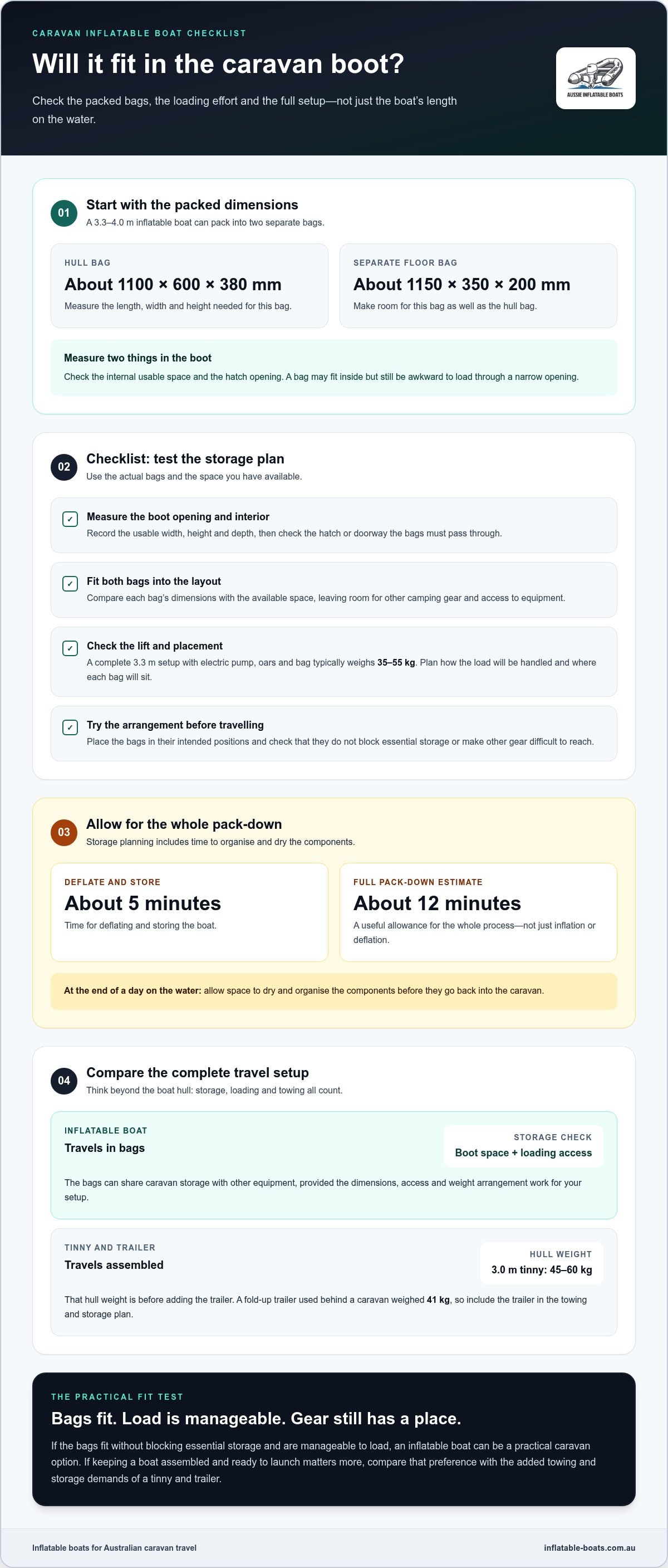
A bigger boat isn't automatically the better choice for a caravan trip. A 3.3-4.0 m inflatable boat for caravanning can pack into a hull bag measuring about 1100 × 600 × 380 mm, with a separate floor bag about 1150 × 350 × 200 mm, so packed dimensions matter as much as the boat’s length on the water.
It’s easy to focus on how many people a boat can carry, but the practical fit depends on the whole setup: where the bags will travel, how much weight you can handle, and how easily you can launch and pack down. A boat that suits your storage space and the waters you plan to explore is more useful than one that simply looks larger on paper.
This guide explains how to assess boat size, packed dimensions, setup, stability, shallow-water access and carrying capacity for Australian caravan travel. You’ll learn what to consider before choosing, including the trade-offs between a compact inflatable and a larger craft, so you can match your boat to your tow vehicle, storage space and planned trips.
Key Takeaways
- Compare the boat’s packed bags with your caravan’s usable storage space, not just the boat’s length when assembled.
- Allow for the full load, including the pump, oars and bags; a complete 3.3 m inflatable setup typically weighs 35-55 kg.
- Factor in unloading and assembly as well as inflation, and consider who will handle each component at the water’s edge.
- Match hull design and carrying capacity to your usual crew, gear and intended waters; shallow access and open-water stability call for different priorities.
- Weigh an inflatable boat against a tinny and trailer as a complete travel setup, including storage, towing and launching demands.
Will a 3.3-4.0 m inflatable boat actually fit in a caravan boot?
It can, provided the boot’s usable space accommodates both packed bags and the rest of your camping gear. A quality 3.3-4.0 m inflatable boat typically packs into a hull bag measuring about 1100 × 600 × 380 mm, plus a separate floor bag measuring about 1150 × 350 × 200 mm. Measure the opening as well as the storage area inside. A bag that fits the interior may still be awkward to load through a narrow hatch.
Allow for the full setup, not just the hull. A complete 3.3 m inflatable boat setup with an electric pump, oars and bag typically weighs 35-55 kg. That load may be divided between the hull and floor bags, making handling and storage layout important. Before leaving, place the bags in the intended boot positions and account for access to other equipment. The heaviest bag needs to be manageable for the people loading it.
Pack-down time also affects life on the road. Deflating and storing the boat takes about five minutes, while a full pack-down estimate is about 12 minutes. Treat the longer figure as a useful planning allowance for the whole process, rather than inflation or deflation alone. After a day on the water, allow space to dry and organise the components before they go back into the caravan.
Compared with towing a tinny, an inflatable boat can remove the need to tow a dedicated boat trailer. A 3.0 m tinny hull typically weighs 45-60 kg before its trailer is added, so the complete towing setup carries more than the hull alone. A fold-up trailer used behind a caravan weighed 41 kg. That may be an option for travellers who prefer a rigid boat, but it still adds a trailer to the camping arrangement.
For an Australian touring setup, compare the total space each option takes up. A tinny and trailer travel assembled, while an inflatable boat packs into bags that can share caravan storage with other equipment. The best fit depends on boot dimensions, loading access, weight distribution and what else needs to travel inside. Measure the bags and plan where they’ll go before packing for a trip.
Use this practical check before choosing:
- Measure the caravan boot’s opening and internal usable space.
- Compare both bag dimensions with the space available, including room for other camping gear.
- Consider how the 35-55 kg complete setup will be lifted and arranged.
- Compare packed storage with the towing demands of a tinny and trailer.
If the bags fit without blocking essential storage and are manageable to load, an inflatable boat can be a practical choice for caravan travel. If your camping routine depends on keeping a boat assembled and ready to launch, a tinny and trailer may suit you better, despite the added towing and storage demands.
Boat stability and ease of setup
In Australia, licence and registration requirements depend on the state or territory, vessel and engine; insurance terms depend on the policy and intended use. Caravan travel doesn’t create one national rule for every boat, so include your planned waterways and propulsion in your travel preparations.
Stability starts with matching the boat to the water and load. Hull shape, floor construction, weight distribution and the number of people aboard all affect how a boat feels underway. Arrange passengers and equipment evenly, and avoid sudden movements when boarding or changing seats. Stability depends on suitable design and careful loading, not boat length alone.
Setup affects whether a boat is practical for regular stops. A 3.3 m air-deck inflatable boat takes about 20 minutes for two adults to unload, assemble and carry to the water. That estimate covers more than inflation: it includes moving the parts, assembling the floor and preparing the boat for launching. Allow room at camp to lay out components without blocking access or disturbing neighbouring sites.
An engine adds weight and handling steps, so include it in your launch plan. Decide who will carry each component, where the engine will be mounted, and how you’ll move the boat from the campsite to the water. Soft sand, uneven ground or a long walk can make an otherwise manageable boat harder to launch. Practise the sequence at home before setting off.
Conditions matter just as much as assembly. During northern Australia’s dry season, approximately May to October, trade winds commonly blow. A 3 m tinny is not suitable for unprotected northern Australian waters when trade winds are blowing. Choose sheltered water when conditions demand it, and plan around local exposure rather than assuming a calm campsite means calm water.
Build these habits into each launch:
- Set the boat on stable ground before assembly, and keep components together.
- Distribute passengers and gear evenly, then review the load before departure.
- Carry one Level 100+ personal flotation device per person for free-camp boating.
- Allow time to assemble, launch and return, especially when wind or access complicates the trip.
The main disadvantages are the extra loading, assembly and pack-down, plus exposure to changing weather and water conditions. A trailer boat also adds towing and launch logistics. If inflatable construction suits your travel plans, explore inflatable boat options as part of weighing up setup effort against the access you want.
Check the requirements for your state or territory, boat and engine. Match your insurance to the policy and intended use, and account for your planned waterways and propulsion when preparing.
Caravan storage dimensions and packed boat size
A tape measure and loading plan tell you more than the boat’s length alone. For caravan boating, measure the storage opening, internal width, height and depth, then compare them with each packed component. Account for corners, wheel arches, shelves and any lip that narrows the opening. Measure the route from the boot to each component’s final position, not just the empty compartment.
Leave room to remove each bag without unpacking the whole caravan. For example, if the hull bag sits behind camping chairs, check whether you can lift it out first. A tight fit can become impractical when other gear shifts during travel. Leave space to grip, turn and slide each load into position, and keep frequently used items accessible.
How much do caravan-friendly boats and boat trailers cost in Australia? There’s no single total: the main cost drivers are the boat’s construction and size, its floor, engine, trailer and required accessories. Compare complete setups: a trailer adds equipment and towing needs, while an inflatable boat requires storage for its separate components.
Use a simple fit test before committing to a layout:
- Measure the boot opening and the compartment at its narrowest points.
- Record the packed dimensions of every boat component and accessory.
- Mark the position of other gear, such as chairs, food boxes and recovery equipment.
- Practise loading and unloading in the order you’ll use at camp.
Weight matters as much as volume. A load can fit inside the caravan yet still be difficult to handle or poorly positioned. Keep heavy components low and secure them against movement, while leaving access to gear you’ll need first at the campsite. Give the pump, oars and engine designated positions instead of wedging them wherever space remains.
How do you safely tow, launch and retrieve a boat while caravanning? Before towing, secure the boat and loose equipment, check the trailer connection and lights, and confirm the load is balanced. At the ramp, choose a clear staging spot and prepare the boat away from the water’s edge. Launch and retrieve slowly, with one person guiding.
Storage plans differ by boat type. An inflatable boat separates into bags, so you can arrange its components around other caravan equipment. A rigid boat needs a transport position on a trailer or suitable rack, plus room to access it for launching. For a camping trip with frequent stops, compare the time and effort needed to unload each option, not just its packed footprint.
Finally, repeat the storage test with the caravan loaded for a real trip. Bedding, food and camping equipment can change how much space remains. Secure the boat components so they cannot slide during travel, and keep the boot door clear. A workable layout makes each boating day easier to start and simplifies packing when it’s time to move on.
Shallow draft and access to secluded places
A shallow-draft boat can reach sheltered creeks, estuaries and quiet shorelines that deeper hulls may not access. Draft is the depth of water the boat needs beneath it. It changes with the load, passenger positions, engine and equipment, so assess the complete setup rather than assuming every inflatable boat is suited to very shallow water.
For a caravan trip, think about where you want to explore. A sheltered freshwater inlet has different access demands from a tidal river or an exposed coastal bay. The hull, propulsion and water conditions all matter. A boat that can cross a shallow campsite channel may not be suitable for a windy, open stretch of water.
Before launching, review the route and the tide’s direction. A falling tide can quickly reduce the depth in some northern Australian river systems. Boaters have been left stuck in a small boat for 10 hours without sun protection. Carry sun protection and drinking water, and plan a return while there’s enough water along the route.
Use a simple launch routine before exploring an unfamiliar channel:
- Identify shallow sections, exposed areas and possible landing places along the route.
- Consider how passengers, fuel and gear affect the boat’s position in the water.
- Keep the engine and propeller clear of submerged obstacles when approaching a bank.
- Set a turnaround point before water depth or weather makes the return uncertain.
Shallow access doesn’t mean freedom from hazards. Sandbanks, rocks, submerged timber and shifting channels can affect a small boat’s route. For example, a clear path at a quiet creek mouth may become harder to follow as the tide changes. Slow down, watch the water and avoid entering a route with no safe way back.
Pack for the conditions, not just the destination. A sheltered landing spot may have no shade, services or easy walking access to camp. Carry sun protection, water and any essentials you may need if the return takes longer than planned. In northern Australia, trade winds commonly blow during the May to October dry season, so choose sheltered water when wind exposure affects control.
For caravan travellers, an inflatable boat offers transport flexibility, but suitability for shallow water still depends on the craft and conditions. Match the intended route to the boat’s loaded draft and propulsion. If a trip includes both a sheltered creek and open water, choose for the more demanding section, not just the easiest launch.
Keep expectations realistic: reaching secluded spots depends on choosing a suitable boat and a safe route. Check the tide, carry sun protection and leave room to turn back. That preparation helps make exploring a quiet Australian waterway a considered part of the trip, not a gamble with changing depth.
Boat specifications and carrying capacity
Choose a boat by matching its size, load and intended waters to your caravan setup. Hull length is only one part of the decision.
Boat and Trailer Size and Weight Limits
Australian towing setups don’t have one boat-and-trailer weight limit that suits every vehicle and caravan. The practical limit depends on the ratings of the tow vehicle, caravan, coupling and trailer, alongside the loaded combination’s weight. A typical 3.8 m open aluminium boat weighs around 90-105 kg, while a 4.5 m boat weighs 130 kg, generally too heavy and bulky for a roof rack.
Car-topped boats are commonly no longer than 3.8 m because of roof-rack weight limits and the difficulty of handling larger boats. A 3.0 m tinny hull typically weighs 45-60 kg before its trailer is added. These figures help compare transport options, but boat length alone can’t establish whether a particular towing setup is suitable.
Towing Capacity and Payload Requirements
For towing capacity and payload, account for the complete travelling load, not just the boat’s listed weight. Include the trailer, engine, fuel, passengers and caravan gear, then consider how their positions affect the vehicle and caravan. The lowest applicable rating in the combination sets the limit, so added boat equipment reduces the capacity available for other loads.
Carrying capacity also depends on how many people and how much equipment the boat must carry. A single boat component under 50 kg is suggested for a touring couple in their 60s and 70s, making component handling a useful selection criterion. Plan the load before departure and distribute people and gear evenly.
Water type should guide the hull choice. A 5-6 m aluminium boat is described as suitable for navigating open waters while caravanning, while a compact craft may be easier to transport. For protected waterways, weigh access and stowage against passenger and gear capacity. A boat intended for open water needs to suit those conditions, not just fit beside the caravan.
Propulsion is another trade-off. A 2.5-3.5 hp four-stroke petrol outboard is suggested as a touring option. Consider the engine’s weight and how it will be carried, mounted and stowed. The final choice should account for the whole outfit, from the boat and propulsion to the caravan’s loaded payload.
Compare inflatable boat options against your carrying and storage needs, then choose a setup that fits the waters and travel load you have in mind.
Inflatable Boats: Inflatable Boats
Inflatable Boats is a practical next step if your measurements point towards a portable craft for caravan travel. Explore its range of inflatable boats and compare options with your storage space, intended waterways and carrying needs before choosing a setup.
Inflatable Boats also offers accessories and spare parts to support your equipment needs, as well as repairs for damage or wear to an inflatable vessel. These services and products can help whether you’re planning a new trip or maintaining a boat already in your camping setup.
Use the dimensions and load considerations in this guide to narrow down what suits your travel plans, then explore Inflatable Boats’ inflatable boats. Contact Inflatable Boats to discuss your requirements.
Plan your first launch with confidence
Before setting off, picture a real day on the water, from leaving camp to returning after the trip. Decide where you’ll unload the boat, who will prepare it, and how you’ll keep the campsite organised while you’re out. A simple routine can make the difference between a relaxed launch and a scramble through packed gear.
Choosing a boat for caravanning is ultimately about fitting the craft to the way you travel. Think beyond the destination: your preferred pace, the people aboard and the outings you’ll actually make all shape the right setup. A practical choice should support the trip, not become another job to manage.
If you’re ready to explore options that suit your plans, contact Inflatable Boats for advice. Set your sights on the water, prepare thoughtfully and make room for the next stretch of adventure.
Frequently Asked Questions
How big a boat can you take?
There’s no single maximum size for every caravan setup; the transport method sets the practical limit. A boat carried on a roof rack is constrained by the vehicle’s rack capacity and handling, while a trailer setup depends on the tow vehicle, caravan and trailer combination. For example, a larger boat may suit a dedicated trailer but be impractical to store or manage at a compact campsite. Match size to transport, storage and intended water.
What’s the lightest practical setup for a couple in their 70s?
A practical choice is an inflatable boat with components each person can handle comfortably, rather than a setup that depends on lifting one heavy, assembled craft. Consider how the boat, floor, engine and other gear will move from storage to launch, and whether you can share those tasks. A simple loading and launch routine matters too. Prioritise manageable handling and the waters you plan to use over maximum capacity.
What does “boat for caravanning” mean in Australia?
A boat for caravanning is a watercraft chosen to travel alongside a caravan, with transport and storage considered as part of the setup. It might be an inflatable boat packed away between trips or a rigid boat carried on a suitable trailer or rack. The phrase describes how the boat fits into touring, not one particular hull type. The right option depends on how it travels and where you plan to launch it.
What types of boats are suitable for towing behind a caravan?
Inflatable boats and rigid boats on trailers are common options to compare for caravan travel. An inflatable suits travellers who want a boat that separates into components for storage; a trailer carries a rigid craft ready for launching. Consider how each option affects your loaded setup, campsite space and launch routine. Choose according to your intended waters and carrying needs, rather than assuming every boat-and-trailer combination suits every caravan.
How much do caravan-friendly boats and boat trailers cost in Australia?
There’s no single total: costs depend on the boat’s construction and size, floor, engine, trailer and accessories. Compare complete setups, since a trailer adds equipment and towing needs, while an inflatable boat requires storage for its separate components.
What are the best lightweight trailer boats for caravanning in Australia?
For a lightweight caravan setup, a 3.3-4.0 m inflatable boat packs into separate bags and a complete 3.3 m setup typically weighs 35-55 kg. If you prefer a rigid boat, a 3.0 m tinny hull typically weighs 45-60 kg before the trailer; a fold-up trailer used behind a caravan weighed 41 kg.