
Avoiding Buyer's Remorse on a Boat Purchase Starts Before You Buy
The boat that turns heads at the ramp may still be wrong for your plans. Avoiding buyer’s remorse on a boat purchase starts with matching the boat to how you’ll use it, then considering the full costs and checking its condition before you commit.
It’s easy to focus on the purchase price and picture days on the water. But storage, trailering, fuel, servicing, maintenance and insurance all shape the costs and effort of ownership. A careful decision protects your budget and your time on the water.
This guide explains how to set a realistic budget, assess whether a boat suits your activities, and approach a survey, sea trial, warranty and written agreement. Use this practical framework to weigh the details before buying, choose with greater confidence and avoid unwelcome surprises.
Key Takeaways
- Think beyond the boat’s unloaded performance: consider how it will handle with your usual passengers and gear aboard.
- Make sure the trailer is sturdy enough to carry the boat safely, as towing is part of the ownership decision.
- Build a professional survey and sea trial into your pre-purchase assessment to uncover concerns before you commit.
- Read the warranty closely so you understand what it covers and excludes before buying.
- Keep the agreement in writing and signed by both parties; according to the ACCC, accepting a contract can also happen through actions such as paying for the boat.
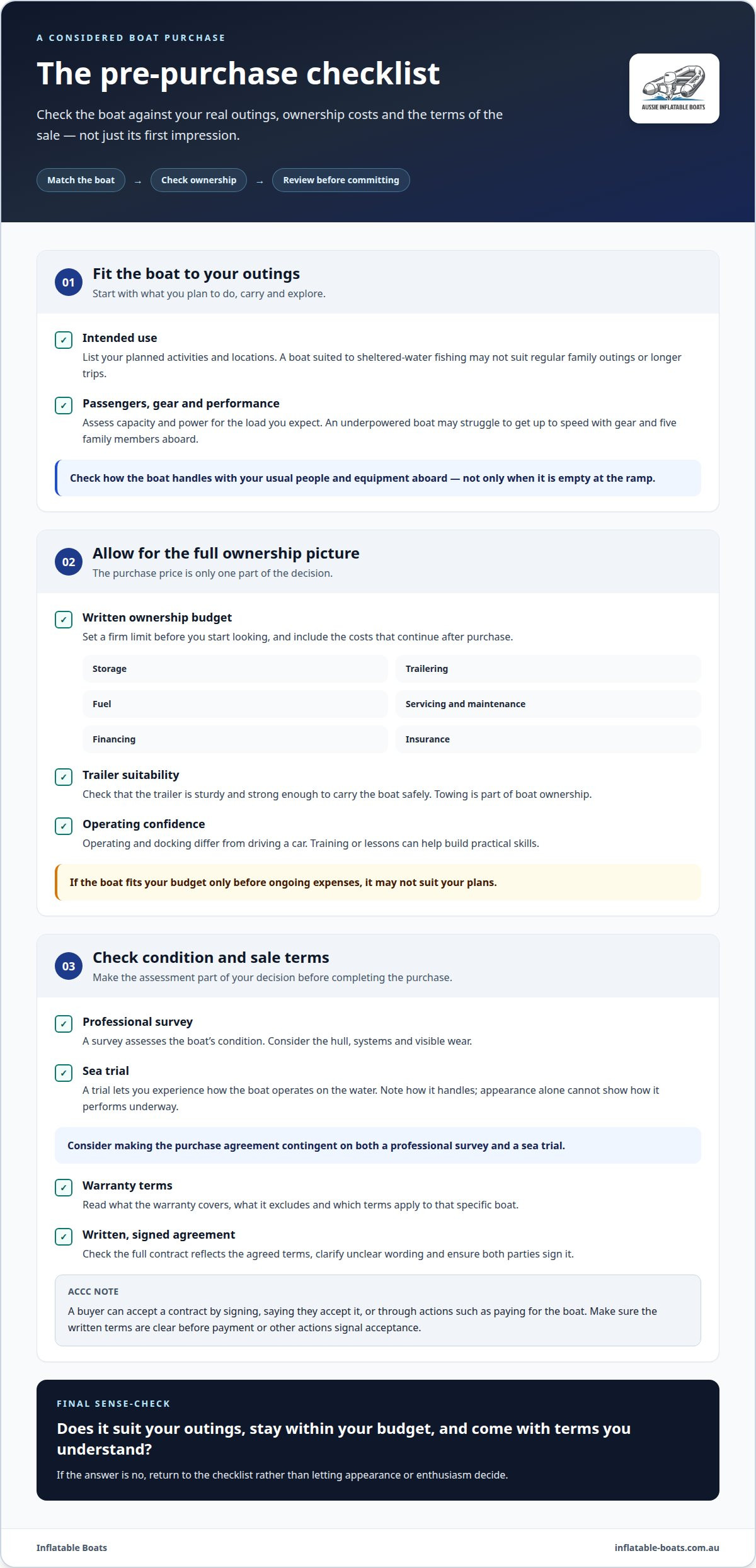
Avoiding buyer's remorse on a boat purchase
Set a written budget before you start looking, and keep your purchase within its limits. Include more than the boat’s purchase price: storage, trailering, fuel, servicing, maintenance, financing and insurance all affect the cost of ownership. If the boat fits your budget only before these expenses, it may not suit your plans.
Next, define the boating you actually want to do. A boat suited to sheltered-water fishing may not work for regular family outings or longer trips. List the activities, usual number of passengers, gear and locations you have in mind. Then assess each boat against those needs, rather than choosing based on appearance or one feature. A mismatch can become frustrating once the boat is loaded and underway.
Capacity and power should suit real outings, not just an empty boat at the ramp. For example, an underpowered boat may struggle to get up to speed with gear and five family members aboard. Consider how the boat performs under the load you expect to carry. Look for a suitable match between the vessel, its intended use and the people or equipment on board.
Use the same checklist for each candidate. It helps turn a strong first impression into a decision based on practical details:
- Intended use: Match the boat to your planned activities, typical passenger load and usual gear.
- Ownership budget: Account for storage, trailering, fuel, servicing, maintenance, financing and insurance.
- Trailer suitability: Choose a trailer sturdy and strong enough to carry the boat safely.
- Condition: Make the purchase agreement contingent on a professional survey and sea trial.
- Ownership terms: Read the warranty and understand its coverage and exclusions before buying.
A survey and sea trial answer different questions. A professional survey assesses the boat’s condition, while a sea trial lets you experience how it operates on the water. Making the agreement contingent on both gives you a chance to assess the vessel before completing the purchase. Consider the hull, systems and visible wear, and note how the boat handles during the trial. A promising appearance alone cannot show how it performs underway.
Read the warranty before agreeing to buy. Identify what it covers, what it excludes and which terms apply to the specific boat. The existence of a warranty alone doesn’t show whether its terms suit your needs. Put the purchase contract in writing and ensure both parties sign it. According to the ACCC, a buyer can accept a contract by signing, saying they accept it, or through actions such as paying for the boat. Make sure the written terms are clear before payment or other actions signal acceptance.
Consider towing and operating confidence, too. The trailer must be sturdy and strong enough for the boat, as an unsuitable trailer can undermine safe transport. Operating and docking a boat also differ from driving a car, so training or lessons can help you build practical skills. Account for these needs alongside the vessel itself. A sound choice suits your intended outings, ownership budget and ability to use the boat confidently.
Before you commit, compare the boat with the outings you want and the experience you hope to have on the water. A vessel that looks appealing may still be a poor fit if it doesn’t suit those plans. Let your intended activities guide the decision, and return to your checklist if you find yourself focusing on appearance or one attractive feature. Keep your original budget as a firm limit; enthusiasm for a particular boat is no reason to abandon it. If the boat doesn’t fit both your plans and your budget, consider other candidates rather than forcing a mismatch.
Give the written contract as much attention as the boat itself. Before signing, read the full document and check that it reflects the terms both parties agreed to. Ask for unclear wording to be explained, and don’t rely on an understanding that isn’t included in the contract. Both parties should sign the written agreement. Confirming these points can help you make a deliberate final decision: the boat should suit your intended use, stay within your budget and come with terms you understand. Being clear on these essentials can reduce the chance of regret after the purchase.
Inflatable Boats
If your assessment points to an inflatable boat as a practical fit for your intended outings, Inflatable Boats can help. A considered purchase still comes down to matching the boat to how you plan to use it, your storage arrangements and your towing setup. Explore the available inflatable boats with these needs in mind, rather than choosing based on appearance alone.
Ownership may also call for suitable accessories, spare parts or repairs over time. Inflatable Boats offers these alongside its boats, providing practical options to consider when planning for maintenance and ongoing support. Keep your decision grounded in your activities and ownership plans to choose with greater confidence.
Contact Inflatable Boats to discuss your inflatable boat needs.
Set your next boating goal in motion
Turn your decision into a clear picture of the outings you want. Think about where you hope to launch, who you’ll take and what kind of experience you want on the water. That vision can keep your choice focused on what matters to you, rather than letting excitement alone set the course.
A considered choice can also include what will support ownership beyond the boat itself. Inflatable Boats offers inflatable boats, accessories and spare parts, giving you options to explore as your plans take shape. The right fit will depend on your intended use and priorities. A steady, informed approach to avoiding buyer’s remorse on a boat purchase leaves room to choose with confidence and enjoy the journey ahead.
Contact Inflatable Boats today to take the next step towards your time on the water.