
5 safety steps for a sudden storm in an inflatable
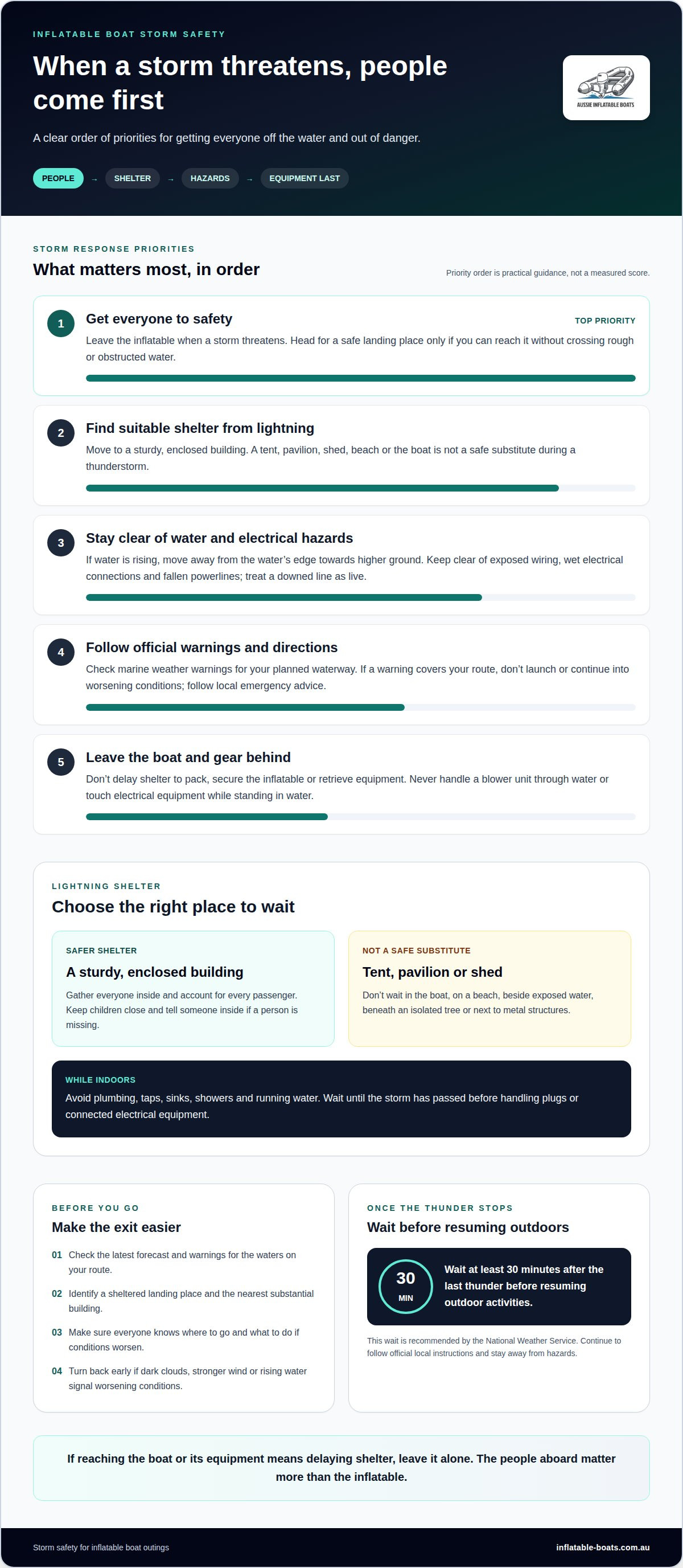
A sudden storm is a cue to leave the inflatable, not try to save it. If you’re wondering what to do in a sudden storm in an inflatable, get everyone to suitable shelter and follow emergency advice. People come first; the boat can wait.
Storms can bring more than rain. Wind, rising water, lightning and electrical hazards can quickly turn a calm outing dangerous, so know what to do before conditions change.
This guide sets out five practical steps for responding to a storm in Australia. Learn how to manage rain and flooding hazards, reduce lightning risks, follow emergency advice and put a storm plan into action, including what to do if high winds arrive while an inflatable is still up.
Key Takeaways
- Leave the inflatable when a storm threatens and move everyone to suitable shelter; don’t put people at risk trying to secure it.
- Watch for rising water and electrical hazards, and keep clear of any fallen powerlines.
- During a thunderstorm, shelter in a sturdy enclosed building rather than a tent, pavilion or shed.
- Wait at least 30 minutes after the last thunder before resuming outdoor activities, as recommended by the National Weather Service.
- Make a storm plan in advance so everyone knows where to go and what to do if conditions worsen suddenly.
1. Rain, flooding and electrical hazards
Rain changes the conditions around your boat and underfoot. Keep passengers seated, move carefully and watch for water collecting inside the inflatable. Wet floors can become slippery, while reduced visibility makes it harder to spot other vessels, shorelines and hazards.
Knowing what to do in a sudden storm in an inflatable boat starts with putting people before equipment. Head towards a safe landing place if you can reach it without crossing rough or obstructed water. If water is rising, move away from the water’s edge towards higher ground. Don’t wait beside a flooded ramp or shoreline.
What wind speed and wave conditions are unsafe for inflatable boats? There’s no single wind-speed or wave-height threshold that suits every inflatable boat. Treat conditions as unsafe when wind, waves, visibility or current exceed the boat’s capabilities or the crew’s ability to control it safely.
Take care around electrical equipment in the rain. Keep people away from exposed wiring, damaged batteries and electrical connections that have become wet. Don’t touch electrical equipment while standing in water. If a powerline is down near shore, treat it as live, even if it appears inactive, and keep well clear.
A practical plan for what to do in a sudden storm in an inflatable boat should also cover power cuts. A power cut can affect equipment that relies on electricity, such as an electric pump or charging system. Don’t assume a stopped device is safe to handle in wet conditions. Move passengers away, avoid wet connections and wait until the area is safe before inspecting equipment.
What safety equipment should you carry on an inflatable boat in Australia? Carry a correctly sized lifejacket for each person, a reliable means of communication, a sound-signalling device, a torch, a first-aid kit and a way to remove water. Keep equipment accessible, dry and secured so it remains usable when rain or spray enters the boat.
Before setting out, check the forecast and identify a sheltered landing place. If dark clouds, stronger wind or rising water signal worsening conditions, turn back early rather than wait for the storm to arrive. Once ashore, move away from electrical hazards and follow official emergency advice. Don’t return to the inflatable to retrieve gear while dangerous conditions persist.
2. Avoiding lightning hazards
Lightning shifts the priority from protecting equipment to sheltering people. Leave the inflatable and move towards a sturdy, enclosed building as soon as a thunderstorm threatens. A building with plumbing and electricity is identified as suitable shelter during a thunderstorm. Don’t stay in the boat, on a beach or beside exposed water while waiting for the storm to pass.
Once inside, avoid contact with plumbing. Metal pipes can conduct electricity if lightning strikes, so don’t use a bathtub, tap or sink during the storm. Avoid showers and other activities involving running water too. Similarly, wait until the storm has passed before handling plugs or connected electrical equipment.
A tent, pavilion or shed isn’t a safe substitute for an enclosed building during a thunderstorm. If you’re at a campsite, leave a fabric shelter and head to a substantial enclosed building. Don’t shelter beneath an isolated tree or remain beside metal structures. If no suitable building is immediately accessible, follow local emergency advice and move towards safer shelter without crossing exposed areas unnecessarily.
Plan your exit before the weather turns. Identify the nearest substantial building from the launch point, beach or campsite, and make sure everyone knows where it is. Keep the route clear of mooring lines and loose gear. If thunder begins while passengers are aboard, leave the inflatable promptly and take the shortest safe route to shelter. Don’t delay to pack equipment or secure the boat.
At the shelter, gather the group and account for every passenger. Keep children close, and tell someone inside if a person is missing. Don’t go back outside to retrieve bags, phones or boat equipment while lightning remains a threat. If you need a phone for emergency updates, use it indoors and follow official local instructions.
For a future outing, make shelter part of the plan alongside your route and landing points. Explore inflatable boat options with the waters you intend to use in mind, then organise a clear exit plan before launch. A prepared route makes it easier to leave quickly when thunder signals that conditions have changed.
Rain can make surfaces slippery and create electrical hazards if water reaches inflatable blower units. Move carefully as you leave, watching your footing on wet surfaces, and don’t rush. Never handle or move a blower unit through water. If rain is falling, prioritise people and the route to shelter over equipment; leave the unit alone if reaching it means crossing a slippery area or going near water. Water reaching the blower unit can create an electrical hazard. Make sure passengers understand that the inflatable and its equipment aren’t worth delaying shelter for. A calm, direct exit helps reduce confusion when rain and lightning occur together.
3. Following emergency advice
In Australia, treat marine weather warnings and local emergency directions as instructions for your planned waterway, not general background information. If a warning covers your route, don’t launch or continue into worsening conditions. Follow directions to leave an exposed area, seek shelter or avoid travel, even if the storm appears distant.
Before departure, check the latest forecast and warnings for the waters you plan to use. Conditions can differ between a sheltered bay and exposed coastal water, so match the warning area to your route. If an alert arrives while you’re afloat, don’t keep trying to reach a more ambitious destination. Choose the safest practical course towards shelter, accounting for wind, waves, visibility and nearby hazards.
How do Australian marine weather warnings and boating safety rules apply during storms? Use warnings to decide whether to postpone, change your route or leave the water, and continue to follow the boating safety requirements that apply to your vessel and location. If emergency authorities issue an instruction for your area, act promptly.
At the ramp or shoreline, don’t treat a warning as permission to make one last trip. Abandon the launch plan, tell your group and move away from exposed water if conditions are worsening. If authorities advise people to stay indoors, don’t go outside to reach a boat or drive to another launch point unless travel is absolutely necessary.
During a storm, avoid walking outside and driving unless absolutely necessary. A short trip to retrieve a boat cover can expose you to wind, flying debris or flooding. Stay in a safe place, keep people together and use official alerts to track changing conditions. Don’t assume a quiet spell between rain bands means the warning has ended.
For a group outing, assign one person to receive emergency updates and share decisions. Agree beforehand that anyone can call off the trip if the forecast changes. If mobile reception is unreliable along your route, discuss another way to receive warnings before leaving. Set a clear meeting point so separated passengers know where to go if plans change.
Once an official warning is active, don’t improvise a route through unfamiliar water to save time. Follow the safest available direction and avoid unnecessary movement until authorities advise that conditions have eased. Making a cautious decision at the ramp is far easier than managing an inflatable in a storm.
4. Lightning distance and thunder safety
Lightning can strike up to 10 miles from the base of a thunderstorm. A storm that looks distant can still threaten people on open water, at a boat ramp or along an exposed shoreline. Don’t use the storm’s apparent distance as a reason to stay outside. Move towards suitable shelter when thunder or lightning signals nearby storm activity.
Use the flash-to-thunder interval as a warning, not a reason to delay. The National Weather Service recommends seeking shelter if thunder follows a lightning flash in less than 30 seconds. If you see a flash and hear thunder within that interval, leave exposed areas and get inside a sturdy, enclosed building.
Counting the seconds between a flash and thunder can help you recognise that lightning is close, but it doesn’t make an outdoor location safe. Wind, rain or boat noise can make thunder hard to hear. Don’t wait for a second flash to confirm the danger. Treat the first clear thunderclap as a signal to act.
A tent, pavilion or shed won’t provide safe shelter during a thunderstorm. Choose a substantial enclosed building and stay there while thunder continues. If you’re with a group, head inside together. Don’t send anyone back across an exposed car park or beach to collect gear.
Keep away from the water once you’ve reached shelter. Don’t return to the ramp to move an inflatable or retrieve equipment, even if the rain briefly eases. A pause in rainfall doesn’t mean the lightning risk has passed. Wait for the thunder to stop, then begin the recommended waiting period from the last thunder you hear.
The National Weather Service recommends waiting at least 30 minutes after the last thunder before resuming outdoor activities. If thunder sounds again during that period, begin the wait again after the latest thunder. Use the full interval to remain sheltered, account for everyone in your group and listen for official emergency updates.
Include the waiting rule in your outing plan before launching. Agree on a shelter location and tell passengers nobody returns to the water until the waiting period has passed. For example, a group at a beach should stay together inside a suitable building rather than split up to check the boat or walk along the shore.
After the waiting period, look and listen for renewed storm activity before leaving shelter. If thunder returns, go back inside and restart the 30-minute wait after the last thunder. A cautious return protects the group from rushing back onto open water while lightning remains a threat.
5. Putting an emergency plan into action
If a storm hits while you’re aboard, put on lifejackets and focus on getting everyone to safety. Stop fishing or other tasks, keep passengers together and follow local emergency advice. Don’t try to manage the boat or retrieve loose gear while conditions are dangerous.
Return to shore only if you can reach a safe landing place and the boat remains controllable. Keep the route simple, avoid exposed water and don’t head towards a distant ramp through worsening wind or waves. If a thunderstorm makes the journey unsafe, seek the nearest suitable shelter when it’s safe to reach.
Keep occupants low and balanced, with lifejackets secured and essential communication equipment accessible. Tell passengers to hold on to fixed parts of the boat, not each other, and avoid sudden movements. Don’t tie anyone to the inflatable, as that could prevent them moving freely in an emergency.
If the boat capsizes, account for everyone and keep lifejackets on. Stay with the boat if it’s safe, and use your communication device or signalling equipment to call for help. Don’t attempt a long swim through storm-affected water to reach shore.
Call 000 if someone is in immediate danger, seriously injured or missing. Contact Marine Rescue for urgent on-water assistance when the boat or crew needs help, and provide your location, conditions and the number of people aboard. Use the communication method available, and keep the message clear so responders understand the situation.
After reaching shore, move the group away from the water and into shelter. Check everyone for injuries, account for all passengers and follow emergency directions before moving again. Don’t return to the boat during dangerous conditions to collect equipment or secure it.
Once conditions ease, inspect the inflatable for visible damage and water inside before using it again. Keep it out of service if you find a tear, loose fitting or other damage that could affect safe operation. A clear storm plan should name who makes the call, identify safe landing options and explain how the group will contact help.
Before your next trip, review inflatable boat options with your intended waters and emergency plan in mind.
For powered outdoor inflatables, treat a storm in progress as a reason to leave the inflatable and seek shelter, not handle it. If high winds arrive suddenly while an inflatable is still inflated, the guidance advises leaving the blower running and moving people to shelter rather than trying to deflate it; deflation can be dangerous in high winds. A forum user said their outdoor inflatables stayed up in rain but were turned off in high winds. If there is enough warning before high winds arrive, evacuate everyone and turn off the blower to let it deflate. Christmas inflatables should be deflated and secured or brought inside whenever a severe storm or gale warning is issued. In all cases, prioritise getting people to shelter over managing the inflatable during dangerous weather.
Inflatable Boats
Inflatable Boats helps you prepare for time on the water with inflatable boats, accessories and spare parts, and offers repairs for damaged inflatable vessels. After a storm, use these services when your boat needs attention before returning to the water or when you’re preparing for future outings. Have a damaged seam, valve or fitting assessed before the next launch. Storm readiness depends on suitable equipment and a clear plan, not just the boat itself.
Use the safety steps in this guide to make decisions during severe weather, and consider equipment care once conditions are safe. For help with your inflatable boat needs, contact Inflatable Boats.
Make storm readiness part of every outing
Plan your next launch around a deliberate decision, not a last-minute reaction. Before heading out, agree who will make the call if the forecast changes, and make sure everyone understands that turning back is sound seamanship. Knowing what to do in a sudden storm in an inflatable can help your group respond calmly when conditions shift.
Use that preparation to make each trip more purposeful: choose a route that suits the conditions, keep your group informed and leave room to change plans. Good seamanship isn’t about pressing on. It’s about knowing when to pause, adapt or head home.
For help planning your next step with inflatable boating, contact Inflatable Boats. Prepare well, make the call early and enjoy the water with greater confidence.
Frequently Asked Questions
How can you protect yourself from lightning while boating in an inflatable?
Leave the inflatable and get inside a substantial enclosed building as soon as thunder or lightning threatens; the boat cannot protect you. Keep passengers together as you move, and take a phone or marine radio only if it’s immediately accessible. Once sheltered, use it to follow emergency updates. Don’t go back outside for equipment, even if the rain eases before the storm has clearly passed.