
5 Reasons a Portable Inflatable Boat May Be Worth Owning
A boat that packs away between trips can make getting on the water simpler. The advantages of owning a portable inflatable boat are clearest when easy transport, compact storage and flexibility matter more than keeping a vessel permanently ready to launch. Whether it suits you depends on how you plan to use it and whether its practical benefits fit your boating routine.
Weigh convenience against the effort of setting up and packing away. An inflatable boat can be deflated and folded or rolled for compact storage, and transported without a dedicated trailer or roof racks. That can suit some Australian boaters, but the right choice depends on your activities, passenger numbers and gear.
Here are five reasons a portable inflatable boat may earn its place, from easier transport and storage to use across different outings. You’ll also find what to consider before buying and how to decide whether those advantages justify the commitment.
Key Takeaways
- Weigh the convenience of compact storage and simpler transport against the time and effort needed to set up and pack away your boat.
- Choose a boat with capacity suited to your passengers and the gear you plan to carry.
- Consider how you’ll use it, from fishing and family outings to other water activities, and whether the boat suits those conditions.
- Factor in the full ownership routine, including care, storage and any transport arrangements your chosen boat requires.
- Look at how portability could make launching in different locations more practical for your boating plans.
1. Are Inflatable Boats Worth the Money?
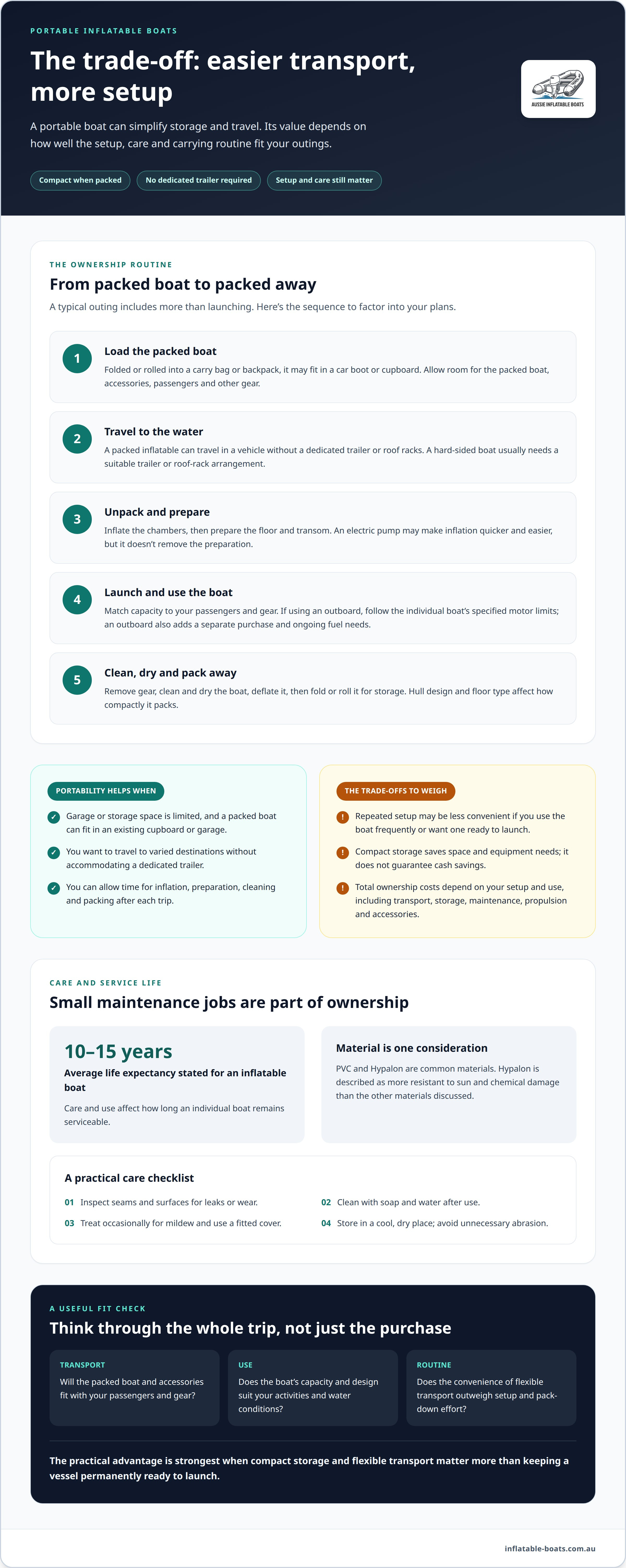
For boaters short on garage space, portability can make ownership more practical. Deflate the boat, fold or roll it, then store it in a carry bag or backpack. Its compact form may fit in a car boot or cupboard, unlike a rigid hull that needs room for its fixed shape. The trade-off is that you’ll need to set it up before heading out.
Inflation is part of that setup. Some inflatable boats have electric pumps to make inflation quicker and easier, but you’ll still need to unpack the boat, inflate its chambers and prepare the floor and transom before launching. If the boat is designed for an outboard, that can provide propulsion. After the trip, remove gear, clean and dry the boat, deflate it, then fold or roll it for storage. The hull design and floor type affect how compactly it packs.
Consider how you’ll transport the boat. A compact package may be easier to load into a car than a rigid craft, and an inflatable boat can travel without a dedicated trailer or roof racks. This can reduce the need to store and maintain extra transport equipment, and offer more flexibility when a trailer isn’t practical at home. The packed boat and accessories still take up space, so plan how they’ll fit alongside passengers and other gear.
Storage affects convenience as well as cost. A boat that fits in an existing cupboard or garage may not need a separate storage arrangement, and avoiding a dedicated trailer means you won’t need to accommodate one at home. These are savings in space and equipment, not guaranteed cash savings: the total depends on your setup and use. For occasional trips, storing the boat between outings may suit you. With frequent use, weigh the repeated setup against the transport advantages.
Assess the whole routine before deciding. Picture a typical outing: load the packed boat into the car, travel to the water, inflate and launch it, then clean and pack it away. A carry bag supports compact storage, while an electric pump may simplify inflation, but neither removes the need for preparation and care. If flexible transport matters and you can allow time for setup, an inflatable boat may suit you. If you want a vessel ready to launch without unpacking, a portable design may be less convenient.
2. Inflatable Boats: Why Are Dinghy Boats So Versatile?
A dinghy’s ownership cost includes more than its purchase price. Transport, storage, maintenance and propulsion all affect the budget over time. A hard-sided boat usually needs a suitable trailer or roof-rack arrangement, while a packed inflatable boat can be carried in a vehicle. That may reduce the equipment and space needed for transport. It doesn’t eliminate costs, but it changes what you need to accommodate before setting off.
Consider a trip to a river or a weekend away. A trailer can mean extra towing, storage and upkeep, while a compact inflatable boat can travel in the car with other gear. The practical cost depends on your vehicle, distance and launch plans. If you visit varied destinations, a boat that travels without a dedicated trailer may make outings easier to organise. If you already have a trailer and suitable storage, that advantage may matter less.
Purchase price is only one part of the comparison. Hull design, capacity and intended use shape the equipment you’ll need. An outboard, for example, adds a separate purchase and ongoing fuel needs; rowing avoids motor-related costs but takes physical effort. Allow for accessories and replacement parts, too. The total depends on how you configure the boat and how often you use it, not on a single figure that applies to every owner.
Durability also influences value over time. PVC and Hypalon are common inflatable-boat materials, and Hypalon is more resistant to sun and chemical damage than the other materials described. The average life expectancy of an inflatable boat is 10-15 years, though care and use affect how long an individual boat remains serviceable. Material choice matters, but so does avoiding unnecessary abrasion and responding promptly to signs of wear.
A simple care routine helps protect the hull. Regularly inspect seams and surfaces for leaks or wear, especially after contact with rough ground or debris. Clean the boat with soap and water after use, treat it occasionally for mildew, and use a fitted cover for protection. Store it in a cool, dry place. Regular attention takes time but can help you spot a small issue before it develops into a larger repair.
Compare the boat’s likely use with its upkeep. A stable, keel-free design may suit calm-water recreation, though it lacks the dynamic performance of a boat with a keel. A motorised setup adds equipment and fuel considerations; a rowing setup has different demands. If you’re weighing those trade-offs, explore inflatable boat options with your transport, use and maintenance needs in mind. The most economical choice is the one that fits your routine without leaving equipment unused.
3. Versatility for fishing, family outings and water sports
Yes, portable inflatable boats can be used with an outboard when their design allows it. Suitable engine size depends on the particular boat, its capacity and its specified motor limits. As one example, a keelboat with a hard deck measuring 4.5-4.6 metres can take a motor of up to 40-50 HP. That example isn’t a universal guide: matching the outboard to the individual boat matters.
For fishing, an inflatable boat can provide a platform for casting, handling tackle and moving between spots. On a calm lake or sheltered river, its compact form may suit a short trip with fishing gear aboard. Stability depends on hull design, load and water conditions, so account for passengers and equipment when considering how the boat will handle. Organising gear also preserves usable space for anglers.
Family outings call for a different balance. Choose a model with enough capacity for passengers and their gear, such as food, bags and life jackets. An inflatable can suit relaxed exploring or time near shore on a calm lake, but it may feel crowded when several people and their equipment are aboard. Let capacity guide your plans, not appearance alone.
Water activities can broaden a boat’s use beyond fishing and family trips. Depending on its design and setup, outings may include rowing, cruising under an outboard, or activities such as tubing and waterskiing. Each places different demands on propulsion, space and passenger capacity. Plan around what the boat is designed to handle rather than assuming every model suits every activity.
Waterway choice matters as much as the activity. Inflatable boats can be used from calm lakes to coastal waters, but not every model suits every condition. Calm rivers and sheltered estuaries differ from exposed coastal water, where waves and wind can place greater demands on the boat. Stability in calm conditions doesn’t prove a boat is stable in rough water.
Before setting out, match the activity to the boat’s design, passenger load and conditions. Carry life jackets and safety equipment, including a first aid kit and signalling devices. For fishing, leave room to move and manage rods; for a family outing, account for every passenger and bag. Choosing a boat for the waterways and activities you actually enjoy makes its versatility practical.
4. Lightweight transport and launching
Transport flexibility can make more waterways practical for a day out. A packed inflatable boat can travel inside a car, then be carried to a launch point that may be difficult to reach with a trailer. This can help when exploring a remote riverbank or a small access point away from a formal ramp. Handle the boat carefully, but make use of its portability to broaden your options.
How long does inflation and launching take? It depends on the boat and setup. An inflatable catamaran can be launched in under 20 minutes after being unpacked from a car, and inflatable catamarans don’t need a ramp. Treat that timing as a specific example, not a promise for every boat: inflation systems, floor assembly and preparation all affect the process.
A clear launch sequence helps keep equipment organised. Unload the boat and place it on suitable ground. Inflate it according to its setup, then fit or secure the components required by that model. Load passengers and equipment evenly before moving to the water. If you’re using an outboard, prepare it as directed for the boat. Keep loose gear together to avoid delays and reduce the chance of leaving essentials behind.
What are the weight, capacity and payload limits of common inflatable boats? They vary by model, so no single figure applies to all. Choose a boat according to its stated passenger capacity and payload, counting people, an outboard and carried gear together. A fishing trip with tackle has different loading needs from a short river outing with minimal equipment.
Lightweight transport also means considering everything beyond the hull. A pump, fuel, safety equipment and personal bags add to the load carried from car to water. Organise these items before departure and plan a clear route from the vehicle to the launch point. Carrying several loose items along a rough bank can be awkward, so keep equipment secured and manageable for a more controlled approach.
Conditions at the launch point matter. A boat that can be carried to the water may suit a quiet inlet or river access without a ramp. You’ll still need a clear area for inflation and safe boarding. Check the ground for sharp debris, keep the boat clear of passing vehicles, and avoid launching in wind or water conditions beyond its intended use. Portability helps you reach the water; preparation helps you launch safely.
5. Inflatable boat advantages
An inflatable boat can also complement a larger vessel. An inflatable dinghy can serve as a tender, carrying people or gear between a sailboat and shore. Its flexible sides can make it practical to tie alongside other boats, with less risk of scratching or marking a neighbouring hull than a hard-sided craft. This can help in a crowded anchorage, where careful positioning matters.
An inflatable structure has benefits beyond compact storage. Modern inflatable boats use materials designed to withstand abrasion, punctures and ultraviolet rays. Those qualities support regular outdoor use, but don’t make a hull immune to damage. Sharp objects and rough surfaces can still cause problems, so choose a clear place to land and handle the boat carefully.
A tender can make a larger boat more useful. For example, a dinghy lets an owner reach shore when the main vessel is anchored away from a landing point. It can carry supplies or passengers for a short transfer, provided its capacity suits the load. This gives the inflatable boat a role beyond standalone outings.
Convenience depends on how the boat fits into your boating routine. Set it up for an outing, then pack it away when the trip is over. As a tender, it may be kept ready for transfers; for occasional recreation, it can be brought out when needed. The best arrangement depends on whether you prefer a vessel that stays assembled or one that stores away between adventures.
There are trade-offs. An inflatable boat still needs preparation, care and a suitable load plan. A model chosen for short shore transfers may not offer the space or performance you want for fishing or water sports. Match the boat to its main role, then consider whether another use, such as rowing or carrying gear, adds real value. That’s more useful than treating versatility as a benefit in itself.
For some owners, the strongest case is combining several practical jobs: transport to the water, recreational use and tender duties. For others, a hard-sided vessel may better suit a routine that prioritises immediate readiness or a particular hull design. An inflatable boat is an excellent fit when compact handling and multiple uses matter more. Explore inflatable boat options with your intended use, storage needs and preferred activities in mind.
Inflatable Boats
Inflatable Boats can help you weigh portability, intended use and ongoing care when choosing an inflatable boat. The range includes inflatable boats, accessories and spare parts, and the company repairs inflatable vessels. This lets you consider the boat alongside the equipment and upkeep that support ownership.
If easy transport matters most, consider how the packed boat will fit your routine. If fishing, family outings or tender duties are the priority, compare the boat’s capacity and design with those activities. For existing owners, spare parts and repairs can support ongoing care. Your next step depends on whether you’re choosing a boat or maintaining one you own.
Contact Inflatable Boats to discuss your inflatable boating needs.
Make your next boating decision count
The best choice is one that fits the way you’ll actually get on the water. Picture a typical outing and consider whether an inflatable boat’s transport, setup and care suit your routine. This practical test can help you decide whether the advantages of owning a portable inflatable boat matter enough for your plans, rather than simply sounding appealing on paper.
Inflatable Boats offers boats, accessories and spare parts to help you choose equipment for your intended use. If you already own an inflatable vessel, repair services can support its continued care. Your next step could be choosing a boat, finding suitable equipment or arranging a repair.
Contact Inflatable Boats about your options and take the next step towards boating that works for you.
Frequently Asked Questions
Are Inflatable Boats Worth the Money?
They can be worthwhile if their flexibility matches how you’ll use and maintain them. An owner with limited space and occasional trips may value a boat that packs away, while someone who wants a vessel always ready to launch may prefer a different setup. Consider the whole ownership routine, including equipment, upkeep and how often you’ll get on the water, rather than judging value by purchase price alone.
Inflatable Boats: Why Are Dinghy Boats So Versatile?
Dinghies can suit different roles: they can carry people or gear, be rowed, or use an outboard when designed for one. A sailor might use one for a short trip between an anchored vessel and shore, then row during another outing. The right choice depends on capacity, propulsion and the planned activity. Versatility doesn’t mean every dinghy suits every waterway or task, so match the model to its intended use.
What are the main advantages of owning a portable inflatable boat?
The main advantages of owning a portable inflatable boat include flexible transport, compact storage and use across different kinds of outings. It may also serve as a tender for a larger vessel, giving it a role beyond standalone recreation. These benefits matter most when you’ll use them regularly. Before choosing, picture a typical outing, from loading and launching to carrying gear and packing everything away.
How portable and easy to store are inflatable boats compared with rigid boats?
Inflatable boats can be deflated and packed, while rigid boats retain their shape and need suitable space for storage. The packed boat may still share a car with passengers, an outboard, a pump and trip gear, so portability depends on the whole load. After use, clean and dry the boat before packing it away. That extra preparation helps make storage practical and protects the vessel between outings.
How do inflatable boats compare with aluminium tinnies and rigid-hull boats for stability and performance?
There isn’t one answer for every model or condition. A keel-free inflatable boat can feel stable in calm water, but it won’t deliver the same dynamic performance as a design with a keel. Aluminium tinnies and other rigid-hull boats also vary in hull shape and intended use, so a broad ranking can mislead. Compare each boat’s design, capacity and intended conditions with how you plan to use it.
Are inflatable boats safe in Australian coastal and inland waters, and what are their main risks?
Inflatable boats can suit Australian inland or coastal outings when the boat, load and conditions are appropriately matched. Main risks include overloading, damage from sharp objects, and going out in water or weather beyond the boat’s intended use. Wear life jackets and carry safety equipment, including a first aid kit and signalling devices. Check the hull for leaks or wear, and don’t treat stability in calm water as proof of suitability offshore.